Men’s Bespoke Suit Guide
everything there is to know about the world of bespoke suits
Men’s bespoke suits are a mystery to most, and that is why I’ve written this guide.
I’ve written it as if I were training my replacement.
It has everything you need to know to become a complete expert in the world of bespoke suiting.
From construction, to fabrics, fit, pairing colors and dress codes, you’ll learn the a general overview, with links to go in-depth.
By the end of this guide, you’ll know more than most custom tailors, and certainly more than anyone that works at a department store.
This guide is long, so if you would like to read it in chunks, sign up for the newsletter and over the next ten Thursdays, you’ll receive a chapter to read.
About the author: Max Schmidt
My name is Max Schmidt, I’m the owner of 1701 Bespoke, a custom clothing company based out of Detroit, Michigan. I’m a bespoke pattern maker and have owned 1701 since 2013.

Chapter 1:
What is a bespoke suit?
A bespoke suit is a handmade suit, in which an original pattern was drafted by hand, and the construction contains at least 50 hours of handwork.
However, the term is loosely thrown around and chances are, the way the majority of the public uses the term, it really just means a custom suit.
The truth is, a custom suit isn’t even close to a bespoke suit.
A bespoke suit is wearing an original piece of art while a custom suit is wearing a print.
While both may look amazing, only one is the original.
In this chapter, we are going to explore the differences in make
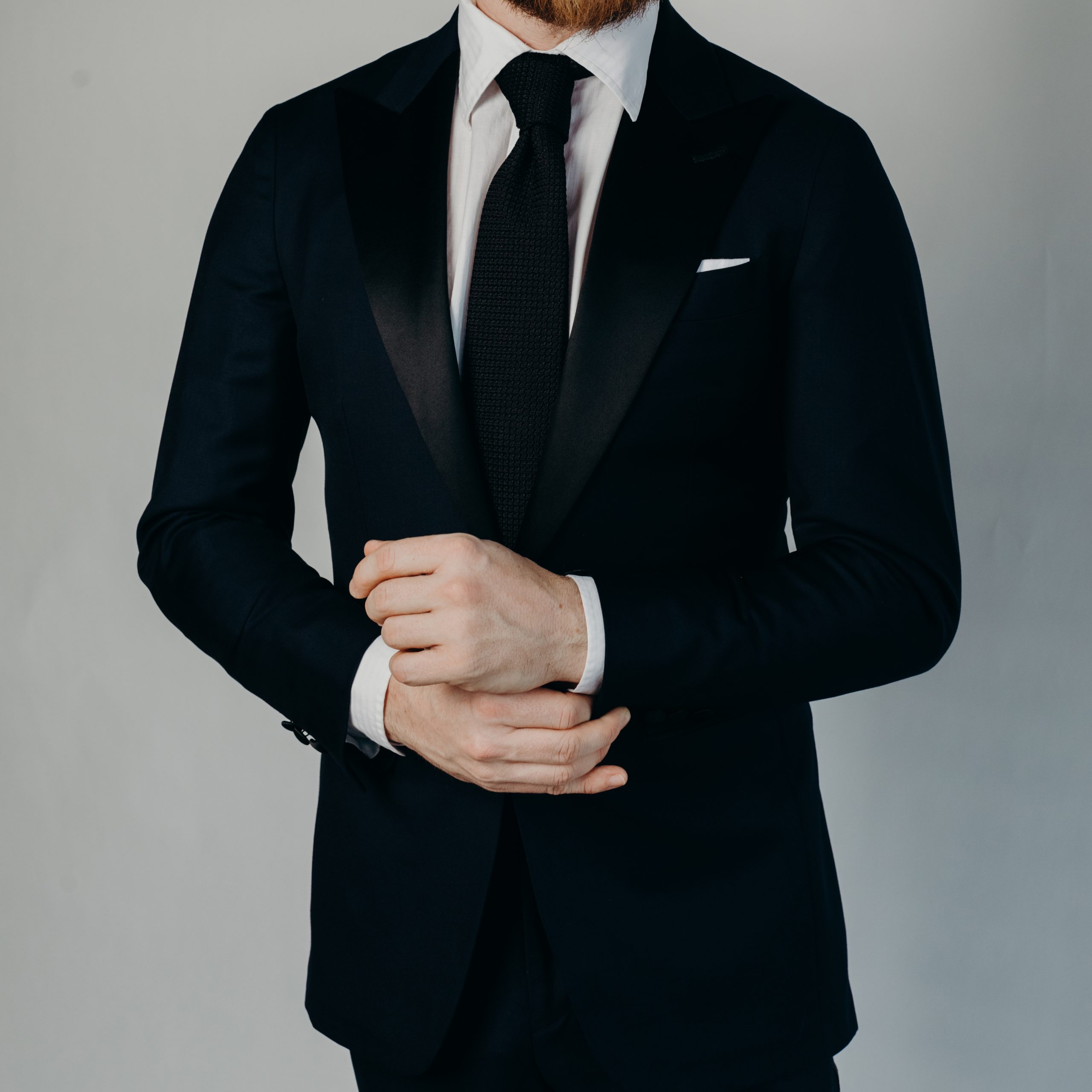
The Three Types of Construction
Ready to Wear vs Made to Measure vs Bespoke
Outside of the realm of style, there are three main types of suits:
Ready to Wear SUITS
Ready-to-Wear (RTW) suits are mass-produced using predefined patterns known as “blocks.” This is what you will find in any store where you buy something that isn’t made for you.
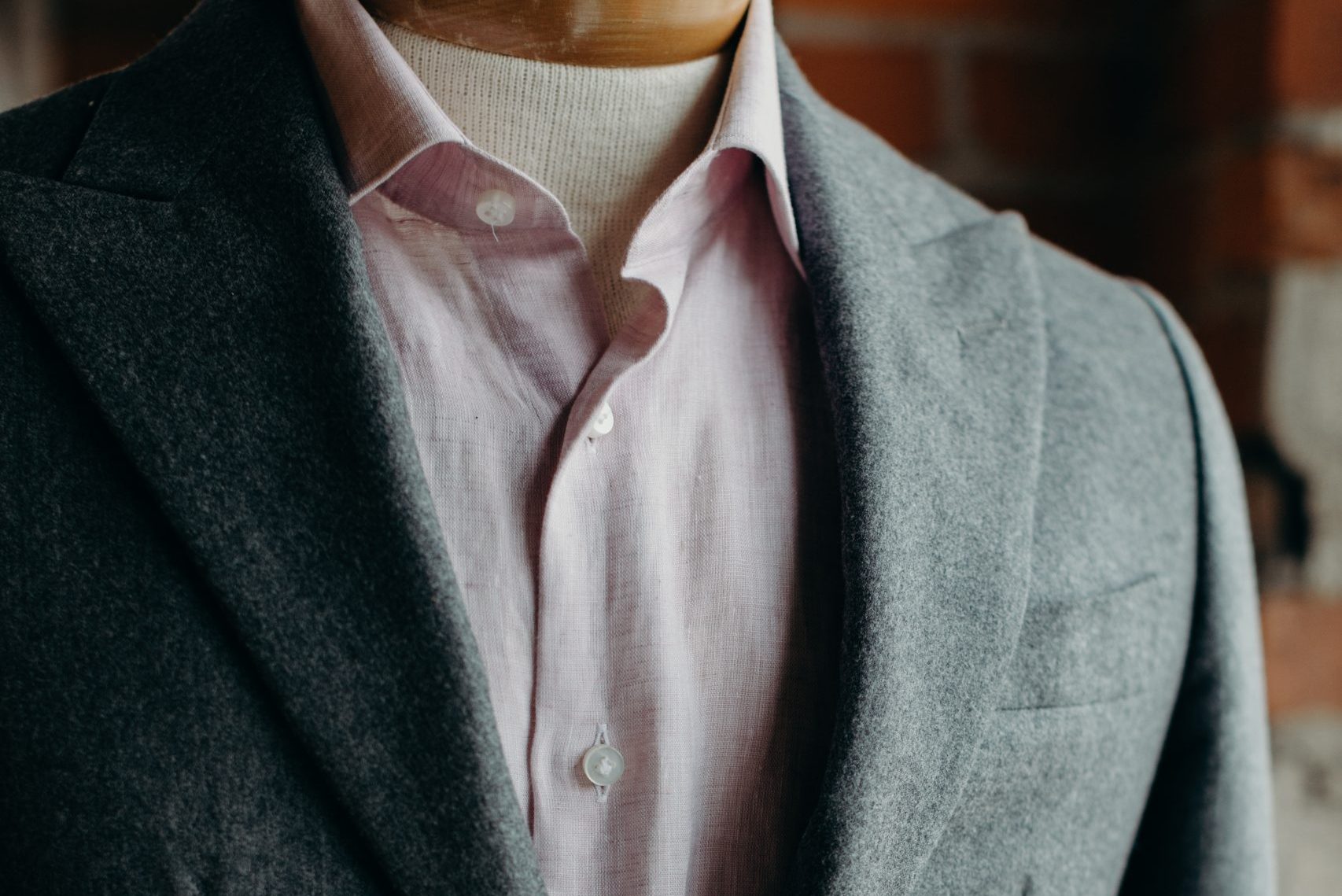
RTW garments are designed to fit a wide range of body shapes, and because they lack customizations, they’re cheaper and faster to make.
Some people look great in them, but some can only fit in a custom made suit.
Made to Measure SUITS
Made-to-Measure (MTM) suits take customization to the next level. Tailors use existing “blocks” but modify them to the wearer’s specific measurements.
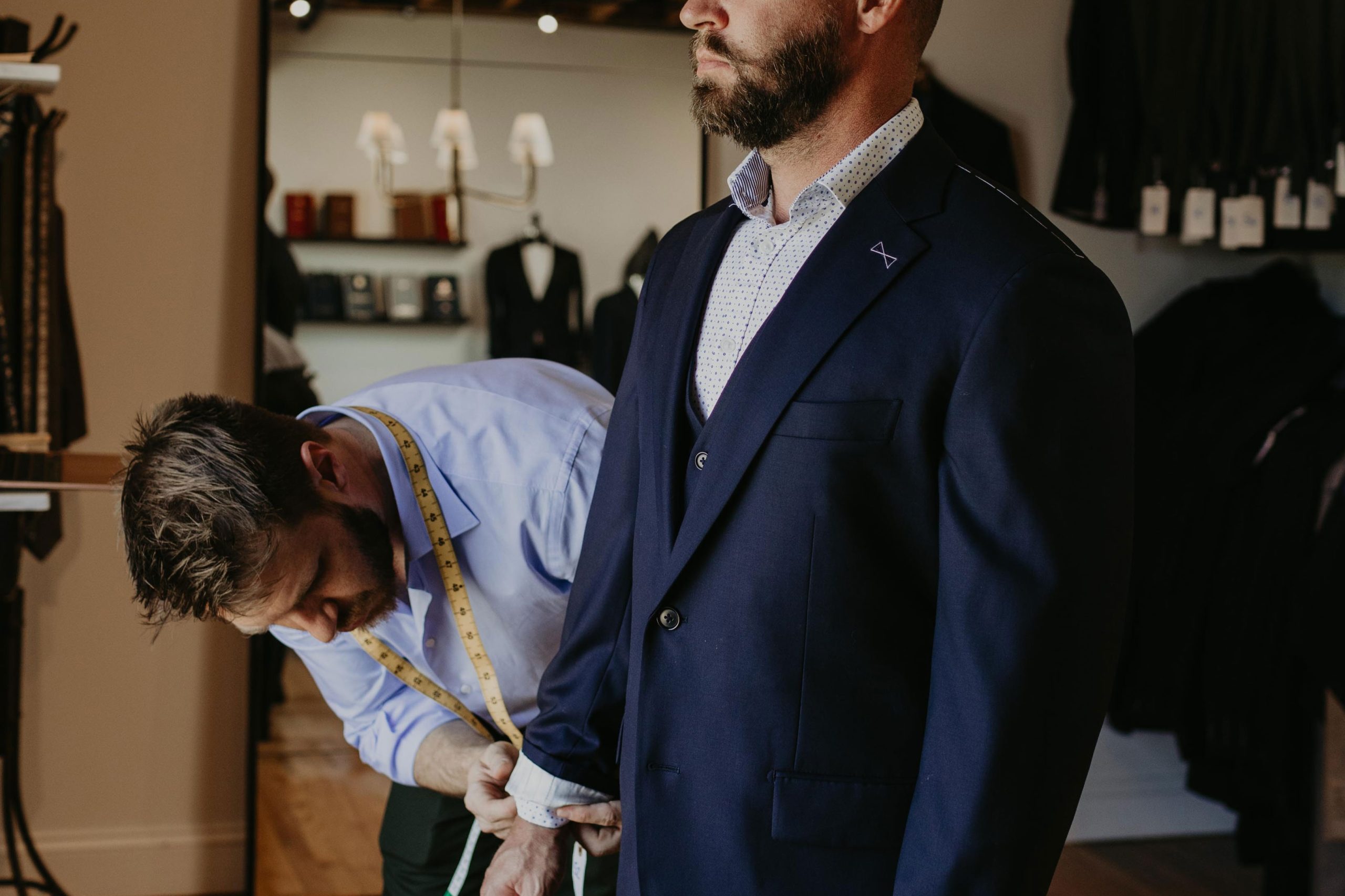
For example, adjustments may include letting out the waist, taking in the chest, lowering the collar or altering sleeve lengths.
Bespoke SUITS
Bespoke suits epitomize the pinnacle of craftsmanship and exclusivity. A bespoke pattern maker draws a unique pattern by hand, tailored precisely to the wearer’s body measurements and style preferences.

There are no predefined “blocks” used in this process, ensuring an entirely custom-made suit that reflects the wearer’s personality and taste.
There is a lot more to be said about the construction differences between these three types of suit, which you can read about here: [In-Depth: RTW vs MTM vs Bespoke]
Before the 20th Century, there was no such thing as a ready-to-wear suit, all suits were custom suits And when they were first introduced, RTW garments were seen as luxurious. If you’d like to learn more about that, see this: [The History of Ready-to-Wear]
A trusted advisor
The Client-Tailor Relationship
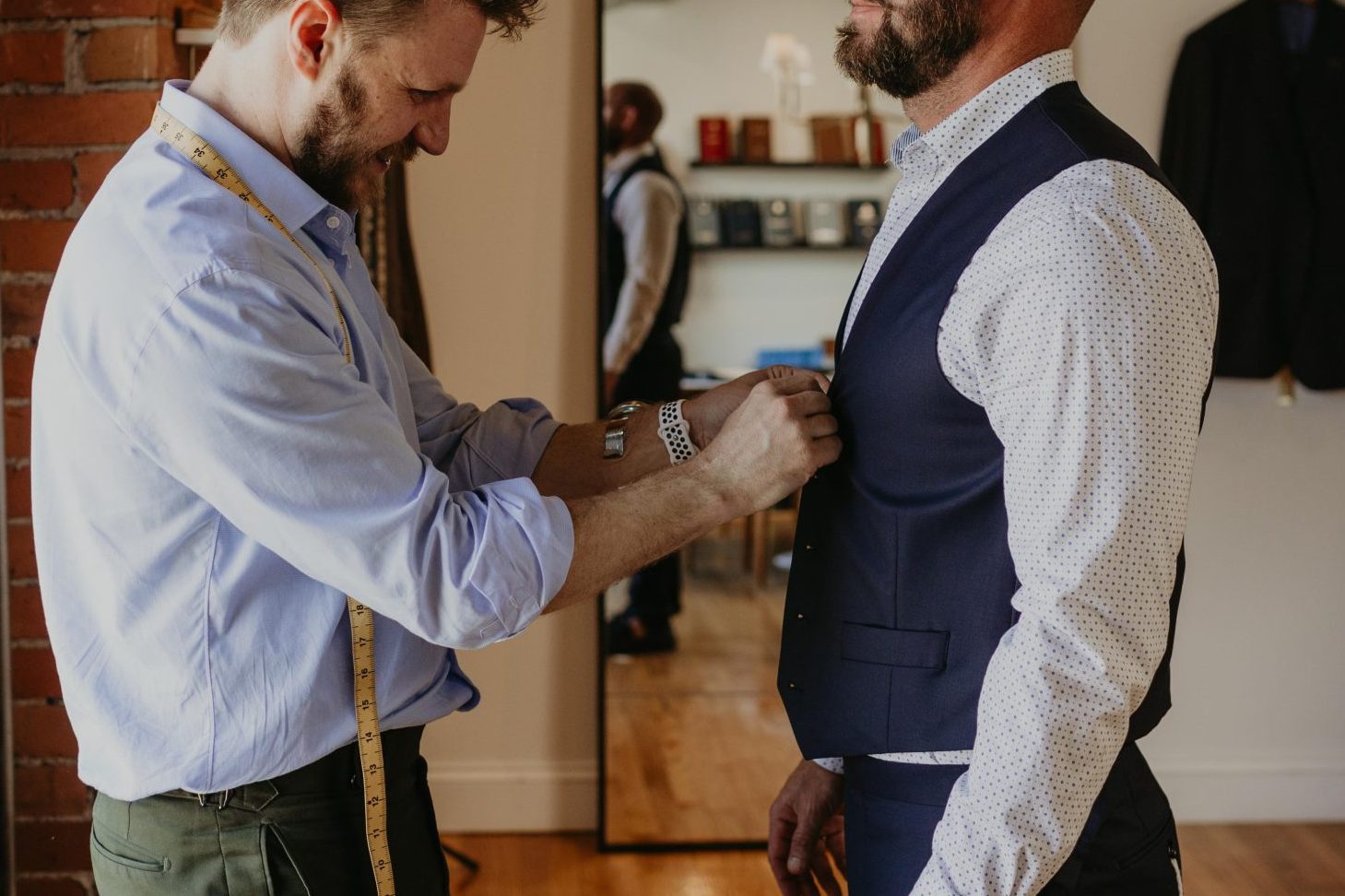
One of the most important pieces of bespoke tailoring is the relationship between the client and the tailor.
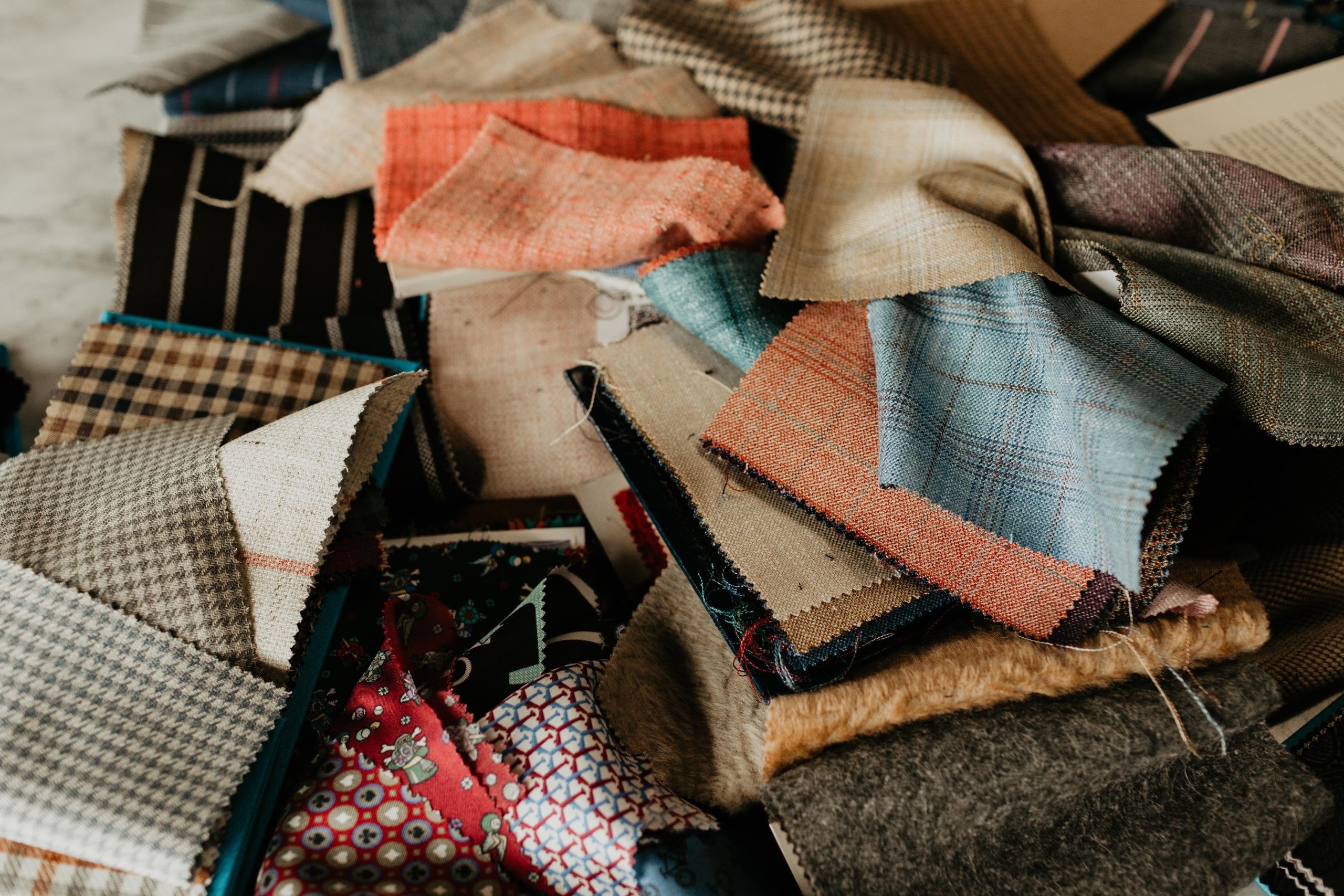
When I first meet with a client, I like to see how they walk in, what they’re wearing, and how they hold themselves. And when going through fabrics, I ask a series of deliberate questions to be able understand my client’s style.
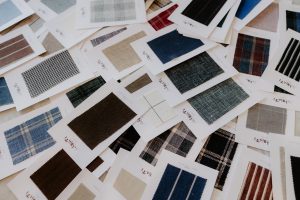
A good tailor should be able to recognize their clients’ tastes, and draw from their vast library of fabrics.
Most tailoring houses refresh their fabrics twice a year, receiving hundreds, if not thousands, of samples from different fabric mils.
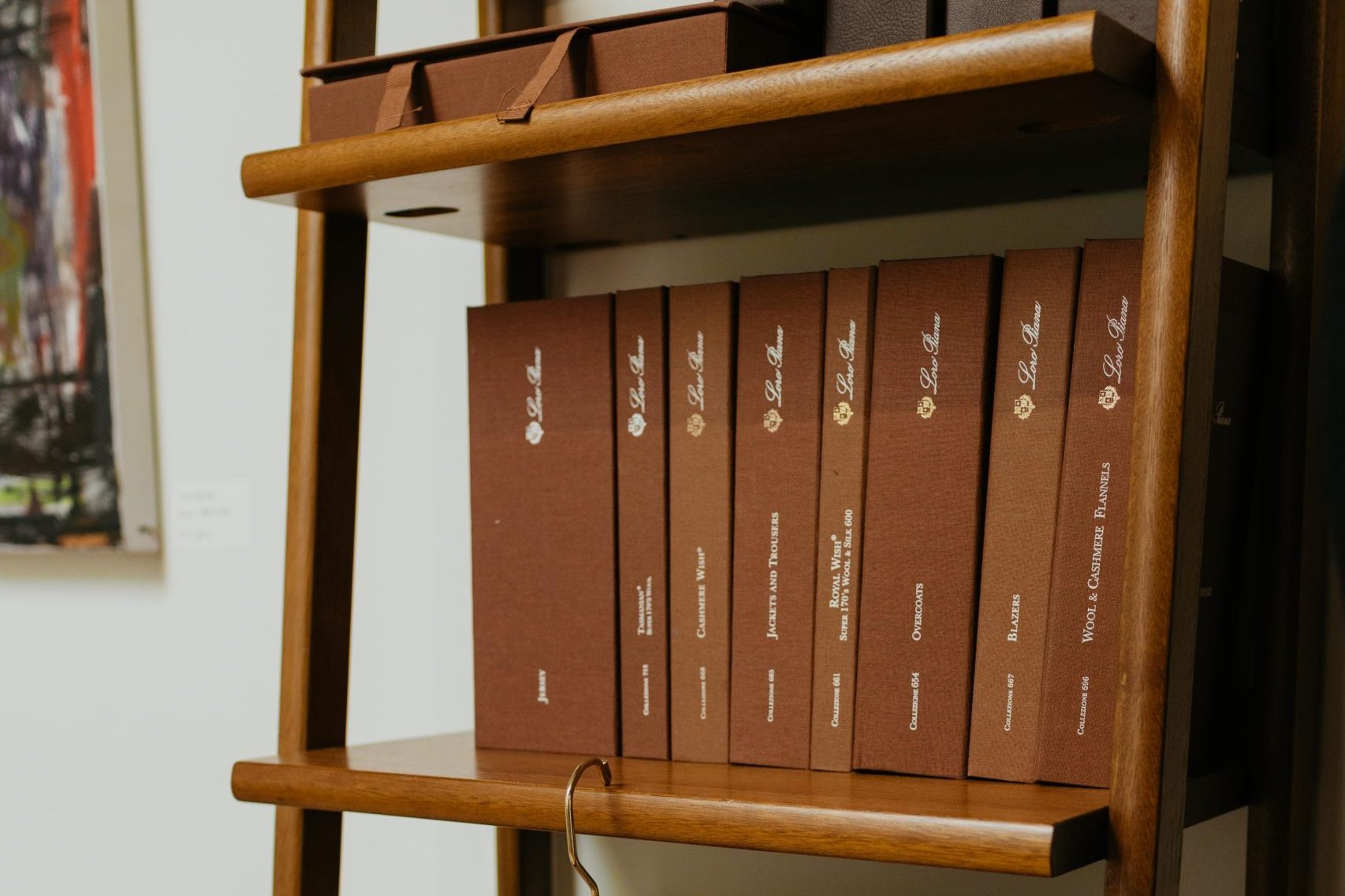

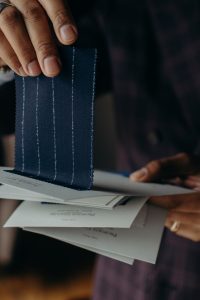
If you were to sit down and go through a year’s worth of fabrics, it would take you well beyond a regularly scheduled appointment time.
That’s why it’s important to have a relationship with your tailor, and you’re able to trust them to pull the right fabrics that fit your taste.
Where does Bespoke Come From?
“Bespoke” finds its roots in the word “bespeak,” indicating the act of placing an advance order.
Your fabric is “spoken for.”
During the rise of ready-to-wear garments, throughout the 1900s, the term fell out of popularity, as mass-manufactured clothes were new and more fashionable.
But ever since the 1990s, there has been a return to the appreciation of handmade bespoke suits.
Chapter 2:
Anatomy of a suit
Before we can start to appreciate the design of the suit, we have to understand its basic parts.
Often times, I’ll meet clients that know a handful of terms, but not the whole nine yards.
This chapter goes over all of the parts of a suit, so when you’re talking to your tailor about design and fit, you can use the proper lingo.
But before we talk about what’s on the outside, we should start with the inside.
At the heart of a meticulously crafted suit lies a pivotal element: its canvassing. This intrinsic component underscores the significance of handcrafted tailoring.
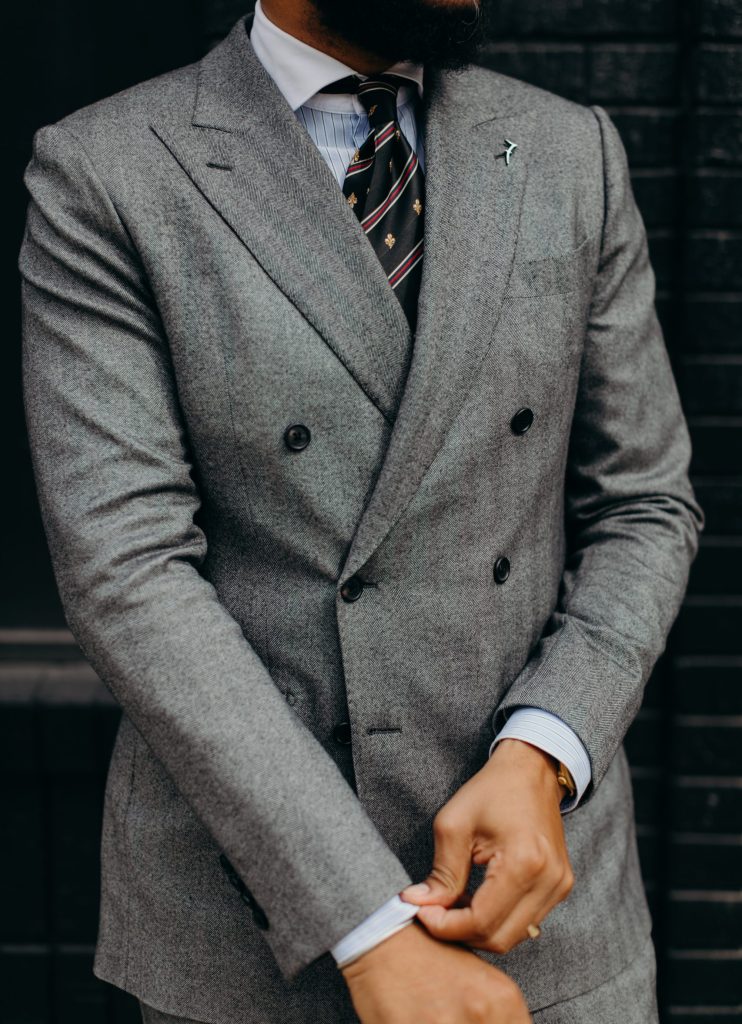
Inside a bespoke suit
Full Canvassing vs. Half Canvassing vs Fused
While there are three types of suits, there are three main methods of canvassing on the inside of a suit; fused, half-canvassed and full-canvassed.
What is canvassing?
The canvassing is the inner layer between the outside of the suit and the inside lining. This canvassing creates an additive layer that acts like a suit of armor. Without canvassing, a jacket looks very unstructured and saggy, which is a look itself, but is not the traditional suit we all think of.
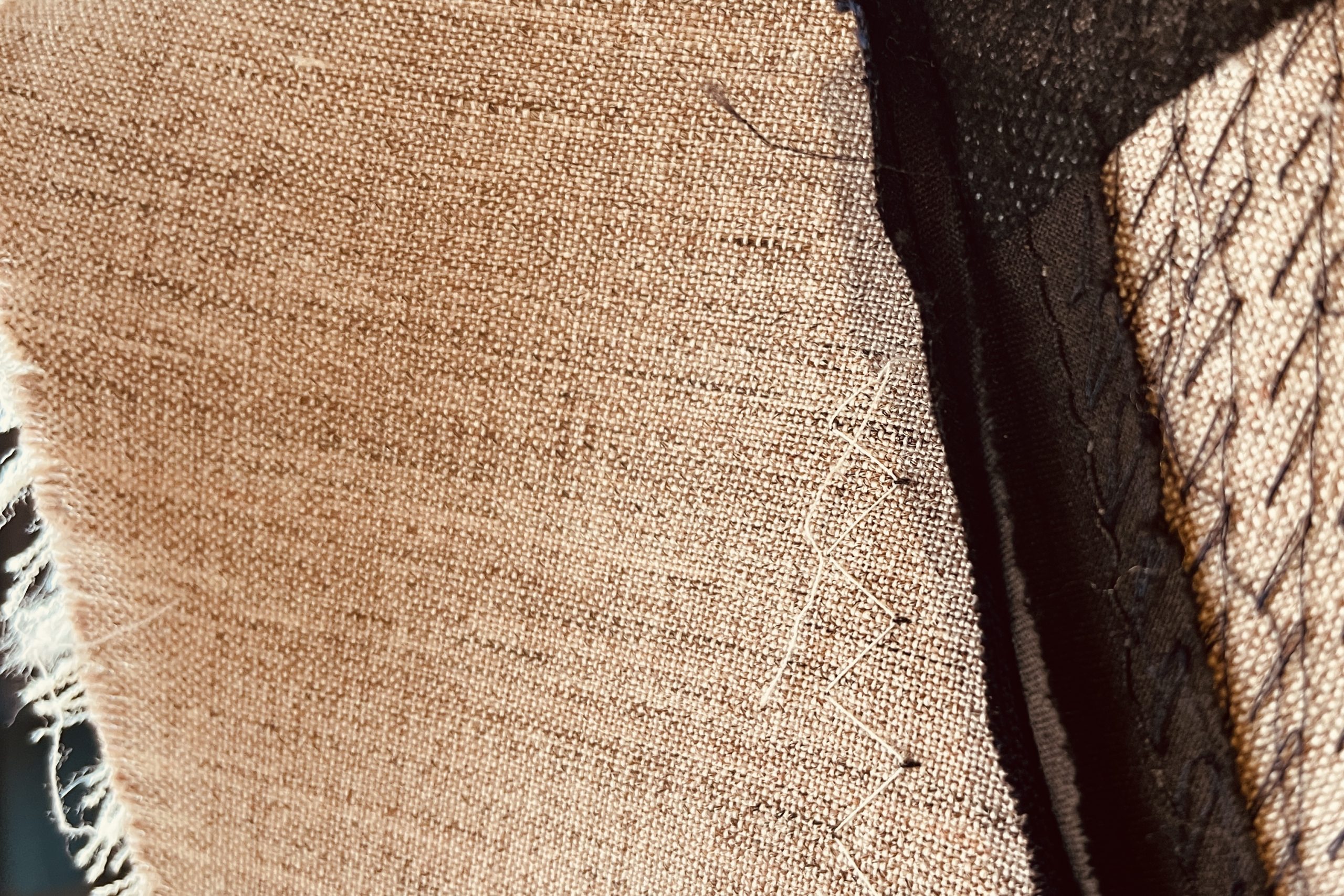
Fused
In the realm of ready-to-wear (RTW) suits, fused construction is industry standard; most department store suits such as Mens Wearhouse are fused. . In this method, a layer of fusible material is applied to the inside and outside of the fabric, then run through a heat press, creating a stiff backing.
Collars and cuffs in shirts also have a fusible layer which makes it stiff. The fusible, in this manner, is trying to mimic the canvassing of the half and fully canvassed jacket.
While more cost effective than canvassing, there are drawbacks to fusing. SInce the fusible is not a free floating layer in between the outside fabric and the inside lining, it doesn’t drape as well as a canvassed garment, nor does it maintain its shape over the years.
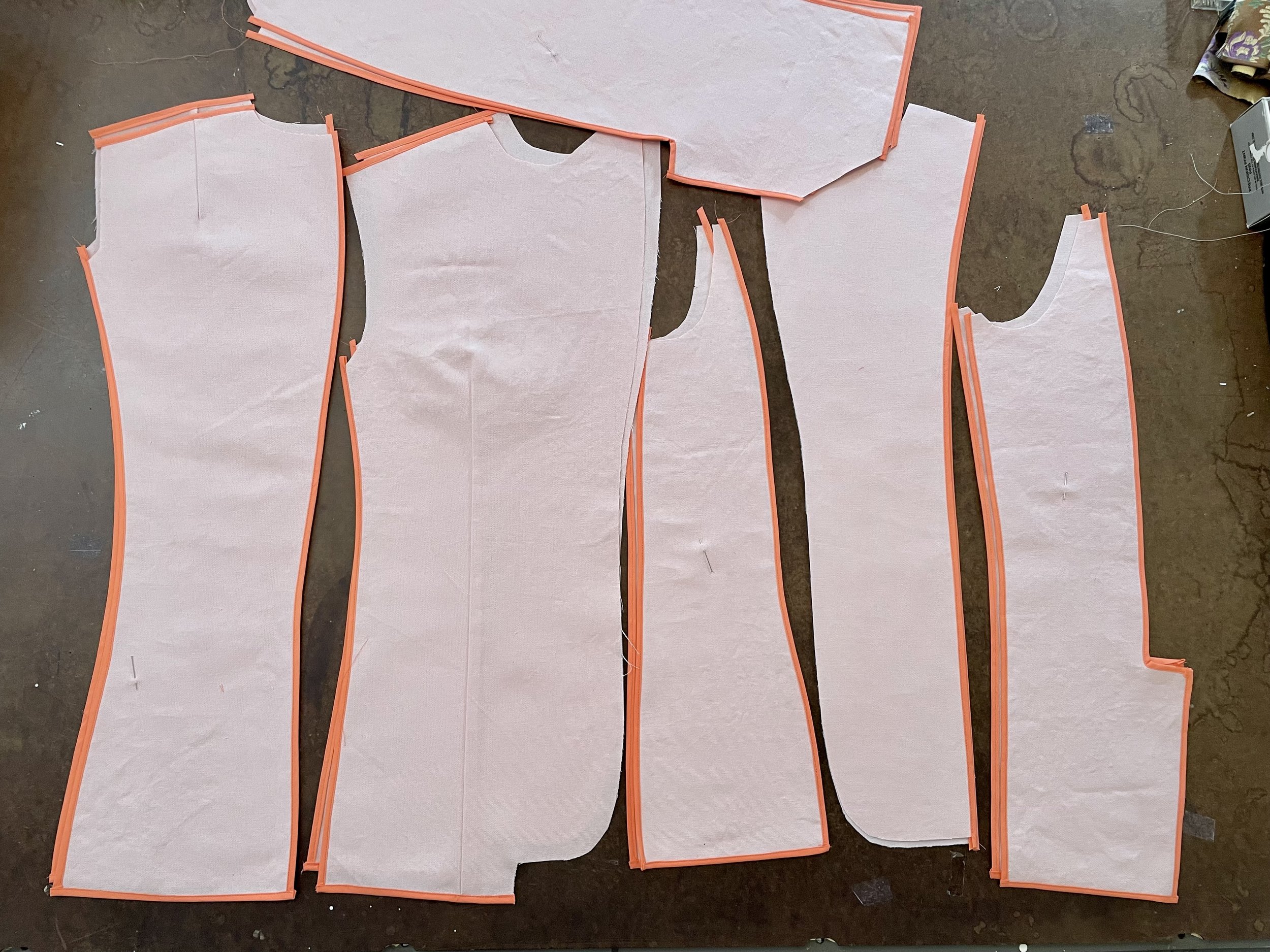
Another drawback is the fusible’s glue can expand and contract at different rates when heat and pressure are applied, which can cause bubbling on the front panels.
The final drawback is the roll of the lapel, which is done through stitching the canvassing. A fused garment is only able to mimic this through folding and stitching, instead of the meticulous work that goes into the roll of a lapel.
However, fused suits offer a budget-friendly option, and if the pattern creates a nice silhouette, it’s great for those seeking a polished look without breaking the bank.
Half-Canvassed
Moving up the ladder, half-canvassed suits strike an alluring balance between craftsmanship and cost.
In this method, from the top of the shoulder down to the first button (on a two-piece suit) has a layer of canvassing, and this is only reserved to the front two panels of the suit. No canvassing is applied to the back or arms of a suit.
Canvassing is a unique fabric made of cotton and horsehair, where the horsehair is woven across the weft of the fabric, which gives the canvassing its stiffness and resistance, while cotton is woven up and down (the warp of the fabric).
It’s this resistance factor of the horse’s tail hair that creates a beautiful lapel roll, that can only be done with canvassing.
While half canvassing provides structure and shape to the chest and the lapel, the remaining sections below the first button are fused, offering cost-efficiency.
The half-canvassed construction ensures that the suit molds to the wearer’s chest over time, enhancing comfort without sacrificing elegance.
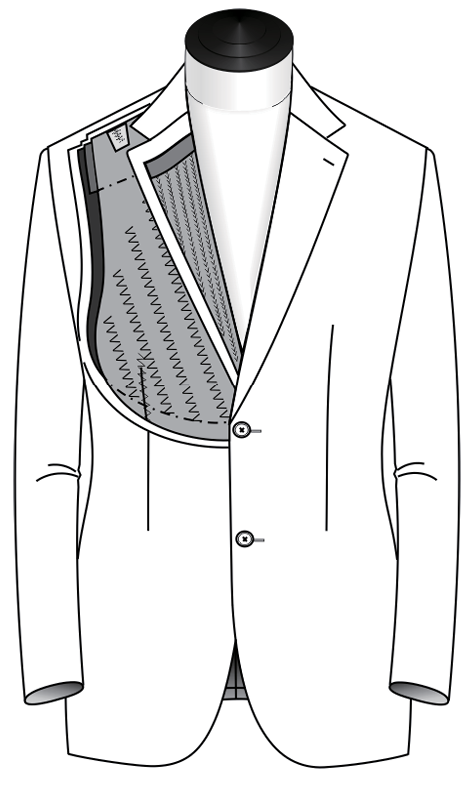
However, men with a belly will find that the shape created through the canvassing is needed to create a proper fitting waist, and is something they’ll miss out on with half-canvassing.
Fully-Canvassed
At the pinnacle of suit construction, we find the fully-canvassed suits.
Here, a canvas interlining independently drapes throughout the entire front panel.
Like the half-canvassed, the fully-canvassed coat allows the suit to conform to the contours of the wearer’s chest, and creates a beautiful lapel roll, but because there is canvassing beneath the first button point, shape can be added and manipulated.
In particular, when a man has a belly, he will find that without proper stiffness at the bottom of the coat, it will hang very loose and dangle.
Furthermore, corpulent darts are added to the mid section that can only be applied to a fully-canvassed garment.
The true craftsmanship of full-canvassed suits lies in the meticulous handwork, creating a garment that evolves with the wearer, yielding a personalized touch that only improves with age.
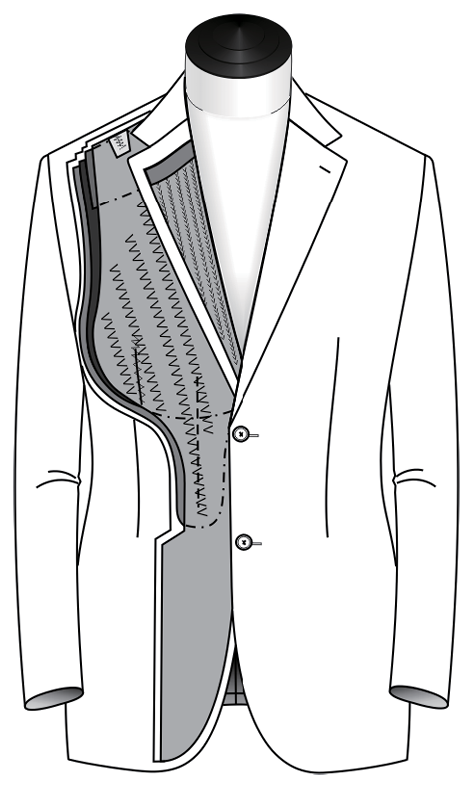
Custom suits come as either half-canvassed or fully canvassed, and it’s more prestigious to have a fully-canvassed coat than a half-canvassed.
So if saving a couple hundred dollars isn’t a big deal, opt for fully-canvassed suit coat.
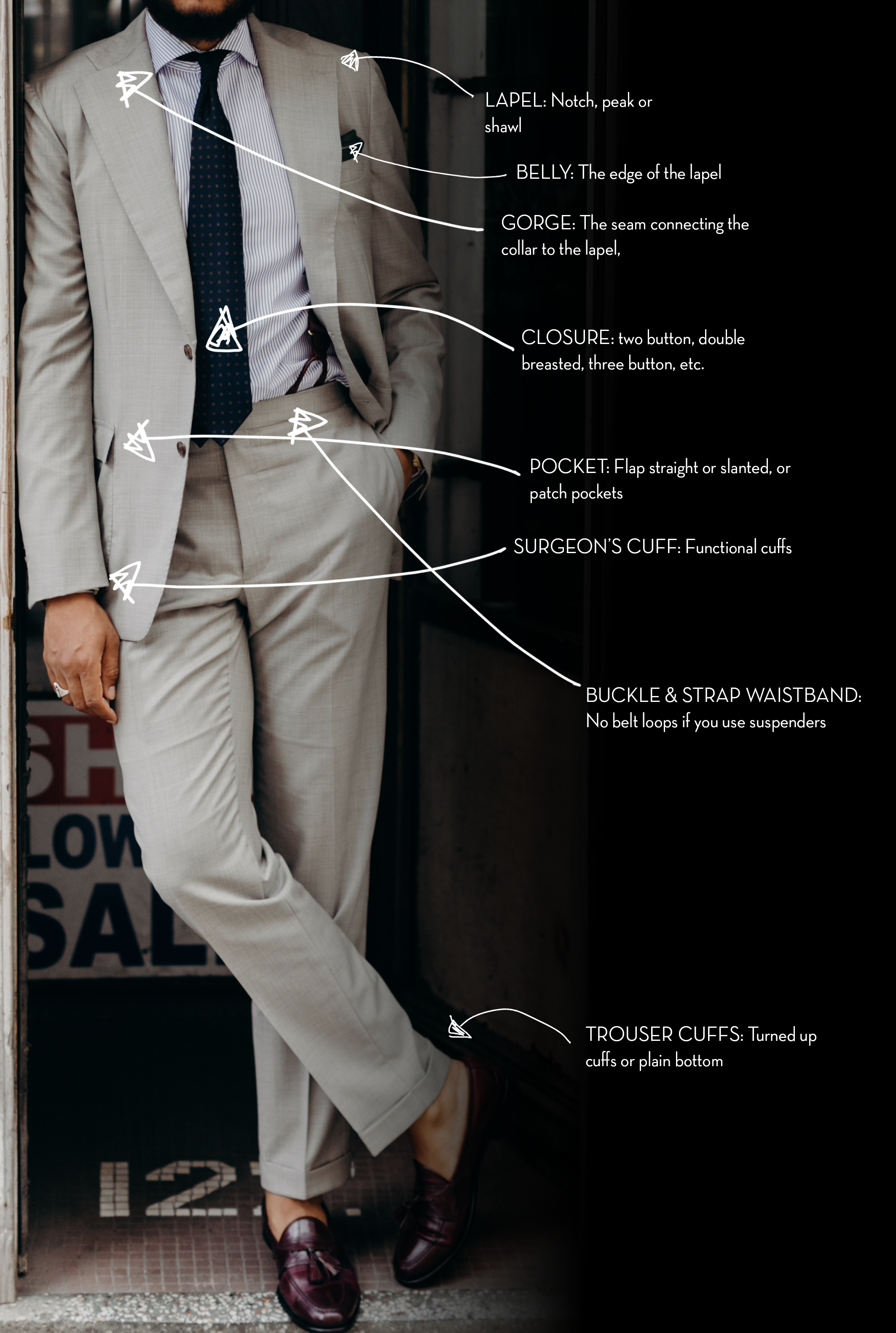
a bespoke suit’s components
Exploring the suit
Below is brief overview of the various terms describing the parts of a suit. Although there’s more, this list should give you what you need.to have an intelligent conversation with a tailor.
Chapter 3:
Bespoke Patterns & Construction
When you think of a bespoke suit, it’s often the image of hand tailoring that springs to mind.
The wabi-sabi stitches of the lapel and its gentle roll always stand out to me.
With a great deal of handwork put in to a bespoke suit, wearing it is truly wearing art.
However to sew a beautiful creation the tailor first needs a pattern.
The pattern maker along with their tools and a touch of math, merge precision and creativity to create a perfectly fitting garment for their client.
To start this chapter, we’ll go into the art of pattern making and then we’ll go into exactly how a bespoke suit is constructed.
Where it starts
Bespoke Pattern Making
There’s beauty in the process of drafting a pattern and seeing it complete.
What makes it more fascinating is that it’s a ritual, derived from a single place, that has been passed down for generations, from one responsible steward to the next.
Nearly all bespoke pattern makers can trace the lineage of their knowledge to Savile Row, and although there are many techniques that have been created over the centuries, the underlying systems are all the same.
What is bespoke pattern making?
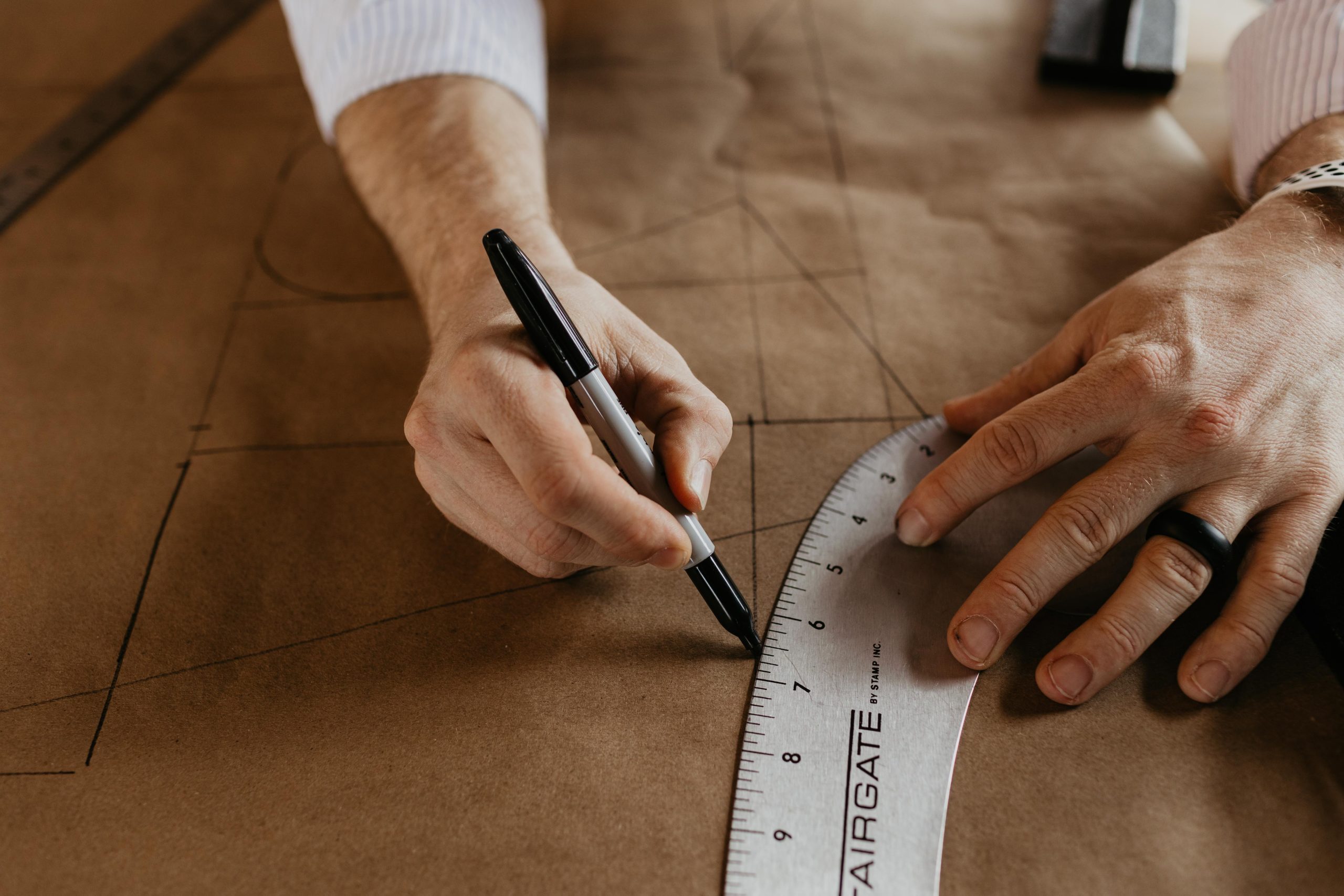
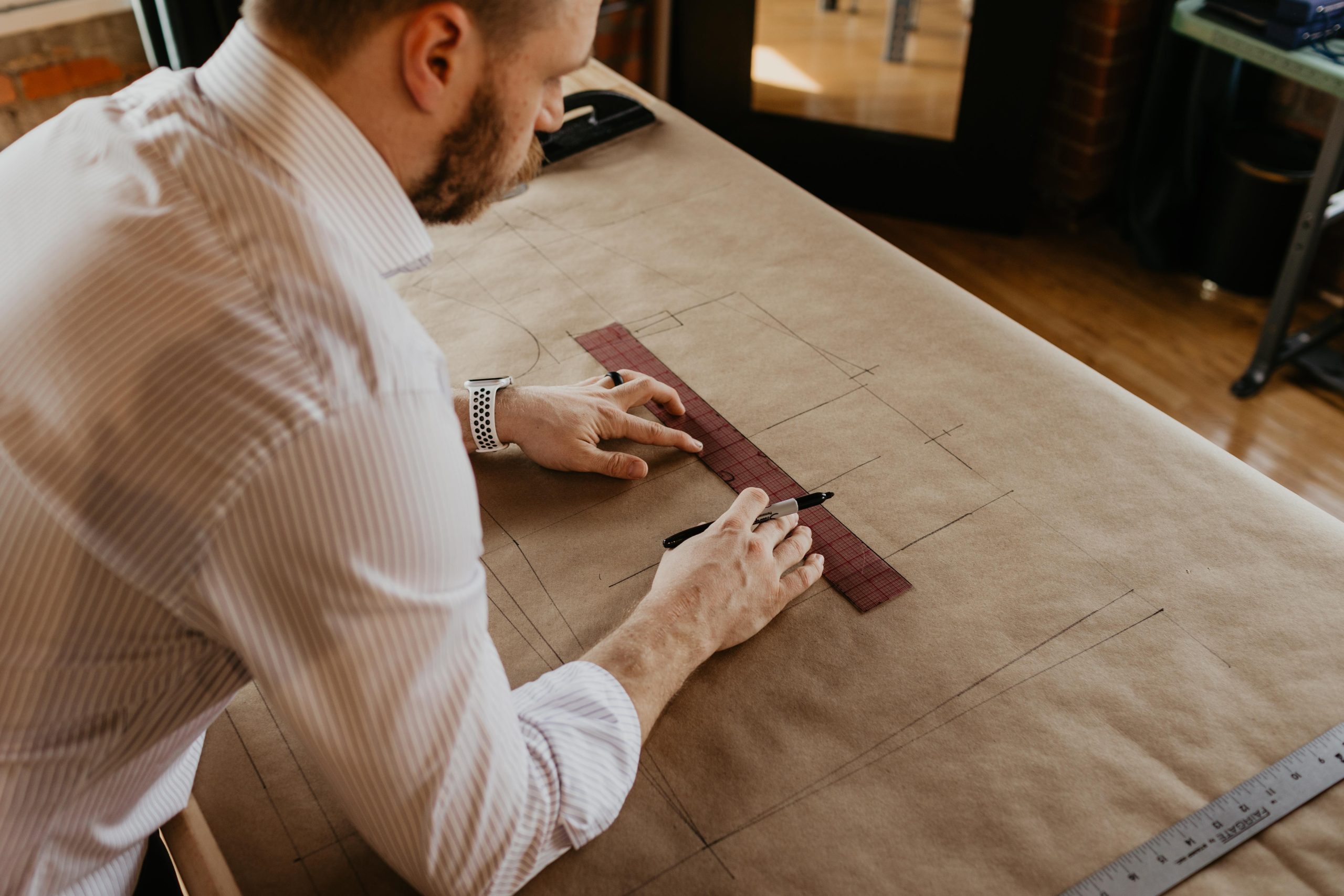
Bespoke pattern making is the process of creating a unique custom pattern that serves as the foundation for a perfectly fitted garment.
The bespoke pattern maker draws the shape of the suit and all its pieces, which is then cut out from the fabric and sewn together.
In essence, the bespoke pattern maker is the one responsible for making sure a bespoke suit fits.
how is a bespoke pattern made?
Bespoke patterns are made through a series of mathematical calculations based upon the client’s body measurements.
Although it may seem complex, a lot of the calculations are done by the tools, which certaily makes the pattern maker’s life easier.
Through a series of steps, known as the system, the bespoke pattern maker measures, marks and connects and shapes the lines that ned up being the suit.
Typically, every bespoke pattern maker will have their own system, but ultimately all bespoke patterns end up looking relatively the same.
As they say, there are many roads that lead to Rome.
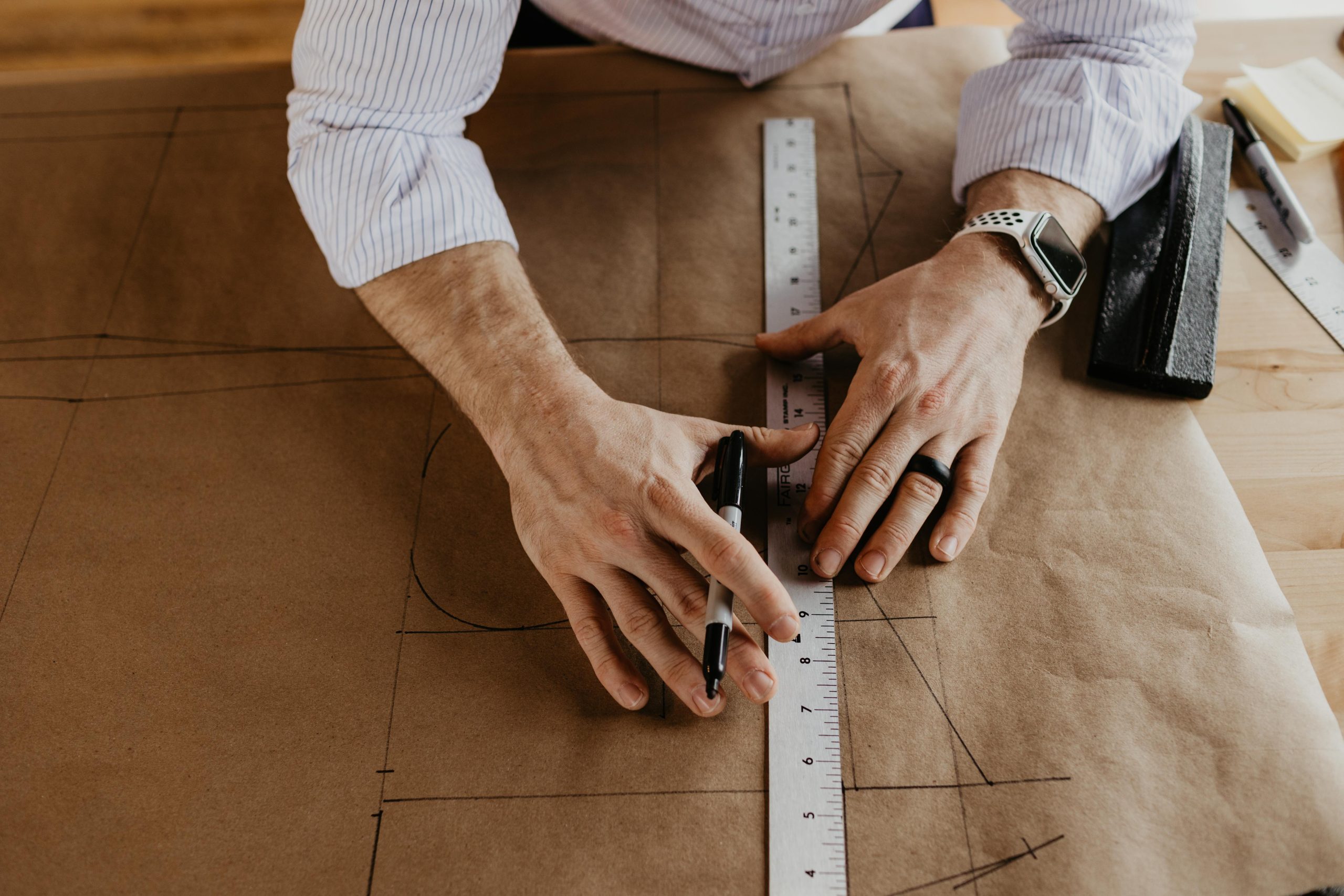
bespoke pattern making tools
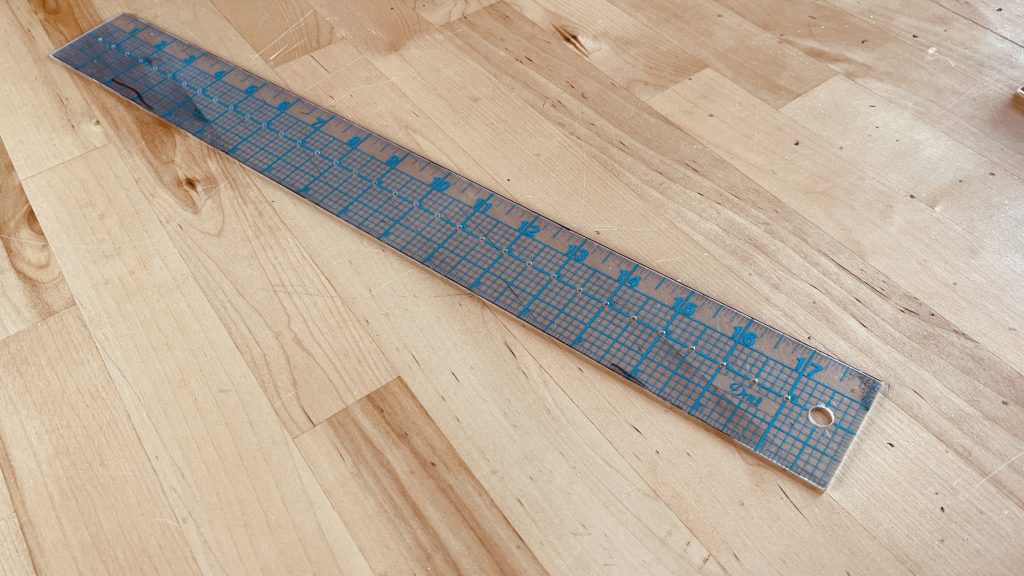
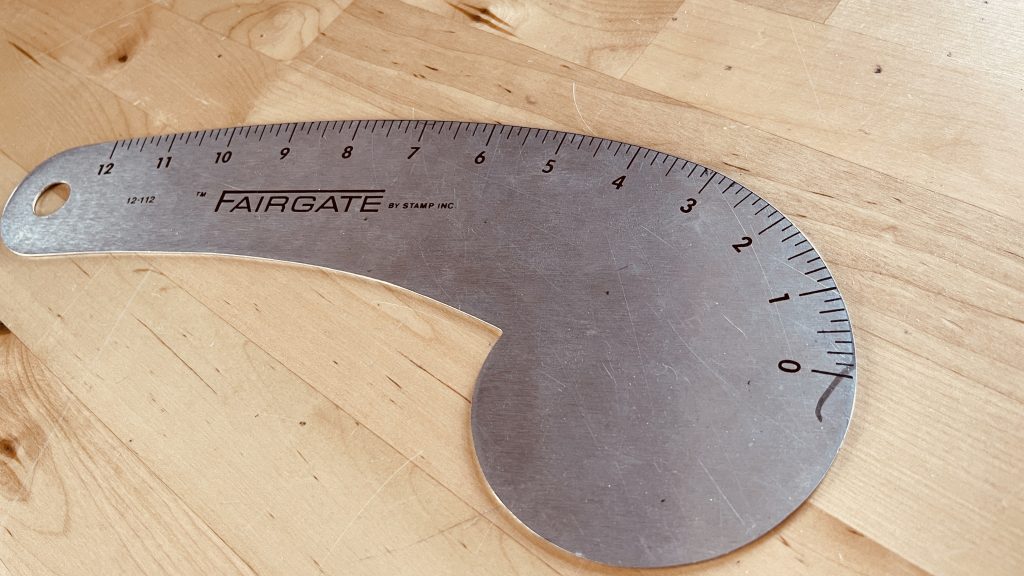
Below is a slideshow of the tools a bespoke pattern maker uses.
But the most important tool, followed only by the ruler, is the tailor’s L square, which is the first tool pictured.
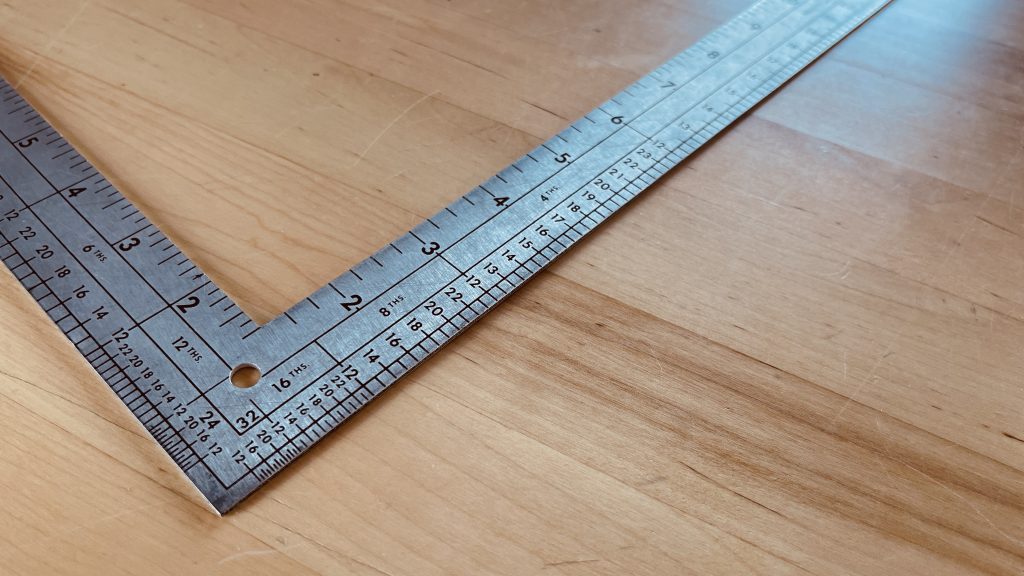
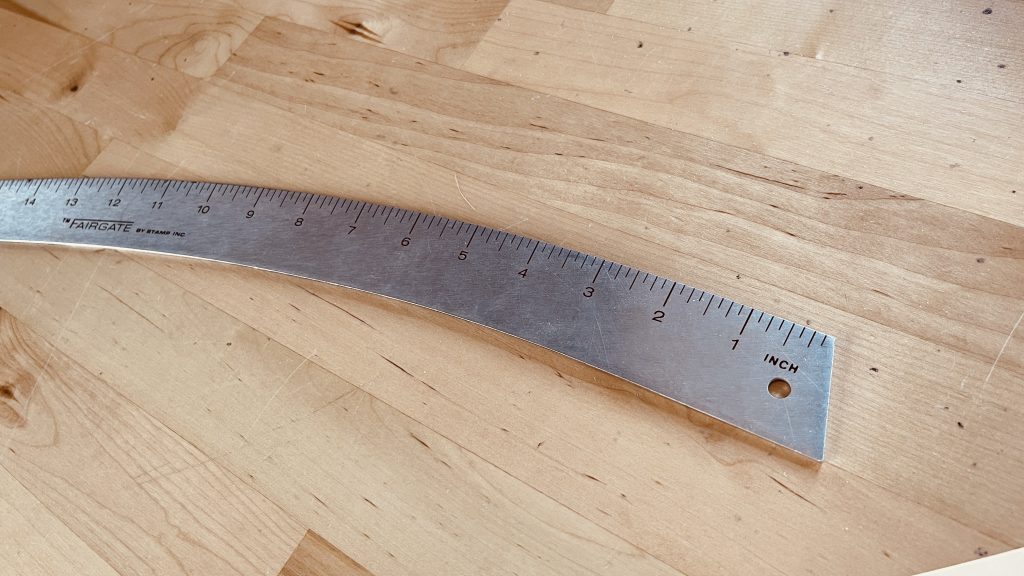
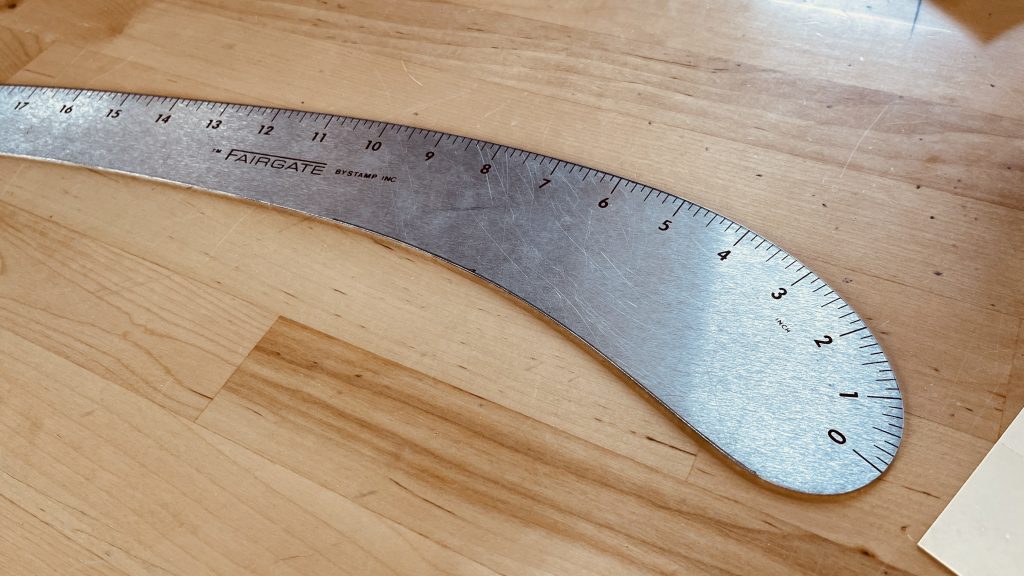
As you can see, the L Square is divided up in to sections that turn it into a calculator.
For example, under the “8ths” section, the distance from the corner of the L to the 18 is 1/8th of 18 inches, or 2 1/4 inches.
Using this tool, a bespoke pattern maker is able to make quick calculations to determine the size of the chest, waist, seat, etc.
Drawing a Bespoke pattern
Below is a video of me drawing bespoke pattern for a jacket:
[insert youtube video]
You may wonder, why is there only one side of the jacket being done and not both sides?
When the pattern piece is being cut out of the fabric, the fabric is folded in half, so two duplicate pieces are being cut out.
More on that later.
Where were bespoke suits invented?
The modern day suit started on Savile Row, a street in London, England that has housed many tailors for a couple centuries.
I personally learned pattern making from a bespoke tailor who worked at Henry Poole, the oldest bespoke tailoring house in the world, which is on Savile Row.
And chances are, every other bespoke pattern maker has learned a system derived from Henry Poole as well.
But we’ll go over a more thorough history in Chapter 9.
Why is bespoke pattern making essential?
Some people, because of the way they are built, are unable to fit in in off the rack suit, and a made-to-measurement garment doesn’t have the flexibility in their patterns to fit correctly.
For example, a man with.a large belly and a large chest often times needs special darts put in their chest and waist for the lapel to lay right across the chest, and their quarters to closer properly.
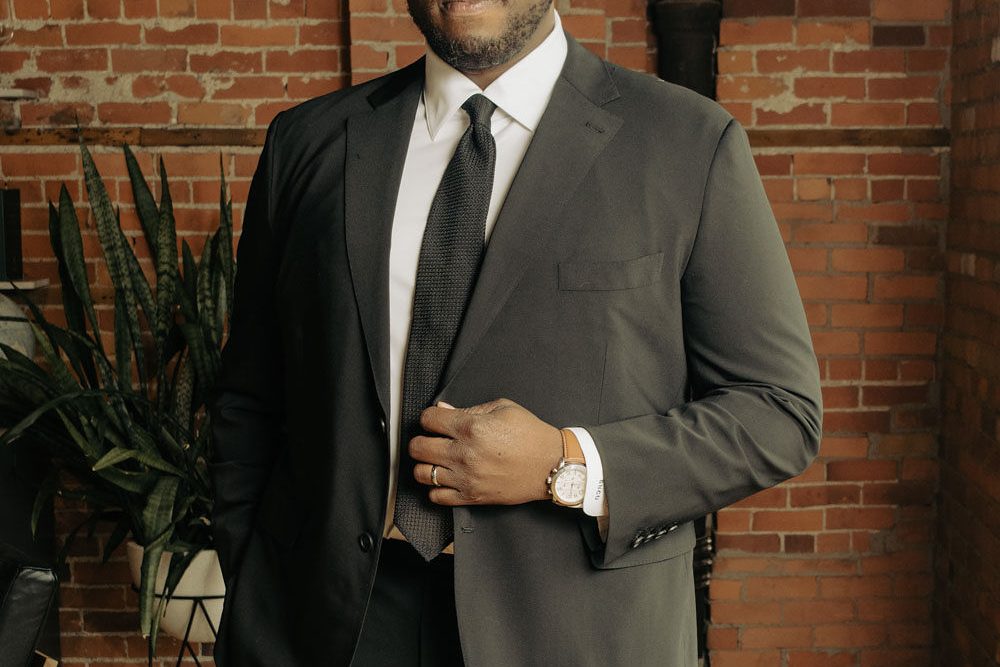
This can easily be done by the pattern maker but in other types of makes, it can be very difficult.
The Construction
How a Bespoke Suit is Made
As soon as they bespoke pattern maker has completed their pattern, they send the patterns over to the cutter.
Cutting involves tracing the patterns out on the cloth, adding in special marks and notations for the tailor, and then cutting out the pieces from the fabric, as well as the canvassing.
Once the cutter’s job is complete, the tailor begins.
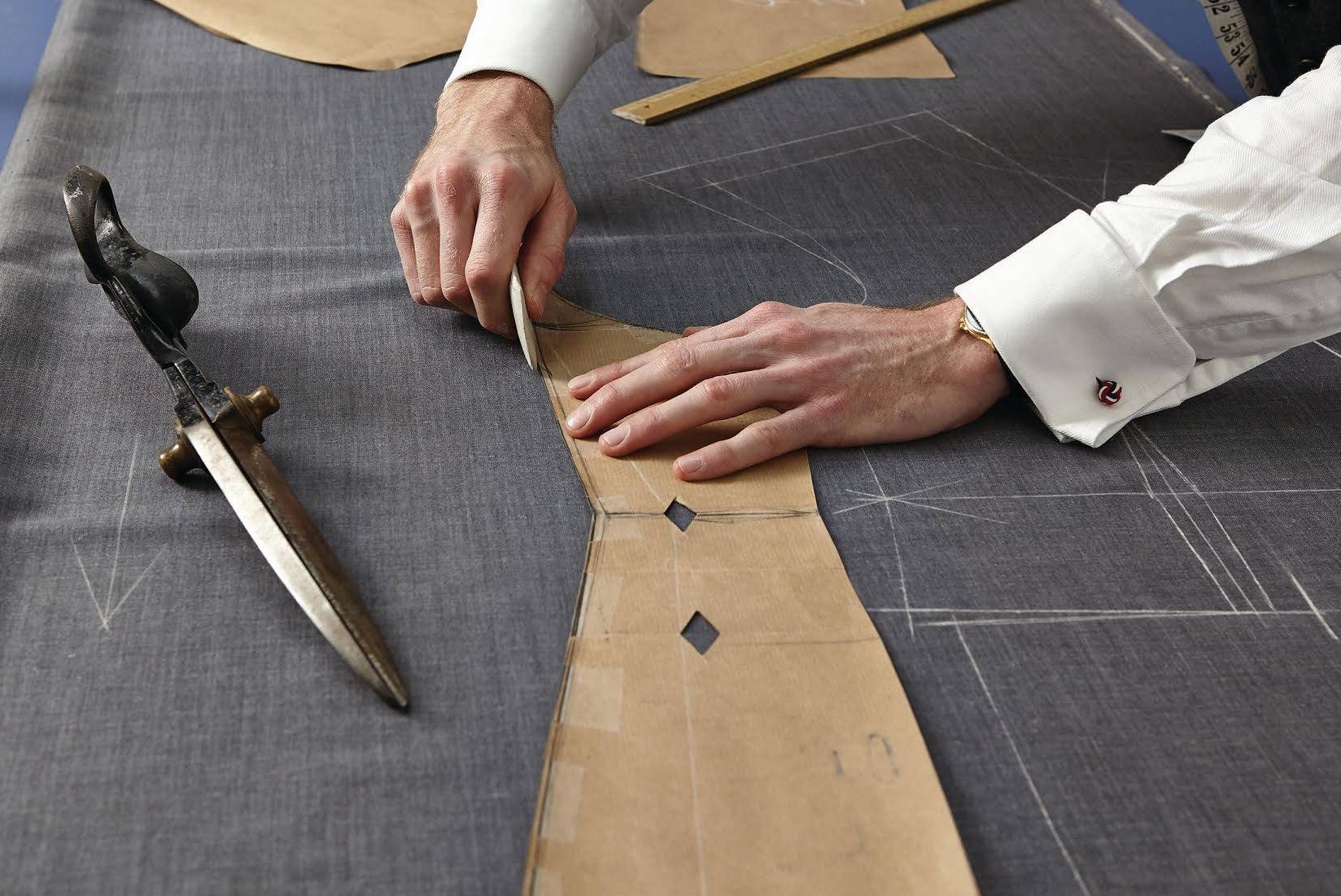
Making a Bespoke Coat
While there.are many steps involved in creating a bespoke suit, the most important pieces are the creation of the chest piece and basting the fabric on, shaping the collar, and then sewing the side panels, back panels and sleeves together.
The Chest Piece
The canvassing of the jacket is composed of three pieces:
- the body canvas,
- the chest canvas
- the domet
They’re placed on top of one another, with the body canvas facing the fabric, and the domet on the inside, then sewn together.
But they’re sewn in such a way as to create a full and slightly concave chest piece. This is perfect to wrap around the chest and and waist of the client.
Once the chest piece is created, it’s basted on the fabric, meaning temporarily stitched.
The collar
At this point, the tailor will put together the collar
The collar also has canvassing in it, which gives it stiffness, so the tailor cuts the canvassing to the right size and uses a series of stitches to give the collar its concave shape to come up and around the back of the neck.
The collar should hug the neck of the wearer, so the hand stitching plays a crucial part in forming the perfect shape.
Sewing The Sides, Back and Sleeves
Now, the tailor sews the side panels along with the back panels to create the shell of a the coat. After which, the sleeves are added and teh collar is basted on.
Now the jacket is put together, but no permeant sewing has happened.
This is because it’s time for the next fitting with the client..
The Second Fitting
With temporary stitching holding the jacket together, it’s time for the client to put on the jacket and see what changes need to be made.
Issues such as a low shoulder, stooped posture, and arm position will be primarily addressed here,
When. the fitting is over, the tailor is able to take the coat apart again, and make the changes necessary so everything fits perfectly to the client.
Stitching the lapel
What makes a bespoke suit stand out from everything else is its gentle roll of the lapel.
This is done through hundreds of hand stitches on the canvassing that connects. itto the fabric.
These stitches are done so carefully that. the needle only collects one or two individual yarns from the fabric, so the thread sewing the canvassing on is nearly invisible when viewed from the fabric side.
Add the Facing, Pockets and Lining
Once the canvassing is attached to the front panels, it’s time for the facing.
The facing is the piece of fabric that extends from the edge of the lapel all the way to the inside pockets. That will be attached to the fabric of the lapel, as well as the canvassing by the inside pockets.
Afterwards, the lining is attached, first basted on as all of the other pieces are sewn onto the front paenls, and then later, the lining is sewn on its edges by hand.
If you look beneath the folded edge of a coat’s lining, you should find the hand stitching.
Buttons and Buttonholes
Another sign of a bespoke suit are the hand sewn buttonholes.
Once the coat is nearly done, the button holes and buttons are sewn on.
Buttonholes should be wabi-sabi, or perfectly imperfect. Some bespoke houses would train their recruits on button holes, taking out a magnifying glass to count how many stitches were done.
Final Pressing
After. thebuttonholes and buttons, the final pressing is done to ensure the chest is full, the lapel rolls nicely and then back drapes well.
Pressing will also help to accommodate prominent shoulder blades and forward shoulders by helping stretch and shape the fabric.
After the final pressing, the work of art is ready.
But instead of hung up on a wall, this piece can only be appreciated in full when its on its new master.
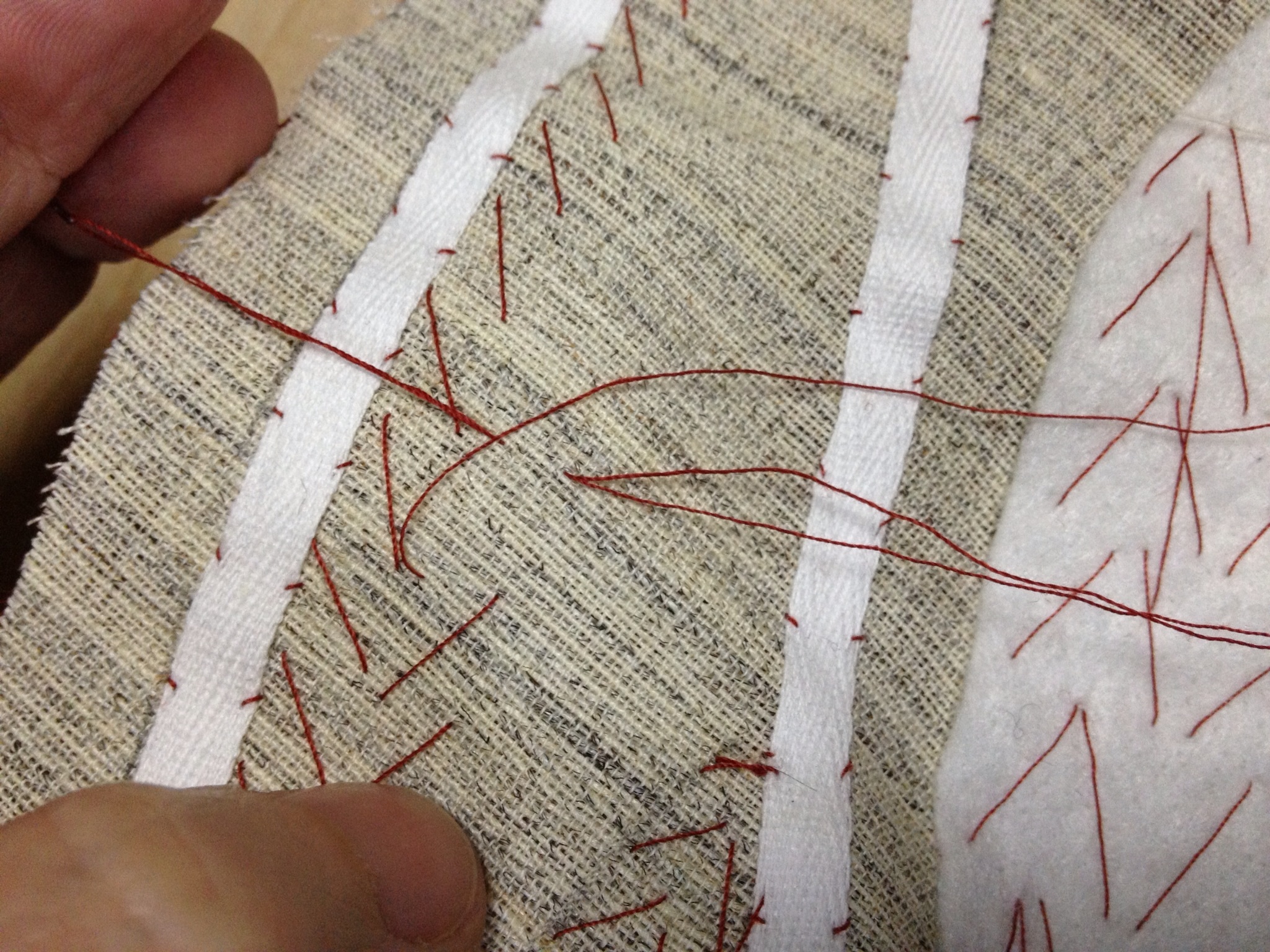
The Pad Stitch Makes the Roll
The most important aspect of the roll of the lapel involves a prominent stitch in the bespoke suit: the pad stitch.
As you can see, the stitch involves creating a diagonal line on one side of the fabric and a straight line underneath the fabric, creating a herringbone pattern going up and down the canvassing.
Each stitch pulls the canvassing together, ever so slightly, creating a concave pattern over and over, which makes the lapel roll so smoothly.
Chapter 4:
Bespoke Suiting fabrics
When it comes to fabrics, most people have no idea what they’re talking about.
You see the word “super” thrown around.
You know most suits are made of wool.
And that’s about it.
But when it comes to suiting fabrics, there are actually three main metrics to look at when evaluating a fabric.
Knowledge these metics, will help you understand where a fabric can fit in your wardrobe.
It will also give you. a greater appreciation for wearing it, especially if you know the story and history behind it.
This chapter is all about giving you the knowledge you need to be able to completely understand fabrics in the world of bespoke suiting.
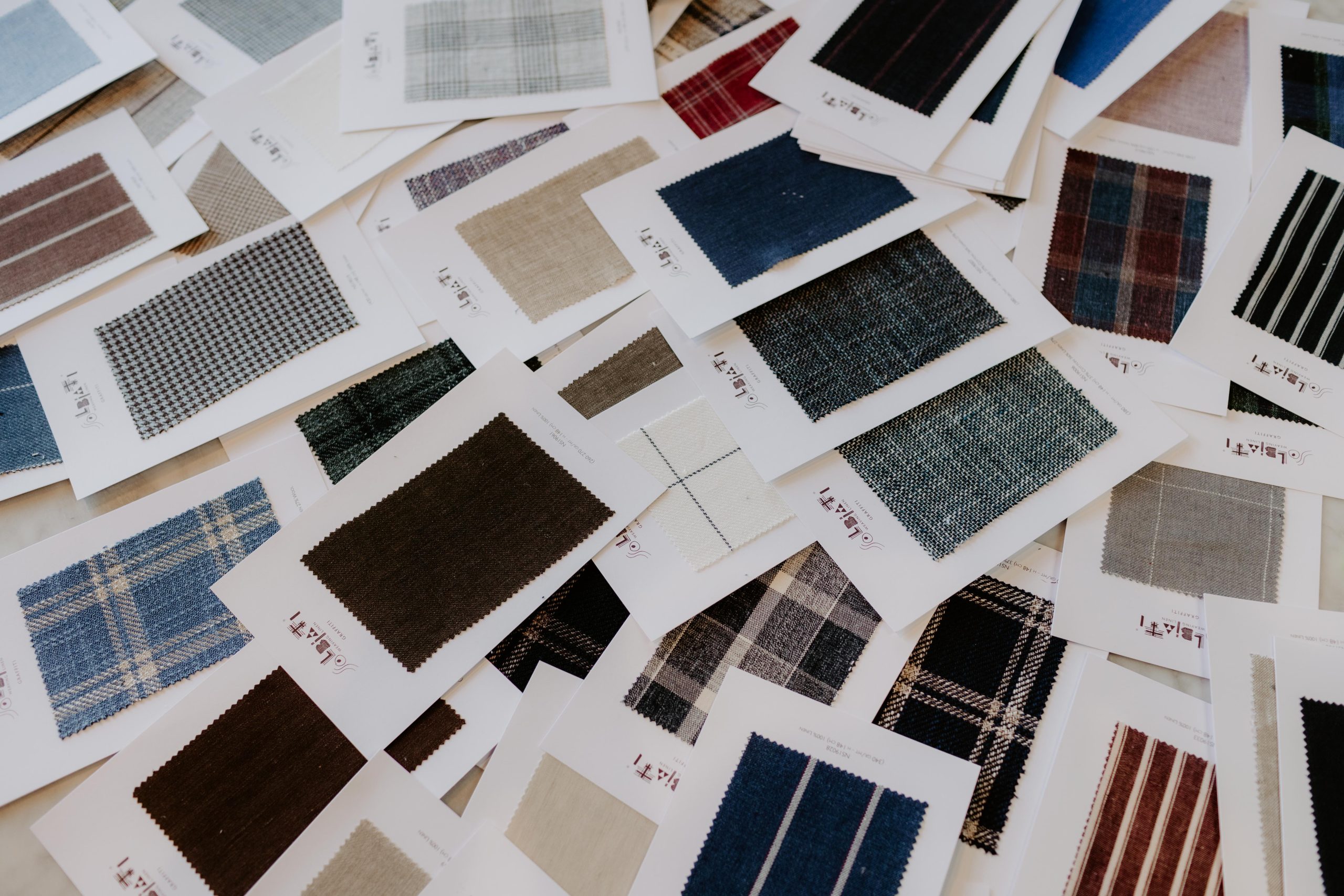
The Three Main Metrics
Super Numbers, Weight & Weave
There. arethree main metrics to look at when evaluating wool: the super number, the weight and the weave.
What is A Super Number?
The super number is the width of the fiber of wool that is sheared from the sheep, before it’s spun into yarn.
A sample is taken from the sheep and measured under a microscope, and the diameter of the fiber corresponds to a Super number.
The higher the super number, the finer and softer the fabric. But because the fiber is so fine, it’s not robust enough to handle the friction from constant wear.
So a high super number fabric might be best for items that you only plan to wear a few times a year, like a very nice suit or tuxedo, and stick to low super numbers for high-wear items like work trousers.
What Super Number should I get?
If you plan on wearing an item once a week, a low super number like Super 100s to Super 110s should be your goal.
You need a robust fiber that can hold up through a lot of friction and a high super number will not help with that
| Super Number | Diameter of fiber in micrometers (microns) |
| 100 | 18.75 |
| 110 | 18.25 |
| 120 | 17.75 |
| 130 | 17.25 |
| 140 | 16.75 |
| 150 | 16.25 |
| 160 | 15.75 |
| 170 | 15.25 |
| 180 | 14.75 |
| 190 | 14.25 |
| 200 | 13.75 |
| 210 | 13.25 |
| 220 | 12.75 |
| 230 | 12.25 |
| 240 | 11.75 |
| 250 | 11.25 |
If your suit is worn once or twice a month, anywhere from 120s to 170s.
There is a big difference in this spectrum in terms of softness, but I recommend picking the nicest fabric you can.
Wearing a garment less than once a month means you have your pick and can choose up to Super 200s.
The Weight of Fabric Explained
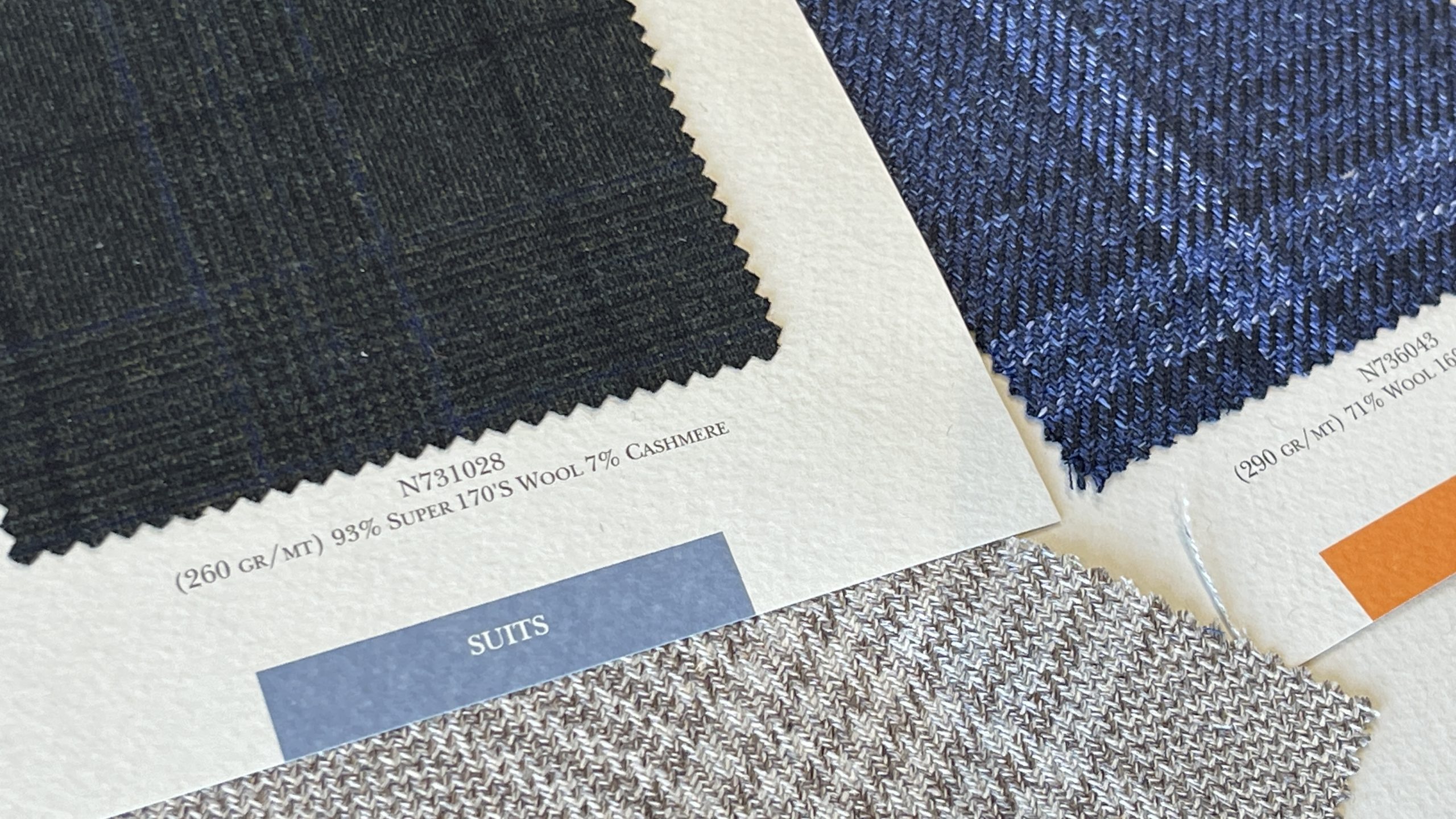
In general, if you’re looking for a four seasons fabric, choose a fabric between 230 and 280 grams per square meter (most people just say grams, even though it’s technically incorrect).
Fabrics can have pretty big ranges in weight and picking the right fabric is important because it can make the fabric work for you in the environment.
For example, some guys tend to run hot. Their wives are always complaining that the temperature is too cold in the house.
These guys typically want to shoot for fabrics around the 230 gram range for all year round.
Anything below 230 grams gets into Spring/Summer territory. Wool fabrics can get as low as 180 grams, so if you’re in a tropical environment, wool is not out of the question.
Above 280 grams and you’re in Fall/Winter. Harris Tweed, for example, is 480 grams. Typically, something this heavy would only be reserved for overcoats, but some people love to have a heavy fabric to wear for a suit.
The Weave Explained
The last characteristic of wool is its weave. Not to be confused with the fabric pattern, the weave can greatly affect the look of the fabric, as well as its performance.
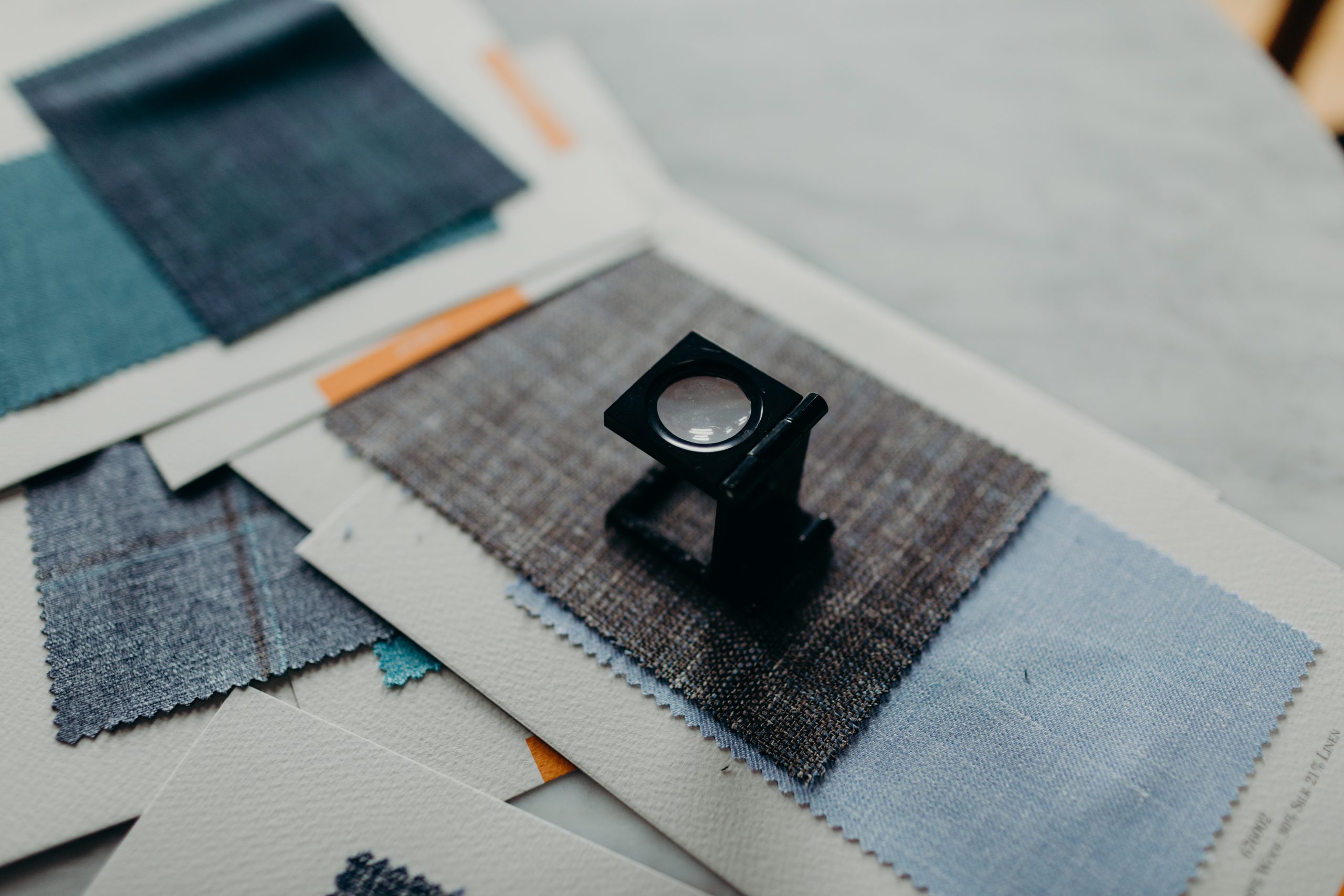
One of the most common
The weavers
THe must know fabric mills
While there are an infinite number of mills to know, especially depending on what fabric you’re looking for, when it comes to fine suiting, there are a handful that stand out above the rest.
This list, while certainly not complete, is a great representation of the most famous mills in the world of suiting.
Loro Piana
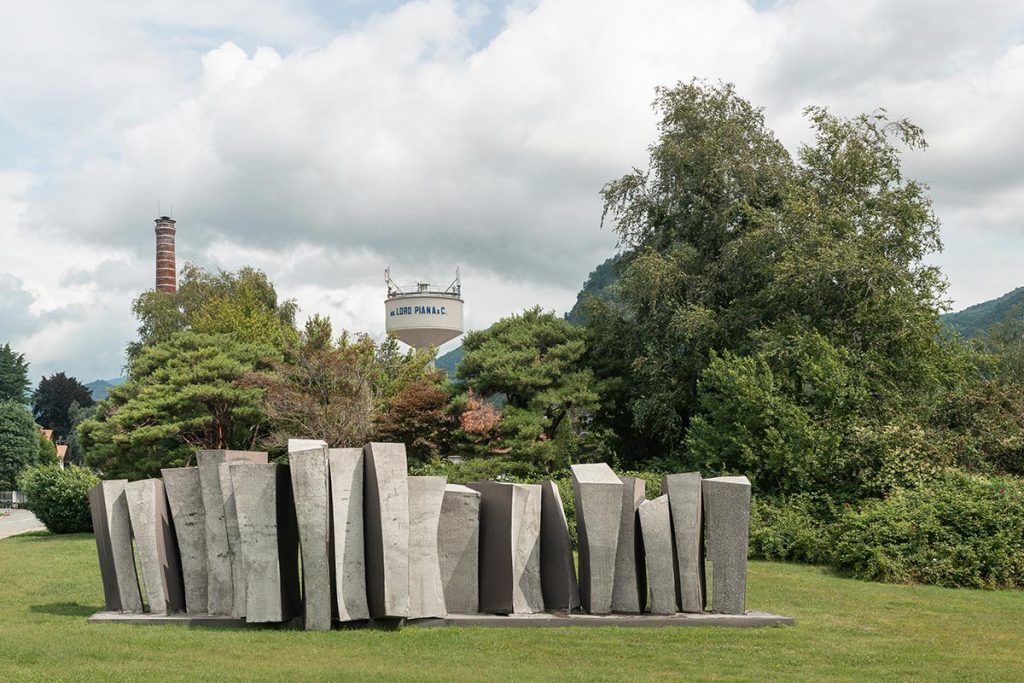
Loro Piana is the most luxurious fabric mill in the world. If you ever see their green badge inside of a jacket, you know that the materials are of the highest quality.
They’re one of those companies that would rather make less money in a year than put out a sub-par product.
Known for their cashmere and vicuna, Loro Piana has also cornered the market on high-super number wool fabrics.
Each year, LP holds a Record Bale event in search of the finest wool in the world.
Vitale Barberis Canonico
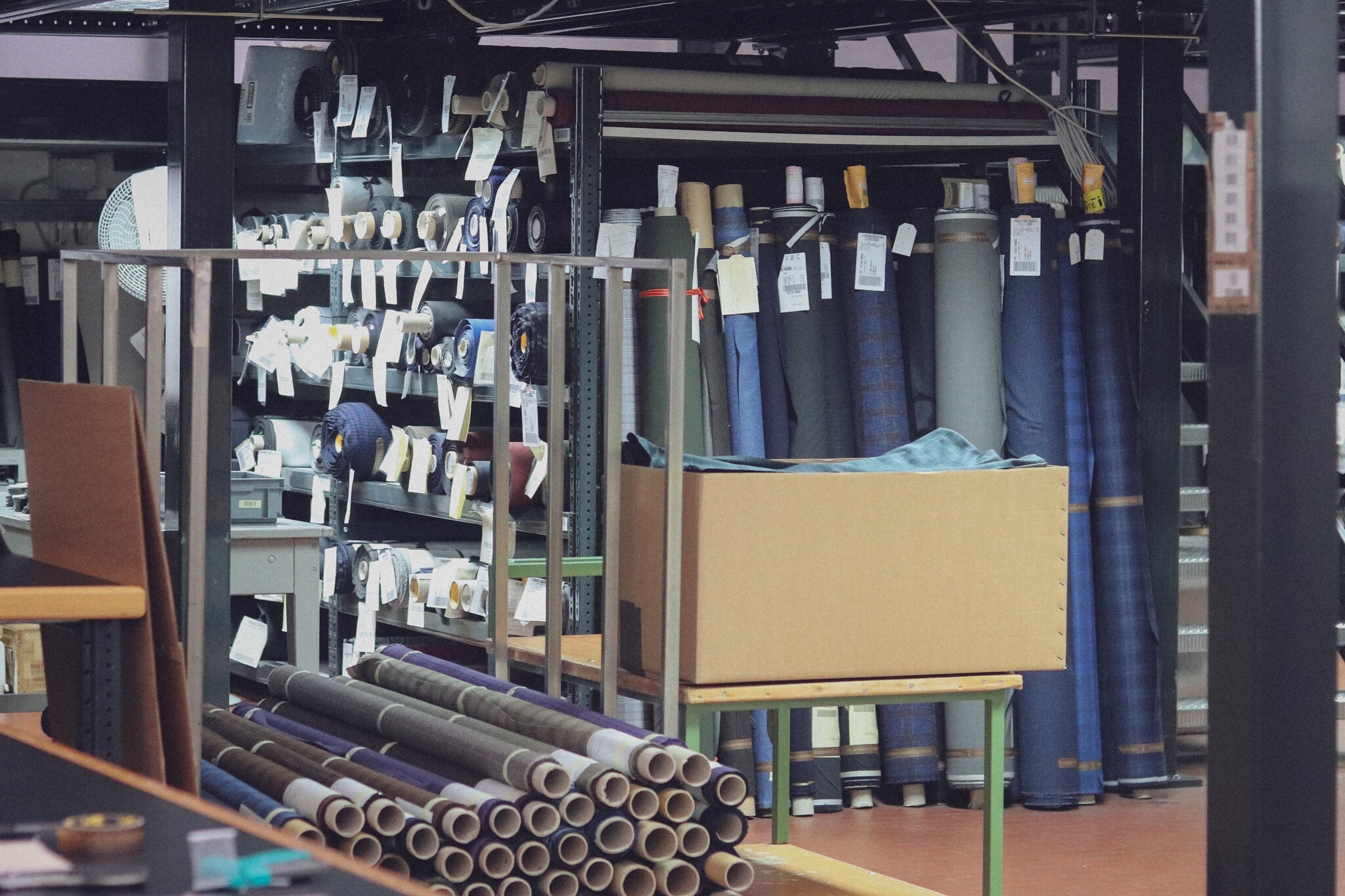
Vitale Barberis Canonico, otherwise known as VBC, is the oldest and largest Itlaian mill.
They are suspected of starting sometime in 1663, although more than likely were in business before then because the record is a tax payment.
Now 13 generations later, VBC is still owned by the same family and is the leader not only in production but in technology, employing the most advanced looms and waste reduction methods in the world.
ARISTON
Ariston, based out of Naples, Italy, is more of a design house rather than a mill.
They don’t produce their own fabrics themselves, but they do design some of the most creative fabrics in Italy each year.
Their solid fabrics are typically double-twisted, which allows them to withstand friction, while their diverse range of materials makes their sportcoat design the leader in Italy, in my opinion.
CARNET

Starting as a silk mill in 1945, Carnet is one of the best mills to work with if you’re seeking a diverse range.
They have excellent choices for linen and linen blends, amazing fabrics for tuxedos, not to mention the best sportcoat book if you’re into navys and blues.
What i am quite fond of Carnet for is their Sapeurs collection, which is a blend of wool and elastane (the material used ot create Spandex). While stretch has been formerly a red-headed step child of the bespoke suiting world, these days stretch has been embraced and Carnet has an excellent collection of extremely soft, stretch fabrics for suits.
HARDY MINNIS
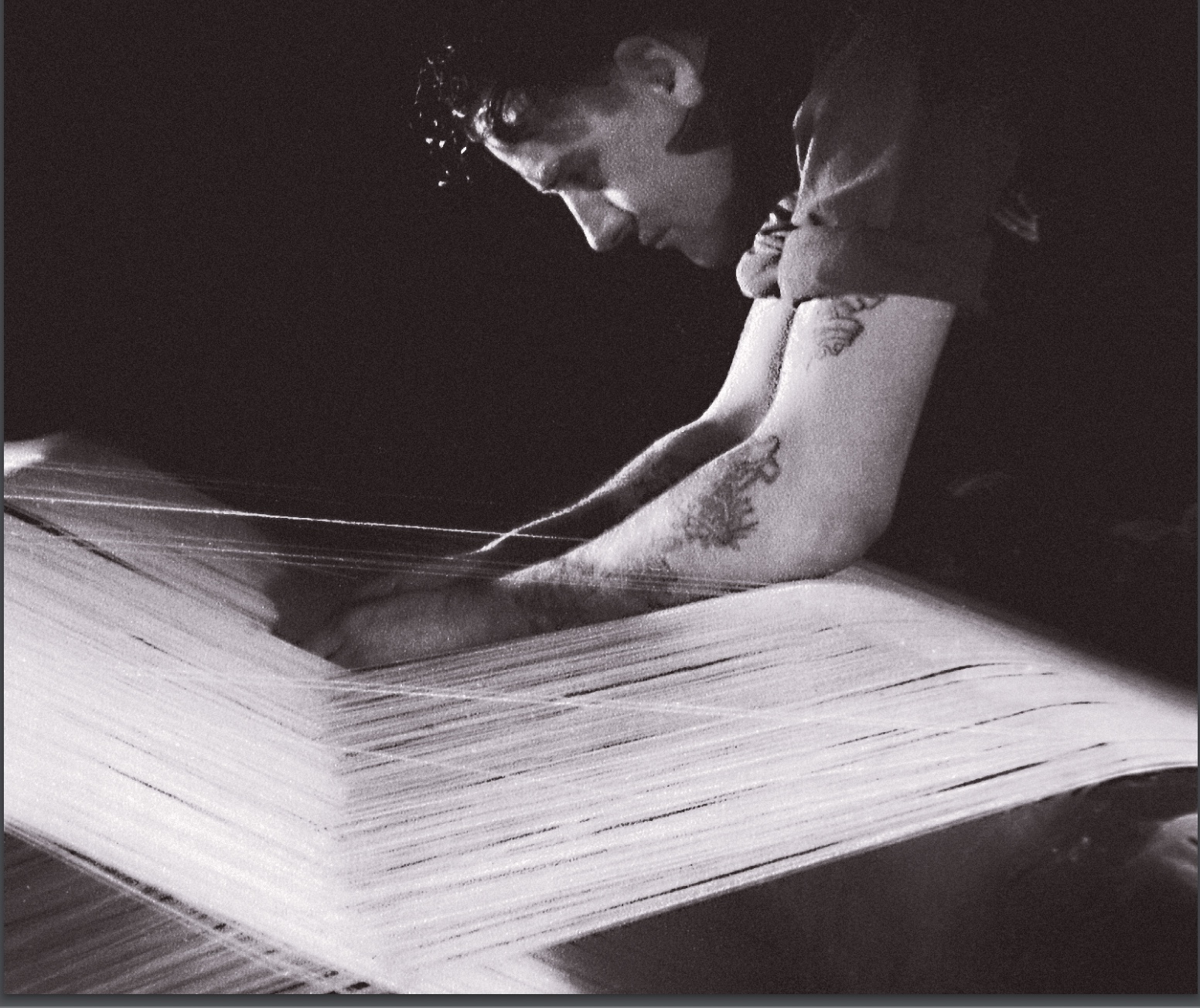
As with most mills in England, Hardy Minnis used to many independent mills until they were consolidated over the last 100 years.
John G Hardy originally won a Royal Warrant from Queen Elizabeth II in 1955, and since the merger with JJ Minnis, Hardy Minnis has been producing a special tweed for one of the Royal estates since.
As you might imagine for a fabric maker making for the royals, tradition is everything.
So you can count on Hardy Minnis for classic fabric patterns, like herringbone and houndstooth, and heavy English fabrics.
My personal favorite from Hardy Minnis is their Fresco fabric, a double-twisted, open weave fabric that they invented in the early 20th Century. If anyone is seeking a bespoke suit that they plan to wear a lot then I always recommend a Fresco.
HOLLAND AND SHERRY
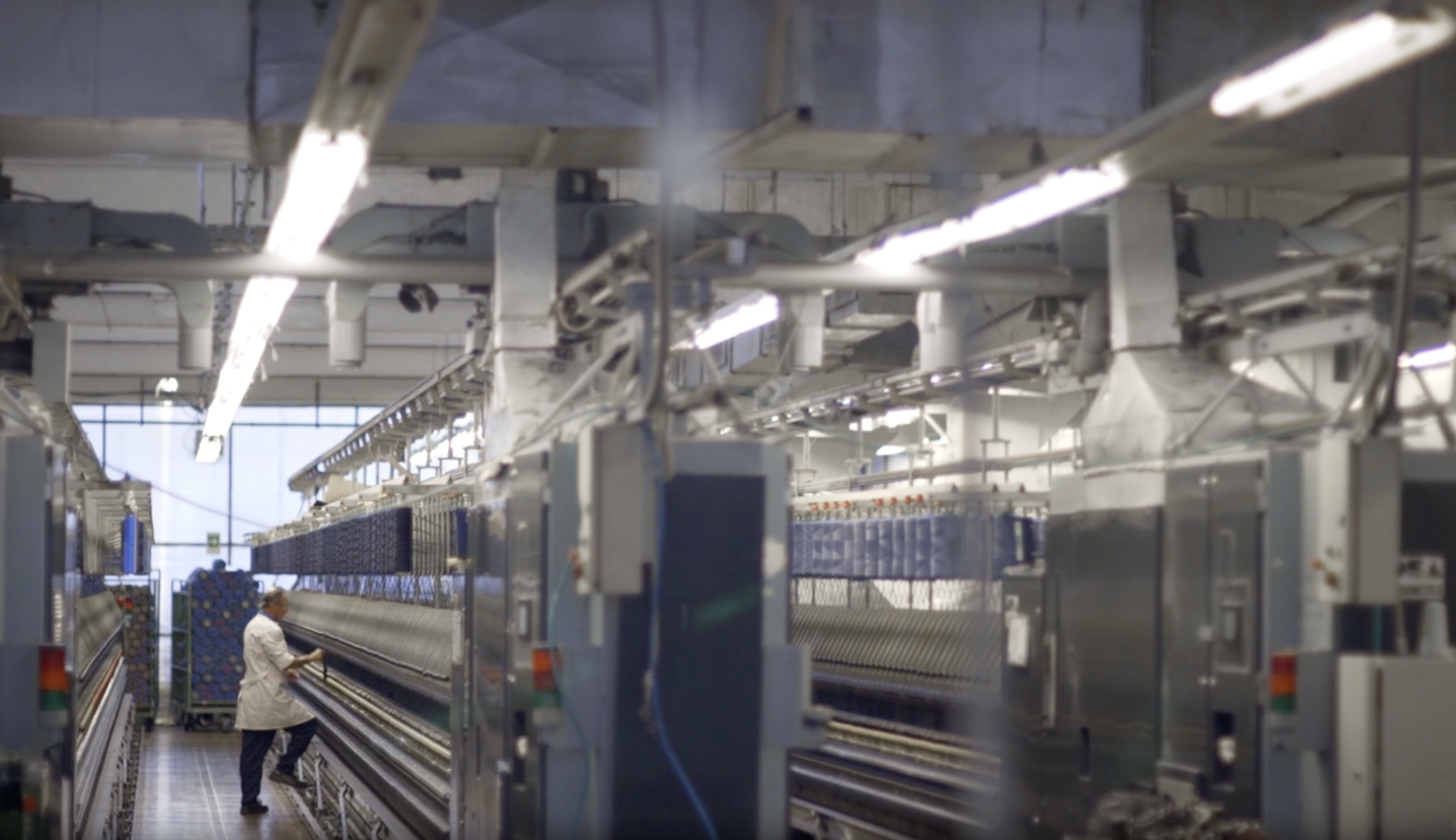
Holland and Sherry first started in 1836 by Stephen Holland and Frederick Sherry in London and is considered one of the most prestigious and historical mills in England.
They specialize in traditional suiting fabrics, nothing too outside of the box, as well as a wonderful collection of solids, with every color imaginable.
As of 2003, Holland & Sherry is owned by Individualized Apparel Group, an American corporation that owns a couple other heritage brands, such as Oxxford Clothes and Hickey Freeman.
Dormeuil
The only French mill on the list, Doremeuil was founded in 1842 as an importing business, bringing English fabrics into France.
Originally importing bed sheets, as the company grew, so did its offerings and soon it began to offer fine English suiting fabric.
That business turned out to be the strongest for the three Dormeuil brothers running the business at the time, and they started to expand the business throughout the century.
Dormeuil always has beautiful classic fabrics, typically with high super numbers, but their creative department is fantastic at creating interesting fabrics that are still subtle and not ostentatious.
Gladson
Gladson is a design company as well as a firm that represents other mills. For example, in America we use Gladson to order VBC and Hardy Minnis fabrics.
However, Gladson also owns mills in Huddersfield, England and it has a very strong design department, capable of producing fine suiting and awesome textured sport coats.
They produce their fabrics both in England as well as in Italy, and one of my favorite lines from them is their Bamboo book Composed of 100% bamboo fabric, they’re super comfortable for sportcoats.
Dugdale
Dugdale is an English mill based out of Huddersfield, England and has been designing and exporting wool since 1896.
It’s currently one of the only independent shop remaining in Huddersfield, and is a favorite for English tailors.
Dugdale is known for its classic English fabrics. They specialize in conservative suiting and tweeds, although they have a growing line of linen as well.
I use Dugdale every now and then for the specific client that wants a traditional English look.
Reda
The historic mill of Reda started in 1865 in the Piedmont region of Italy, where almost all Italian fabrics are produced.
Started by Carlo Reda, he later went in to business with the Botto Poala brothers, who later bought the mill in the 20th Century and started to expand the business.
Today, Reda is still run by the Botto Poala family and is one of the largest producers of wool in the country.
They can produce almost any fabric for suiting, but I am very fond of Reda for their performance fabrics, which have stretch to them.
Zegna
In 1910, Ermenegildo Zegna opened up his first mill in Triverio, a small village in the Piedmont region of Italy.
Learning the craft of weaving from his father, who wove as a hobbyist, Ermenegildo started with a small weaving operation, sourcing local wool.
As the years progressed, he began traveling to different parts of the world to source better material until Zegna became known as a leader in producing some of the nicest fabrics in Italy.
Today Zegna has their own ready-to-wear line but also still produces fabrics for small bespoke tailoring houses around the world. They tend to be conservative with their fabric choices, rarely branching outside the typical business wear.
However, everything they do is very elegant and interesting, and it’s always a pleasure to see what they come up with every year..
Beilla and Huddersfield
Nearly all Italian and English fabric come from two areas: Biella in Italy and Huddersfield in England.
Biella is home to Zegna, VBC, Loro Piana, Reda and more and is known for its “sweet water” which is perfectly filtered water trickling down from the Italian alps.
Biella is a bit mountainous but has great pastures that allow perfect spots for grazing sheep, and during the days when most Italian wool came from Italian sheep, the region cemented its reputation for teh craft, with laws on the books in regulating the weaving trade since the 12th Century.
In England, the production of fabric was more decentralized, with families doing weaving in their homes for centuries. it wasn’t until. theIndustrial Revolution did the weaving industry start to centralize around Huddersfield, which is known for its fantastic water as well.
In 1766, the town built Cloth Hall which hosted a regular market for up to 2000 weavers, and greatly influenced the layout of the city.
Today, Huddersfield is home to Hardy Minnis, Dugdale, Gladson and more.
Chapter 5:
How a Suit Should Fit
I find typically there are a lot of misconceptions as to how a suit shoudl fit.
For example, the length of the trouser.
Sometimes, I see men sit down and then give me feedback for how long the trouser should be.
This is a mistake.
The length of the trouser should be gauged while standing straight up.
In order not to succumb to these common pitfalls, this chapter is will give you a rundown of the basic things. tolook for witha. suit.
By the end, you’ll have a great understanding of whether the suits in your closet fit you well, or if it’s time to make some changes.
The Jacket
How a Jacket Should Fit
There. arethree main metrics to look at when evaluating wool: the super num
ber, the weight and the weave.
Shoulder Width
Problems to Look For:
- Tight Shoulders: If the shoulder width of the jacket feels too narrow, you may notice horizontal creases under the collar and at the rear of the upper sleeves. The sleeves may not hang naturally, and you might feel restricted in your arm movement.
- Drooping Shoulders: When the shoulder width is too wide, the sleeve heads of the jacket may exceed the natural shoulder line, causing the shoulders to droop and sag.
Correct Fit:
- The shoulder of the jacket should naturally follow the line of your shoulders without any visible creases. The sleeves should flow in a straight line from the shoulder, and there should be no excess fabric at the back of the jacket. It’s essential to ensure the right shoulder width to achieve a comfortable and well-fitted look.
Collar Gap
What is the collar gap?
The collar gap refers to the space or visible separation between the jacket collar and the shirt collar on the left and right side of the neck. Ideally, the collar of the jacket should sit comfortably on the shirt collar without any noticeable gap between them.
Correct Fit:
In a well-fitted jacket, there should be no visible collar gap, and the jacket collar should rest seamlessly on the shirt collar.
Problems to Look For:
- Collar is too large: If you notice the jacket collar sitting away from the shirt collar at the sides and there is a visible gap between the two, it indicates that the collar is too large. This problem is generally seen when a customer has a slim neck.
- Collar is too small: When the jacket collar sits away from the shirt collar at the sides and there is a gap between the two, it may suggest that the collar is too small for you. This issue is often caused by the customer’s neck leaning comparably forward.
Collar Roll
What is the Collar Height (on Jacket)?
When you hear about the collar height on a jacket, we are talking about the measurement from the jacket’s neckline to the top of the collar. Collar height is an essential aspect of your jacket’s design, contributing to its style, comfort, and overall appearance.
Problems to Look For:
- Collar Height is Too Low: If the collar height is too low, you may find that it does not provide adequate coverage to your neck area, leaving it exposed. This can lead to discomfort, especially in colder weather, and may affect the jacket’s overall balance and proportions.
- Collar Height is Too High: When the collar height is too high, you might feel that it is restrictive and uncomfortable around your neck. This may result in the jacket not sitting properly on your shoulders, affecting the overall fit and appearance.
Correct Fit:
- The area behind the collar lays very smooth.
- The collar, sits comfortably on the shirt collar.
- The shirt collar sits approximately 1.5cm higher than the jacket collar
Waist
Waist
Problems to Look For:
- Tight Waist: When the waist area feels too small, you may experience pulling and creasing around the front buttons. Horizontal creases may also appear at the sides and back of the waist. If the jacket has a vent, it might flare open due to tightness.
- Loose Waist: If the waist area appears too loose even after fastening the first button of the jacket, there may be excess fabric at the waist when viewed from behind.
Correct Fit:
- When the buttons of the jacket are fastened, the waist area should naturally follow the line of your body from the front to the back. There should be no excessive creasing or pulling. Achieving the right fit around the waist is crucial for a well-tailored look and comfortable wear.
Chest
roblems to Look For:
- Chest Too Small: When the jacket front button is fastened, you might notice horizontal creases at the underarm section, and the lapels might not sit smoothly against your chest. Additionally, the jacket might feel too tight when you raise your arms, restricting your movements.
- Chest Too Big: If, after fastening the buttons of the jacket, you find excess fabric at the front chest and underarm section, it indicates that the chest size of the jacket is too large for you. This can result in a loose and ill-fitting appearance.
Correct Fit:
- After the jacket is fastened, the chest section should gracefully follow the line of your body from the front to the back. There should be no excess fabric at the chest, and the line should flow naturally and flat. The jacket should feel comfortable and well-fitted around your chest, allowing for ease of movement without any pulling or creasing.
The waistcoat
How a Waistcoat Should Fit
There. arethree main metrics to look at when evaluating wool: the super num
ber, the weight and the weave.
Length
Problems to Look For:
- Length Too Short:
- If the waistcoat length is too short, the bottom of the waistcoat may sit above the waistband, and the shirt could be exposed.
- This issue is commonly observed in taller individuals or those with a long upper torso.
- Length Too Long:
- When the waistcoat length is too long, the shortest part of the waistcoat is more than 1cm lower than the waistband of the trousers.
- Excessive length can create an unflattering look.
Correct Fit:
- The shortest part of the waistcoat should extend about 1cm over the waistband of the trousers.
- The proper waistcoat length harmonizes the proportions and enhances the overall tailored appearance.
Waist
Problems to Look For:
- Waist Too Tight:
- If the waist area of the waistcoat is too tight, you may notice horizontal creases at the side seam of the waist.
- The waist size is likely too small for you, causing discomfort and restricting movement.
- Waist Too Loose:
- When the waist area of the waistcoat is too loose, there might be extra fabric gathering at the waist when the first button is fastened.
- The waist size is probably too large for your body frame, resulting in an unflattering and baggy appearance.
Correct Fit:
- After fastening the buttons, the waist area of the waistcoat should naturally follow the line of your body.
- Achieving the correct waist fit ensures a comfortable and refined look, enhancing the overall tailored appearance of the waistcoat.
The Trouser
How a Trouser Should Fit
There. arethree main metrics to look at when evaluating wool: the super num
ber, the weight and the weave.
The Rise
What is the Rise?
The rise of the trousers refers to the vertical measurement from the crotch seam to the top of the waistband. It plays a crucial role in determining the comfort and fit of the trousers.
Problems to Look For:
- Rise is too low: When the rise is too shallow at the front and back, you may find it uncomfortable to raise the waist to your desired position. This can cause the trousers to sit too low on your hips and may lead to a feeling of tightness when moving.
- Rise is too high: On the other hand, if the rise is too high, you might notice horizontal creases at the front of the trousers when you raise the waist to your preferred position. This fitting issue is often observed in customers with a “pot belly” or those who prefer the waistband to sit higher.
Correct Fit:
To achieve the proper fit, the rise should be adjusted so that the waistband sits comfortably at your preferred level. There should be no excess horizontal fabric at the front and back rise, allowing the trousers to fall naturally and comfortably.
Length
Problems to Look For:
- Length is Too Long: When you stand upright naturally, both the front and back lengths of the trousers are too excessive. The trousers may bunch up at the shoe’s surface, affecting the overall appearance.
- Length is Too Short: On the other hand, if the trouser foot falls too high above the shoe heels when you stand upright, the trousers may appear too short, creating an unflattering look.
Correct Fit:
- There is no “wrong” trouser length, per se. It just has to look intentional.
- At the moment, younger men tend to like shooter breaks, although a few of my clients prefer puddling,.
- Most older men prefer a quarter to a half break, where not a lot of sock is showing, but not a full break, which shows they’re behind the times.
Chapter 6:
Designing a Bespoke Suit
I find typically there are a lot of misconceptions as to how a suit shoudl fit.
For example, the length of the trouser.
Sometimes, I see men sit down and then give me feedback for how long the trouser should be.
This is a mistake.
The length of the trouser should be gauged while standing straight up.
In order not to succumb to these common pitfalls, this chapter is will give you a rundown of the basic things. tolook for witha. suit.
By the end, you’ll have a great understanding of whether the suits in your closet fit you well, or if it’s time to make some changes.
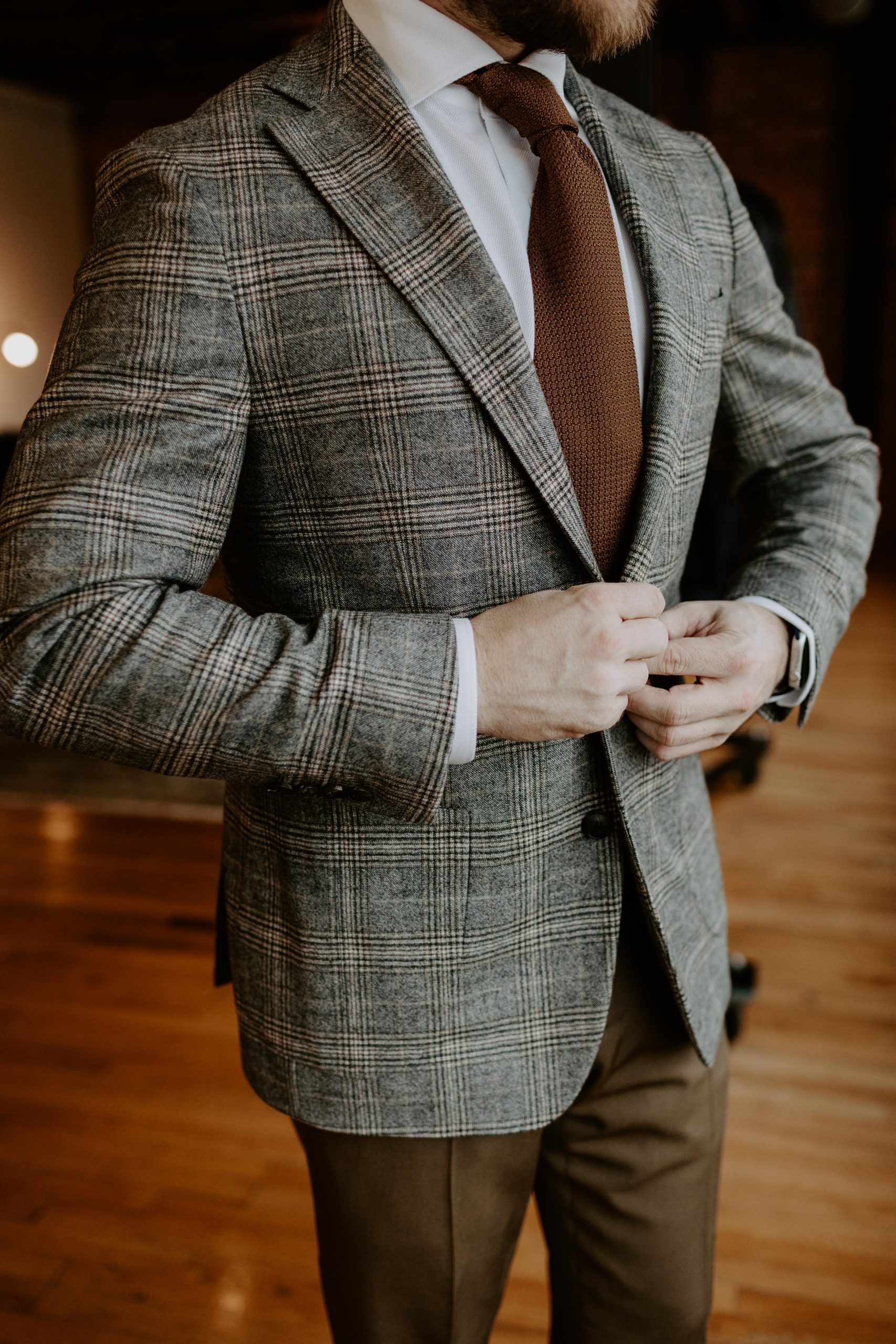
The jacket
designing the jacket
There’s beauty in the process of drafting a pattern and seeing it complete.
What makes it more fascinating is that it’s a ritual, derived from a single place, that has been passed down for generations, from one responsible steward to the next.
Nearly all bespoke pattern makers can trace the lineage of their knowledge to Savile Row, and although there are many techniques that have been created over the centuries, the underlying systems are all the same.
The Closure
Whether a coat has one button, two buttons, three buttons, three-roll-two, or is a double breasted is known as the coat’s closure.
Closure styles are pretty slow to change, so a basic suit or sport coat should be a two button. This has been the style for a few decades and it doesn’t look to be changing.
The other types of closures are:
One-Button
One-button is typically done only for tuxedos. Since the second button of a two-button is never done, the tuxedo decides that the second button is irrelevant, so it’s not included.
However, when people start to play games with their outfits, usually with the help of a custom tailor, you may see a suit or sport coat with a one-button closure.
Three-Roll-Two
The three-roll-two is a concept pioneered by prep-school boys in the early 20th Century and started to catch on as a fashion statement.
The origin of the story is that prep school boys had uniform jackets that had three buttons, but being rebellious, they started pressing their jacket lapels to roll to the second button, instead of the first.
This look started to become popular and by the 1930s, was a regular feature on suits.
The style has waxed and waned until then, but is most commonly associated with Ivy League Prep culture for sport coats (not gold-buttoned blazers).
Three-Button
The three-button was briefly popular in moments during the 70s, 80s, and 90s, but so far this century has not seen a rise at all.
This is because the three-button tends to emphasize a bulkier torso compared to the two button. Most everyone would prefer to look slimmer these days.
Will it ever come back in fashion? There are some faads that come back every now and then, so unless you want to take some fashion risks, I would avoid using the three button closure.
Double-Breasted
Similar to the three button, the double-breasted closes higher on the torso, closer to the sternum, than the one-button and two-button closures. For this purpose, it makes the torso look a bit more boxy.
However, it’s becoming a trend lately to wear a double-breasted coat as a sport coat with a bold pattern.
I personally love the double breasted as a sport coat, but choose a solid navy as my go-to, along with patch pockets to make it a very interesting looking coat. (Normally, peak lapels and patch pockets are not paired together).
Worn unbuttoned, the double breasted can feel like a big cape, which is great for fall/winter and horrible in the summer.
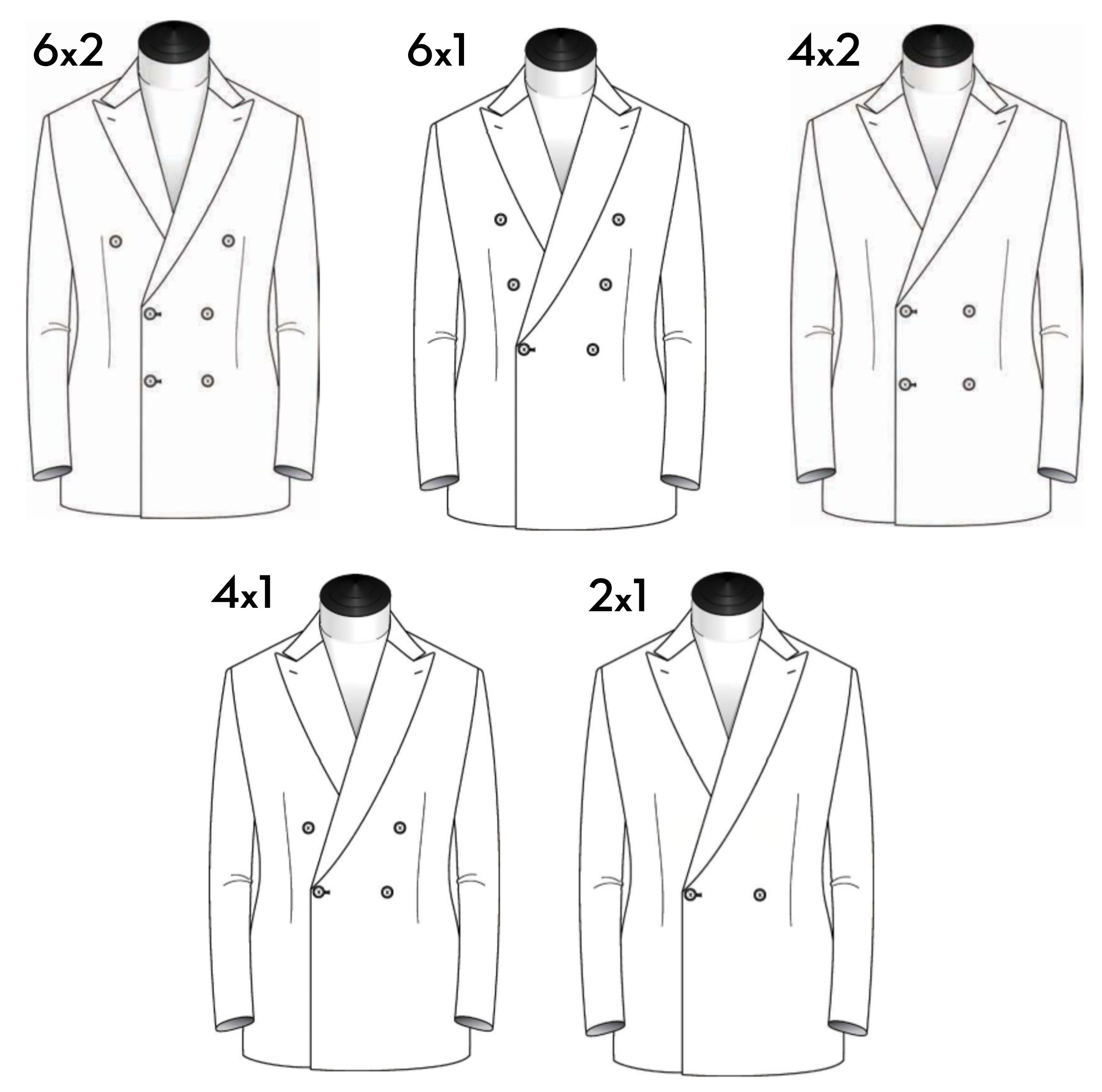
Types of Double-Breasted Closures
Most people never take note, probably because they don’t see double-breasted coats that often, but there are a few distinct styles of double breasted coats and it’s helpful to know what they look l
Types of Lapels
There are three main styles for the lapel: peak, notch and shawl.
The peak lapel is a “I’m the Man” type of detail.
Very appropriate for weddings, for CEOs, for and other important events where you may be the center of attention.
However most men opt for notch lapel suits because they are understated.
If you’re looking for a choice for one of your first suits, the notch lapel is the way to go.
Shawl is typically reserved exclusively for tuxedos, although every now and then you’ll see a suit with a shawl.
Each of these lapels can have a narrow, medium or wide width and there are variations in between.
A typically lapel width can range from 6 centimeters to 12 centimeters (2 ⅜ to 4 ¾ inches), but you should aim for a lapel with a classic width of around 9 centimeters.
How to Measure the Width of a Lapel
There is only one proper way to measure the width of the lapel and that is along the gorge line. Put your tape measure at the edge of the roll of the lapel and measure along the seam that connects the collar to the lapel until you reach the edge of the lapel. See picture for reference.
Types of Pockets
There are four main pocket designs for jackets:
- Flap
- Jetted
- Patch
- Patch w/ Flap
Flap Pockets
Flap straight pockets are most common on suits and recommended for basic suits and sport coats (or patch pockets for the sport coat). There aren’t many variations to the flap straight pocket, just make sure your pockets have a double besom.
A besom is the little strip of fabric above the flap and on the top edge of the pocket. When the flap is tucked in, it should look exactly like a jetted pocket.
Typical widths of the flap of a pocket can range from 5 to 7 centimeters (2 to 2 ⅞ inches). Industry standard is around 2 ¼ inches.
Jetted Pockets
A jetted pocket is exactly like a flap pocket, only without the flap. These are most commonly seen on tuxedos.
The point of a flap on a pocket is to protect its contents from getting wet in the rain or snow. Since tuxedos are not designed to be worn outside, there is no need for a flap.
Patch Pockets
Patch pockets are the most comfortable pocket, in my opinion, because it’s easy to put your hands in and grab your things.
Sewn on the outside of the coat as opposed to a pocket in between the lining and the exterior fabric, patch pockets can come in different shapes, but most commonly you’ll find the shape of a wine glass or the shape of a U.
Patch with Flap
Patch with a flap is usually found on safari pockets, where on the outside of the patch pocket, you’ll find a bleat that allows you to fit more into the contents of your pockets.
A hunting coat is also an example of an appropriate time to use a patch with a flap.
But unless it’s for a specific reason, patch with flap should be avoided because it’s a casual look that’s not as functional as the regular patch.
Slanted Pockets
Flap and jetted pockets can be pitched on an angle called slashed pockets or slanted pockets.
There used to be a suggestion in menswear that shorter men should wear slashed pockets to not have horizontal lines. That by using angled pockets, this will draw the eye up and down, thus de-emphasizing any vertical limitations.
I think that’s silly advice.
Slanted pockets are pretty unusual, so if you put them on one of your basic suits, it will draw more attention to your pockets than if you had straight pockets.
In my opinion, slanted pockets should only be done for fun suits and sportcoats, after you’ve already gathered a few basic pieces.
This can easily be done by the pattern maker but in other types of makes, it can be very difficult.
There’s a lot more to designing a jacket. To go into full detail, check out this article:
The waistcoat
designing the Waistcoat
There’s beauty in the process of drafting a pattern and seeing it complete.
What makes it more fascinating is that it’s a ritual, derived from a single place, that has been passed down for generations, from one responsible steward to the next.
Nearly all bespoke pattern makers can trace the lineage of their knowledge to Savile Row, and although there are many techniques that have been created over the centuries, the underlying systems are all the same.
Closures & Bottoms
When it comes to waistcoat closures and bottoms, a world of choices awaits, allowing you to tailor your look to perfection. For single-breasted waistcoats, you have a plethora of options:
Single Breasted Closures
4-Button Closure: The four button will have the lowest closing point, showing the most shirt, out of any other closures, with the exception of the U-lapel. The 4 button is pretty rare to see, and was popular in the early 20th Century, but has not made a comeback since.
5-Button Closure: The five-button is the standard fare. It finishes just below the sternum creating a nice balance between the shirt and the suiting fabric. If worn with a buttoned jacket, only the top button will show.
5+1 Button Closure: The 5+1 button closure combines the charm of a 5-button waistcoat with an additional button at the bottom that cannot be buttoned.
The last button and buttonhole mirror the angle of the points at the bottom of the waistcoat.
This is a stylistic wink to Edward VII when he started wearing his bottom button open.
6-Button Closure: The 6-button waistcoat offers a timeless look, complementing single-breasted jackets seamlessly.
Buttoning up to the sternum, it’s very reminiscent of 1920s and 1930s style suits – think Boardwalk Empire.
If you’re more of an old soul, I always recommend the 6 button.
Double-Breasted Closures
In the realm of double-breasted waistcoats, while there are a lot of designs out there, there are three that you typically see with classical suiting:
8×4 Button Closure: The 8×4 button closure makes a statement with its double-breasted design, perfect for formal affairs.
6×3 Button Closure: The 6×3 button closure hangs a little lower and showers more shirt than the 8×4, and is slightly less formal, but still a formal waistcoat.
4×2 Button Closure: If you seek a more casual yet sophisticated look, the 4×2 button closure is on for you. It’s becoming more popular these days.
Vest Lapel Styles
The lapel style you choose can elevate your waistcoat to new heights of refinement, or it can keep it somewhat casual. Consider the following options:
Without a Lapel: A lapel-less waistcoat presents a clean and modern look, ideal for those who seek minimalism. It’s most common these days, although lapels are starting to trend lately.
With Lapel: Waistcoats with lapels showcase a timeless elegance that pairs beautifully with your jacket’s lapel (they should match). It’s a very classic look that creates a lot of presence.
If you plan to wear just the waistcoat most often, I recommend adding a lapel to your waistcoat.
.U-Shaped Lapel: Exuding a sense of grandeur, the U-shaped lapel style grants a touch of regality and complements double-breasted jackets seamlessly.
The U-shaped lapel used to only appear with white tie and black tie events, but in the last ten years, it’s become more popular to see with a regular suit pairing.
I still prefer the U-shaped with tuxedos, however.
Shawl Lapel: Embracing a sense of sophistication and relaxation, the shawl lapel is elegant yet casual. It looks like you’re always wearing a nice scarf.
A shawl lapel waistcoat is perfect with a nice flannel fabric for the winter.
Bottom Styles. of a Vest
The bottom style of your waistcoat adds a subtle yet distinctive touch to your look:
Straight Bottom: The straightforward choice, the straight bottom style exudes a balanced and timeless appeal that effortlessly complements your attire.
Most often found with double breasted waistcoats, if you’re going to do a straight bottom, which I don’t recommend, make sure you have a good belt.
The reason I recommend against a straight bottom is it awkwardly bisects the wearer, as opposed to the pointed bottom, which offers a seamless transition from the legs to the torso.
Pointed Bottom: The pointed bottom is the classic style for waistcoats and I think it’s for good reason.
The points swoop down to point near the creases of the trouser and draw your eye up and down, as opposed to a straight bottom which brings your eyes left and right.
There’s a lot more to designing a waistcoat. To go into full detail, check out this article:
The waistcoat
designing the Trouser
There’s beauty in the process of drafting a pattern and seeing it complete.
What makes it more fascinating is that it’s a ritual, derived from a single place, that has been passed down for generations, from one responsible steward to the next.
Nearly all bespoke pattern makers can trace the lineage of their knowledge to Savile Row, and although there are many techniques that have been created over the centuries, the underlying systems are all the same.
Waistband Styles
With Belt Loops: This classic option provides versatility, allowing you to pair your trousers with a variety of belts for different occasions and looks.
Buckle and Strap: A cleaner and more streamlined choice, the buckle and strap waistband offers a polished appearance and eliminates the need for a belt, making your mornings a tad less hectic.
Plain: For a minimalist and sleek approach, the plain waistband is an excellent option that effortlessly complements a well-tailored look. It’s a timeless choice for those who prefer simplicity.
I recommend this choice only for tuxedos and make sure there are braces buttons included.
Side Pocket Styles
Seam Pockets: The seam pocket style seamlessly blends into the trousers’ design, providing a clean and unobtrusive appearance.
Slanted Pockets: A slightly more casual option, the slanted pockets offer a touch of flair and are a popular choice for trousers with a modern twist.
Jetted Pockets: My personal recommendation for side pockets! Jetted pockets elegantly conform to the side of your hip, maintaining a sophisticated and refined silhouette.
Back Pocket Styles
Jetted Pockets: Continuing the theme of elegance, jetted pockets for the back create a sleek and tailored look.
And if you’re anything like me, if you choose to have a button on the back of your trouser, the button will end up scratching the leather of your car seat.
I’ve damaged leather and also snapped buttons in half with my careless sitting, so that’s why I always recommend no buttons on the back pockets.
Welted with a Button: This is a very classic “Dockers Khaki” look, which can be fun but for reasons highlighted above, I tend to stay away from buttons on the back.
Patch Pockets: A more relaxed choice, the patch pockets bring a casual charm to your trousers. While less common in dressier suits, they work well for a laid-back and stylish look.
Of course there are plenty of other options, including adding patches to your pockets, both welted and patch, but these are the main three that will give you a base understanding.
Front Style: Pleats or Flat Front
Flat Front: A sleek and modern choice, flat front trousers offer a clean and contemporary appearance.
One Pleat or Two Pleats: For those willing to experiment, pleated trousers can add an element of sophistication.
I don’t recommend trying pleats with a basic in your weekly rotation, but consider trying them with a breezy fabric like linen for a cool and stylish option.
Pleat Direction: One overlooked option is the direction of the pleats. Pleats can either face inward or outward and it also determines with you’re cool or not.
The classic Dad Khaki pants have double-outward facing pleats. So don’t do this.
Lately, a single inward facing has been on trend in the menswear community, but not caught on with the mainstream because it’s a bit daring.
I recommend sticking with a flat front for now and then if you’re interested, get pleats on some experimental pieces.
Cuffs
Plain Bottom: A straightforward and classic choice that always looks polished and timeless.
Cuffs: Cuffs can be a fantastic addition, especially for cotton trousers or chinos paired with sneakers. They add a touch of character and charm to your ensemble, but for basic suits, sticking to a plain bottom ensures a sleek and refined finish.
Remember, when it comes to trouser length, it’s all about expressing your personal style and making intentional choices that align with your desired aesthetic. Play around with the options and see what speaks to you.
There’s a lot more to designing a trouser. To go into full detail, check out this article:
Chapter 7:
Colors & Tones
In the realm of luxury suits, there’s more than just fabric and stitches.
There’s the art of combining colors and patterns to create a sartorial masterpiece.
But not everyone feels like they know how to do this.
This chapter is designed to help beginners understand how to pair colors together in a wardrobe.
By the end of the chapter, you’ll be ablet o easily pair ties, shirts and suits, as well as as sportcoats and trousers.
But first, we’re going to talk about the basic suits to start a wardrobe.
Every man needs three suits and they’re probably not what you think.
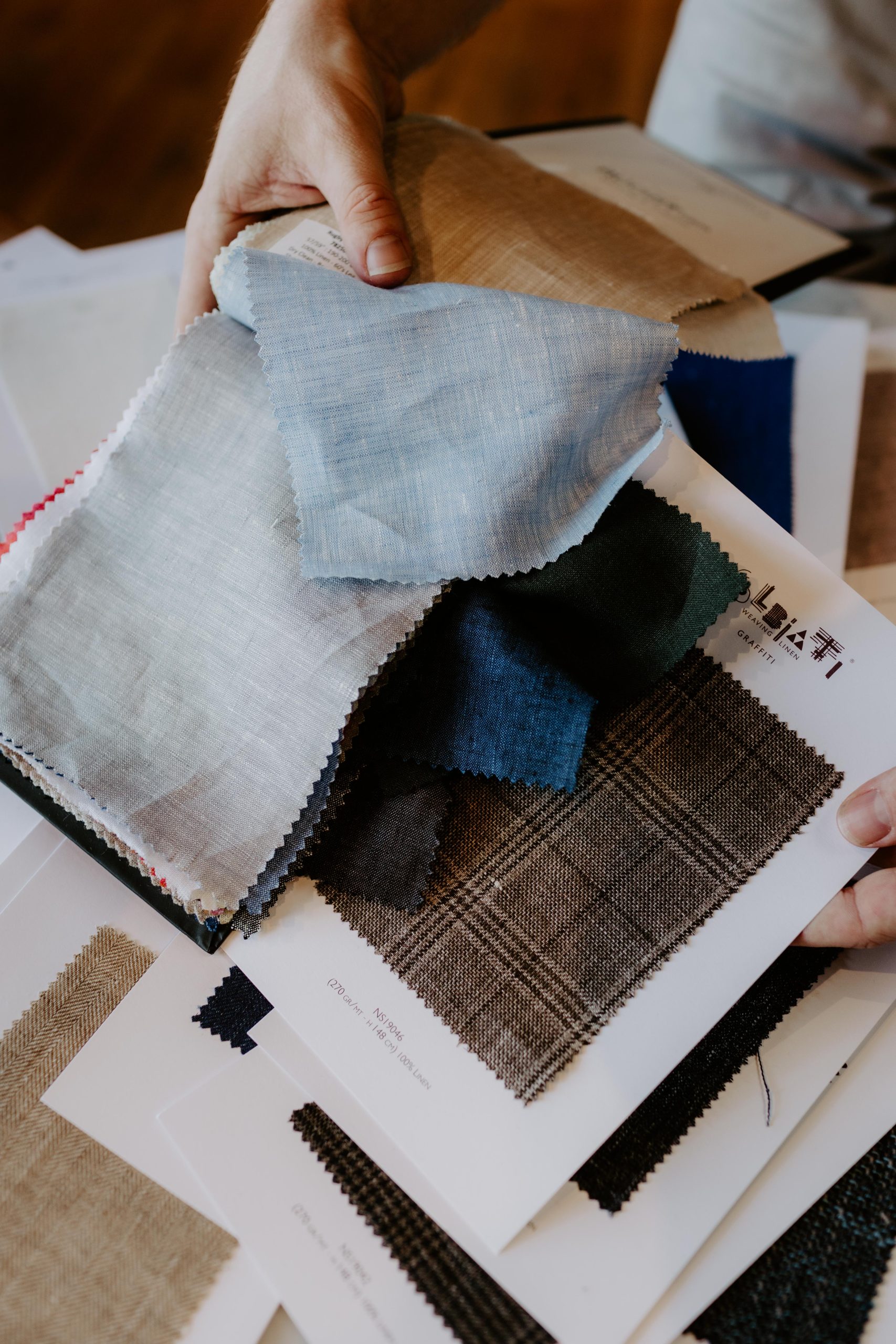
The Basic Collection
Three Suits Every Man Should Own
A well-rounded suit collection is like a symphony of elegance, featuring different notes that harmonize to create a stylish ensemble for any occasion. Here are three foundational suits that no discerning gentleman should be without:
Navy Suit
If you can only have one suit, it should be a navy suit.
Navy allows you to have infinite colors to pair with for shirts, ties and pocket squares, and is the perfect choice for any occasion; business meetings, weddings, and dinners.
Versatile and timeless, I always recommend to start as the cornerstone of your wardrobe.
While there are many shades of navy, opt for something a bit lighter than the typical dark navy.
This way, you’re set apart from the sea of drab.
Charcoal Suit
When it’s time to exude seriousness and professionalism, the charcoal suit steps up to the plate. Its dark and dignified hue speaks respectability and I think it makes it the go-to, for important presentations, important occasions, and funerals.
While most people argue in favor of a black suit in the rotation, I suggest a charcoal because it gives so many more options with pairing colors.
If you have a black suit, you can only do two things: black shirt with black tie (tacky) or white shirt with black tie (timeless).
Pairing black with other colors makes the other color dominate, and doesn’t compliment the wearer.
Instead a charcoal suit allows pairing with light blue shirts, lavender, pink, and many other variations of those.
Tuxedo
For the formal occasions in our lives, the tuxedo takes center stage.
The tuxedo is the epitome of refined elegance, perfect for weddings, formal events, galas, and red carpet affairs.
These types of events we all want to look and feel our best.
That’s why renting a tuxedo will never cut it.
A black or midnight navy, peak lapel tuxedo should be in your rotation for the rest of your life, so you’re never caught shorthanded.
Matching
How to Match Colors
Ever admired those who effortlessly match suit colors, seemingly holding a secret color-coordination power? .
I hear people tell me a lot, “I don’t know how to pair colors very well” as if it’s something you’re born with or not.
To these folks, I always tell them about these two foundational principles that will unlock the mysteries of matching colors.
With these two principles in mind, a little practice can take a complete rookie in matching colors to someone that’s above average.
Here are the two principles:
#1 Go by tonal contrast
imagine someone takes a black and white picture of you.
Can you see the tonal differences between the shirt and the tie and the suit? Or the jacket and the trouser?
This is what’s called tonal contrast and allows us to have a basic principle when pairing articles of clothing.
The more tonal contrast, the better pairing.
While there are cases of tone-on-tone looking great, but for beginners, the first principle is to maximize tonal contrast.
This means for jacket & trouser combinations: light pants, dark jacket or vice versa. And for suit & shirt options, light shirt, dark suit..
For ties, try to match to the tone of the suit; dark ties for dark suits.
#2 Build around earth tones
One comment I get a lot is, “shouldn’t I have a black suit as one of my first suits?”
The answer is no,, because a black suit is extremely hard to build colors around.
Earth tones, such as navy, olive, khaki, gray, and brown, allow infinite expansion into different color schemes, and making these the foundations of your wardrobe will let you pair anything in your closet.
Once you have a foundation of earth tones, you can start adding all sorts of colors in, such as oranges, neons, reds, and yellows.
But you need to have the foundation of earth tones first in order to start playing around with everything else.
Adapt to the elements
Dressing Seasonally
As the seasons shift, so should your wardrobe. There are many men out there who think they have a great wardrobe, but in my opinion, if you don’t dress seasonally, then you’ve only just arrived to the party.
Adapting your suits to different seasons ensures you remain both stylish and comfortable, and is the ultimate sign of a sartorialist.
Here’s how to tailor your choices based on the changing seasons
Summer
When the sun is blazing, opt for suits crafted from lightweight wool or fabrics that have linen in them. These breathable fabrics keep you cool and composed, allowing you to navigate even the hottest days with ease.
Light weight wool means under 230 grams. If you can find a 190 gram wool trouser, you will look extremely professional, but won’t roast in the heat.
If you have more lee-way on your professionalism, opt for linen or linen blend suits. If it’s hot out, the wise man wears linen. Linen wicks moisture from your skin, typically has an open weave, and is extremely comfortable to wear in the summer.
Summertime colors: Stay light. Lighter navy’s, lighter greens, grays. Khakis are perfect for summer if you have the complexion to pull them off.
Fall
This is a good time to wear your all-year round weights. For 100% wool, anything between 230 and 280 grams, is perfect for the season.
The fall is also the perfect time to start introducing warmer suits. Bring out the flannel in on the chilly days.
For colors, transition out of your summer colors by mid September (mid April in Southern Hemisphere), and start introducing your mid-tones and darker suits.
WINTER
- When winter’s chill sets in, it’s time to embrace heavier fabrics like flannel and heavy weight fabrics above 280 grams.
Flannel is the perfect choice and is extremely comfortable to wear.
Italian tweed is also a perfect option for the winter time. The Scottish Harris Tweed is good for coats, but if you plan on going inside, a full suit is way too hot.
If you don’t prefer the texture of flannel and tweed, and would prefer a more traditional looking luxury suit, there are suiting fabrics that weigh above 300 grams that look like they weigh 250.
For colors, wearing light gray in the winter time is considered to be a faux-pas, but if it’s flannel then you get a pass. In general, however, you should stick to dark colors in the winter time.
Spring
Another great time for the all year round fabrics, but it’s also the time to start playing with lighter colors as you’re coming out of the dark winter.
Cotton is the perfect fabric for a spring suit. It’s laid back, but still refined. It’s cool enough if the sun is shining on you, but it will still keep you warm in the shade.
There’s a lot more to dressing seasonally. To go into full detail, check out this article:
Chapter 8:
Dress COdes
When an invitation arrives in the mail that says “cocktail attire,” what does that mean?
Interestingly enough, that term has gotten very popular over the last 40 years.
But was nowhere to be found pre-1980.
So not everyone knows what it means.
In fact, nobody really knows what any dress codes because of of our ever changing world of dress.
Casual reigns supreme over all, so dress codes now have secret coded messaging..
This chapter. to hep you decode the dress code, so you’re always dressed right for the occasion
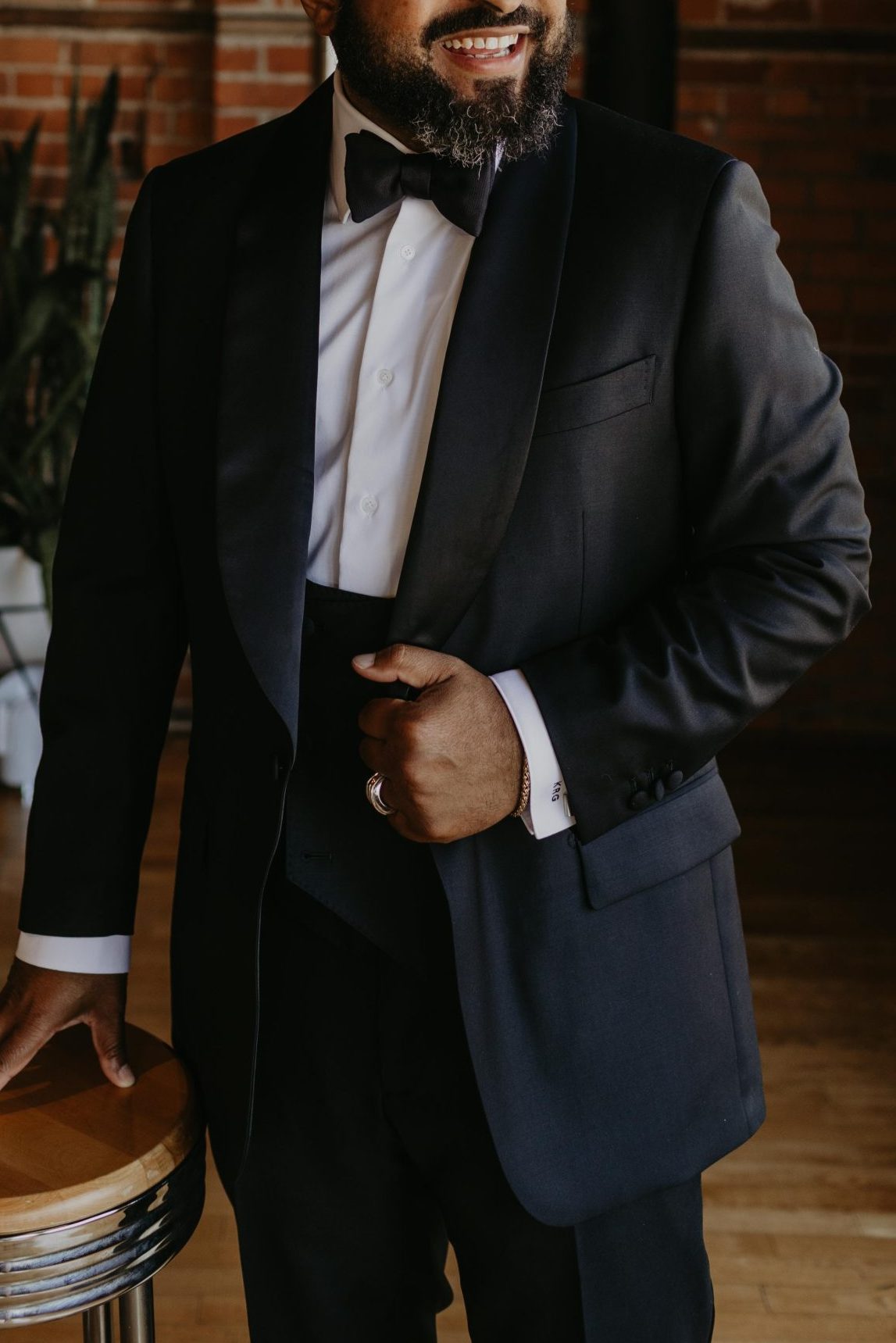
White Tie Event Attire
White Tie events are the most formal dress code you can get. This is the type of outfit you would wear if you were meeting the King of England.
Other examples of White Tie occasions might be state banquets, royal weddings, the Nobel Prize ceremony, and opera galas.
For something to be considered white tie for men, it would need:
- A black dresscoat with cutaway front and sweeping tails (not to be confused with a morning coat)
- A white waistcoat
- A white wing-collared dress shirt
- A white bowtie around the wing collar.
- Black formal trousers with satin stripes.
Accessories complete the look:
- Patent leather shoes.
- Optional white gloves, cufflinks, and a white pocket square.
The White Tie dress code, above all, emphasizes tradition, and I don’t recommend playing any style games with this.
For White Tie events, it’s all about who plays by the rules the best, not who can bend them the best.
It’s a pretty rare occasion that I work with a client requiring a White Tie dress code, but when I do, it’s important to have a classic fit, meaning a high waisted trouser, that isn’t too tapered, and a coat that fits to the waistcoat just right.
Black Tie Event Attire (AKA Formal Attire)
As the clock strikes 6:00 PM, the black tie dress code emerges for men. It’s a blend of sophistication, bridging the gap between formal and elegant, and sets the tone for special social gatherings.
For men, the elements of black tie attire include:
- A black tuxedo jacket with satin or grosgrain lapels
- Black tuxedo trousers featuring a satin stripe down the legs.
- A white dress shirt with a turned-down or wing collar, creating a canvas for accessories.
- A black silk bowtie, a distinctive marker of elegance.
- Dress shoes in black patent leather or glossy material with a rounded shape.
- Optional additions like cufflinks, a pocket square, and a black formal waistcoat or cummerbund complete the ensemble.
However, with black tie events, I encourage my clients to bend the rules. Take a variation on each one of these rules to make a unique tuxedo.
For instance, I suggest wearing black suede or velvet loafers instead of patent leather lace ups, changing out a black bow tie for a black silk grenadine, picking a midnight navy fabric instead of black, or adding a u-lapel waistcoat.
For the formal occasions in our lives, the tuxedo takes center stage.
The tuxedo is the epitome of refined elegance, perfect for weddings, formal events, galas, and red carpet affairs.
These types of events we all want to look and feel our best.
That’s why renting a tuxedo will never cut it.
A black or midnight navy, peak lapel tuxedo should be in your rotation for the rest of your life, so you’re never caught shorthanded.
Black Tie Optional
When an invitation reads “Black Tie Optional” they’re inviting you to wear a tuxedo, but you won’t be out of place if you don’t have one.
These days, there are a lot of people trying to push the boundaries of casual attire into weddings. The brides and grooms I’ve talked with counter this by having Black Tie Optional on their invitations, because it requires all of the guests to step up their game.
I recommend wearing a tuxedo to black tie optional. It’s always best to be over dressed than under dressed. Taking off the tie you wore is much easier than putting on the one you did not bring.
If you don’t have a tuxedo, I recommend a black, charcoal or navy suit, paired with a black tie. And if you have the choice, choose a suit with a peak lapel.
Keeping the suit dark and using a peak lapel will show you have given the effort to appear as formal as you can.
Semi-Formal
When I talk to event planners, they tell me that these days, semi-formal means men should wear a suit or a sport coat, and preferably a tie.
Similar to Black Tie Optional, the term is being used to raise the level of dress, but also to make it clear that a tuxedo would be overdressed.
For Semi-Formal attire, I would say you should wear a dark suit with a dark tie. Maybe a charcoal or a dark navy, but you could also get away with any dark color, such as a dark maroon or a dark green.
Try to stick with a peak lapel for the coat as well. Because the word “formal” is in there, it’s best to try to look as formal as you can without actually wearing a tuxedo.
Cocktail Attire
Cocktail attire means a lighter colored suit with or without a tie, or a sports coat with an odd trouser, again with or without a tie.
Dark suits work just as well, but cocktail attire implies a relaxed, yet joyous occasion, so wearing an all black suit would be a little out of place.
For cocktail attire, now is the time to show off your fun fabrics; windowpane, glen plaid, pinstripe. Anything that’s bold is welcome here.
This type of dress code has gained a lot of popularity over the past 10 years, and is becoming a new standard because of the rise of casual clothing.
I have noticed that people crave to dress up for functions because it’s so rare in every-day life, but also don’t want to appear stuffy. Men in particular don’t want to wear ties as much anymore, so the cocktail attire is the perfect dress code; it gets people a great opportunity to dress up, but it doesn’t require the formality normally associated with a dress code.
Business Professional
Business professional attire means a suit and tie.
Wearing jeans and a dress shirt would be inappropriate for a business professional dress code.
To understand what you should wear for business professional attire, imagine what the President of the United States wears when he meets with the public. He’s always wearing a dark suit and a tie.
Everything is kept to a conservative tone because his dress implies how serious he is taking an issue.
Think about it this way; most people can’t evaluate someone’s grades, work history, experience, and competence level, especially in industries they are unfamiliar with. If you meet someone brand new in a business environment, you don’t know what their backstory is at all.
So, naturally, we rely on clothing to convey these signals.
To send the most professional signal, wearing a suit and tie is the ultimate way to convey professionalism.
For business professional attire, it’s best to keep patterns to a minimum. Stick to solids or very subtle patterns. Pinstripes are great for this environment.
I wouldn’t say a sportcoat and trousers is necessarily out of place, but given the option, a business professional dress code is a great time to bring out the power suit.
Business Casual
Business casual means chill professionalism. It’s a step down from full-on suits, but still conveys competence at what you’re doing.
For business casual attire, the best way to dress is a sportcoat, odd trouser and a collared shirt. This gives you the most professionalism, with the most amount of options to express individual style.
I have seen a lot of men just wear a pair of dress pants and a button up collared shirt, and that’s fine, but it’s always best to have a sportcoat with you in case you need to go anywhere.
Think of a sportcoat as your coat of armor. Whenever you’re going into battle, you need to have your armor.
For business casual shirts, there is some more leeway here; if you’re always wearing your sportcoat, then it’s ok to bring out a t-shirt underneath it.
But if you don’t have a sportcoat on all the time, a button up or button down shirt would work, as well as polo shirts, turtlenecks and mock necks.
Smart Casual
Smart casual strikes the balance between class and comfort. It’s that in-between style that’s not quite formal, yet not too casual.
Smart casual attire is the only one on this list that permits denim and doesn’t require a sportcoat.
Wear a collared shirt, tucked in or untucked, with some dark jeans or some chinos.
For an elevated smart casual look, I suggest chinos without belt loops, with a tucked in textured shirt, along with a chore coat and some tennis shoes.
Ideally, your smart casual attire mostly uses cotton trousers (denim or chinos) and uses coats that have patch pockets to show the casual dress code.
A smart casual dress code doesn’t permit wearing shorts or t-shirts, so make sure you do not wear these items.
Beach Formal
Beach formal combines tropical ease with sophistication.
It’s a laid-back yet refined style for beachfront events, tropical weddings, and outdoor gatherings.
This is another one of those coded languages to make men dress up a bit better; by putting formal at the end, it’s letting men that they are out of place wearing shorts and short sleeve shirts.
What’s ideal for a beach formal event is a linen suit and preferably a nice linen shirt.
If linen isn’t an option a seersucker does really well, in addition to a plain cotton.
What won’t fly at a beach formal wedding is a light-colored wool suit.
Beach formal is an occasion for elegance but the materials you wear have to fit the occasion.
Wearing a tie is completely optional, but if you do wear a tie, you’ll make sure it also has some texture to it. Go for a silk grenadine or another knit tie.
Of course, the only tie you ever need works here as well.
Chapter 9:
Brief History of the Suit
One aspect of my industry that I love is its connection to history.
The fabrics we wear used to be great commodities that built and destroyed nations.
For example, it was the beautiful cotton fabrics that came from India, or lack thereof, that drove the European explorers to find alternate routes to the East.
Fashion drove those explorations that changed the world.
So in this chapter, we’re going to look at a couple of the interesting stories that shaped what we wear today..
But first I want to start off with my first history hot take; the invention of suits is when pants became vogue to wear.
The Basic Collection
The Beginning of Trousers
If you look at men’s clothes in the 1700s and compare them to the 1800s, the biggest difference, outside of styles of coats, are the trousers.
Before the 1800s, men wore breeches, which were silk stockings that went up to the knee.
And although Beau Brummell played a big part influencing the style among the English elite, his credit for introducing trousers is mistaken.
The Sans-Culottes
During the French Revolution, there were three groups: The First Estate (The Church & Clergy), The Second Estate (King, Nobles, and the Noble class) and the Third Estate (Everyone else).
The Third Estate represented the common people, but also contained a bourgeoisie class, filled with merchants and wealthy businessmen who wanted to emulate the Second Estate.
So they would wear breeches, just like the Second Estate did, as well as a number of other accessories (even swords).
Around the early 1790s, the bulk of the gorilla Revolutionary Army in France were composed of working-class people who wore pants out of necessity; it would be difficult to do their jobs in long white silk stockings, so they wore trousers.
During the Revolution, as the Third Estate began to overthrow the first two Estates, the Second Estate would mock the Third Estate by calling them “sans-culottes” or “without-breeches.”
However, as time wore on during the Revolution, the sans-culottes became more powerful and identifying with the Second Estate by wearing breeches could literally be a death sentence.
So the bourgeois class of the Third Estate, who used to try to mimic the dress of the Second Estate, began to mimic the dress of the revolutionaries and began wearing trousers.
This same bourgeoisie class of people also started to escape France as the Revolution became more violent, and with them, they brought their fashion to London.
The bourgeoisie class, who had resources, soon started to influence the styles of the English upper class, and the trend started to appear in London in 1793 and 1794.
Beau Brummell’s Trousers
Although Beau Brummell is credited with popularizing the trouser, he didn’t so much popularize it as innovate it.
Brummell had a German tailor named Meyer who designed a pair of trousers, or pantaloons as they were called.
These trousers opened at the bottom of the leg, and were buttoned closed using loops and buttons.
History of Formal Wear
THe Origin of the Tuxedo
There are many different stories as to the origin of the tuxedo, but the true story starts all the way back in 1865.
Back then, the Royal Family was expected to wear White Tie formal dress for every dinner, whether it was a formal event or even if it was just for family.
So the Prince of Wales, later to become Edward VII, contacted his tailoring company, Henry Poole, to design a coat that could still be worn at dinners, but was a bit more relaxed.
Tailless coats were common for sports and riding horses, and Edward wanted a jacket that was still formal with satin lapels, but was comfortable to sit around in with his friends.
Henry Poole invented the coat that year, called a dinner jacket and Edward soon shared with his friends.
For the next 20 years, Henry Poole made dinner jackets for his clients in London, where it slowly but surely built popularity.
In the records of Henry Poole, the founders of Tuxedo Park, NY are listed as clients in the 1860s, and although we don’t know if they ordered the dinner jackets, we do know their friend James Potter came from England with one.
The group from Tuxedo started wearing it out to one of New York City’s most popular restaurants, Delmonico’s, in the 1880s.
Since it was such a unique look, the jacket became known from the city in New York it came from: Tuxedo.
Alternative Tuxedo History
Before 1979, there was an alternative version of the history of the tuxedo, which is sometimes still reported today.
This involves a Griswold Lorillard (son of Henry Poole customer Pierre Lorillard IV) going to the Autumn Ball in 1886 and causing quite a stir by wearing a “tailless” dress coat.
This was supposedly the invention of the tuxedo, but it wasn’t until the Tuxedo Park Library began a more thorough documentation did the true origin story emerge by one. of the founding members’ families. If you’re interested, here’s the account.
The jacket eVolution
Where jackets come from
The Cutaway Front
If you look back through pictures of fashion, you’ll notice that jackets had a few different iterations before we arrived on the single breasted, notch lapel suit that has become our standard.
One of the pivotal changes happened around the same time trousers became popular: the turn of the 19th Century.
In the 1790s a new style began that started to cut away the front of the jacket.
Before, men wore frock coats, which were long, cape-like coats that fastened around the sternum that went down almost to their knees.
Then the style began to change to cut away the jacket more and more to expose waistcoat and breeches
But around the 1790s, a new jacket emerged that created a hybrid between short coats and long coats, starting in the front.
This is known as the dress coat and is where our idea of the modern suit coat begins.
The earliest coat with a cutaway front I found was from 1790. (https://collections.vam.ac.uk/item/O363063/coat-unknown/?carousel-image=2012FH7963)
This type of coat became extremely popular as the years went on, and in the early 1800s it became a standard part of dress in the British military.
Coupled with the French Revolution’s disdain for aristocratic dress, around 1800 in London, the standard for menswear was a dark jacket with light colored trousers. The iconic painting of Beau Brummell in 1805 is the perfect demonstration of this. [INSERT IMAGE OF BEAU BRUMMELL]
Around 1815, mens dress started to become more elaborate again, and the frock coat was added on top of the dress coat.
The frock coat, this time, had a narrow waist and billowed out at the knees, creating an hourglass appearance. Eventually, in the 1840s, the menswear moved away from the hourglass form into a straight, narrow silhoutte.
The trend of the frock coat dominated the mid 19th Century until the lounge suit, which is the precursor for the modern day suit became popular.
The Lounge Suit
Around the 1840s a new jacket started to develop out of the necessity for a simple design.
During this time, the majority of clothing was custom made for the customer, but ready-to-wear garments started to pick up steam.
The sacque jacket was a simplified frock coat, that was shorter, had less seams, and was easier to make.
The sacque, or as it later became known, sack jacket was still only reserved for informal occasions until it started to pick up steam in the 1860s and more common to see among the dignified public.
By the late 1860s, the sack suit had started to become popular and by the 1880s, matching suit combinations became standard dress for men.
Chapter 9:
Frequently Asked Questions
How much does a bespoke suit cost?
A true bespoke suit should start at $6500. While there are other less expensive options, their patterns are typically not drawn by hand and are usually made in third world countries. $6500 is a starting price point for a true bespoke suit made in Italy, England or USA.
From there, the fabric plays a large part in the pricing.
Higher super number fabrics typically command a higher price point, as well as fabrics from luxury mills like Loro Piana, and Zegna.
How much does a made to measure suit cost?
Made to measure suits typically start around the $2000 price point, for a high quality suit made in Italy, England or USA.
Again, here is where the fabric plays a large role. In general, linen and cotton fabrics are less expensive than 100% wool and cashmere is going to be the most expensive.
How long does it take to make a bespoke suit?
It generally ranges from 6-12 weeks to make a true bespoke suit depending on where you go.
At 1701 Bespoke, it usually takes ~10 weeks for a true bespoke made in the USA.
How long does a bespoke suit last
A bespoke suit is designed to last at least a decade, but it can last longer if properly cared for.
As with anything, the more you wear the suit, the more it’s likely a sitch may pop, or friction wears down the fabric.
The most common cause for retiring a suit, outside of fit, is the friction damage on a fabric, which can’t be fixed.
Men with larger thighs will typically have a hard time with this, and may want to consider buying an extra pair of trousers for their bespoke suit.
How to tell if a suit is bespoke?
The best way to tell if a suit is bespoke is to look at the roll of the lapel (there should be no sharp creases, the roll should be very full) and the chest pocket should have a slight angle called a barchetta.
Another way is to examine the buttonholes; you’re looking for imperfect stitching to prove they’re hand sewn, versus a machine which is too precise.
However these aren’t fool-proof ways of seeing if a suit is bespoke or not. The only sure-fire method is to open the suit up and examine the stitching.
What’s the process of getting a bespoke suit?
There are usually three to four fittings for a bespoke suit.
During the first fitting, I’ll take 30 or so measurements, including height, weight and shoulder slope. These will later be used to create your custom pattern.
After the measurements, for made-to-measure clients, I will typically put them in a block garment to see how everything drapes. But this step is unnecessary for full bespoke clients.
When the measuring and fitting process is finished up, we will sit down and go through fabrics.
There are thousands of fabrics to choose from, soI usually give my clients a little education on fabrics as well as ask them questions to try to understand what’s most important to them.
Then, I’m able to come up with some choices, being careful not to overwhelm. This is why i’ts important to make sure you have a good relationship with your tailor. The better I know a client of mine, the better I can come up with suggestions.
After finalizing the fabrics, the design of the coat, waistcoat and trousers starts. We’ll pick the details such as the closure, lapels and pockets, and agree on what the suit should look like, which concluded the first fitting.
After the first fitting, there is usually around 2-4 weeks of production to come up with a half finished model for the clothes, ready for the second fitting.
During the second fitting, for a true bespoke suit, the garment is not completed and is just “basted” together, meaning it’s easy to remove the stitches and modify.
Here is where I can make changes such as collar height, sleeve pitch, and posture adjustments, and since the stitches aren’t final, the integrity of the jacket isn’t damaged.
The updated changes to the suit usually take another 4 weeks, and then the suit is ready for its third fitting.
In general, the suit should be 95% complete, if not 100%. A fourth fitting is only necessary if there are minor tweaks to be made, such as the length of the trouser, but typically it’s not needed.
The bespoke pattern is updated with the final measurements, so whenever you’re ready for another suit, after a few measurements, we’re able to jump into design right away.
Ready for Your Bespoke Suit?
Fill out the form below and we’ll be in touch!