The zoot suit today is considered a costume by most, and was just a funky outfit people wore in the 1940s. But what most people don’t know is that the zoot suit was actually a form of rebellion. And this rebellion even cost people their lives.
Below is the story of the Zoot Suit Riots and how a form of clothing became to represent counter-culture and anti-patriotism.
The zoot suit has no formal creator because, as with all style, it starts in the streets, then designers take advantage of a trend.
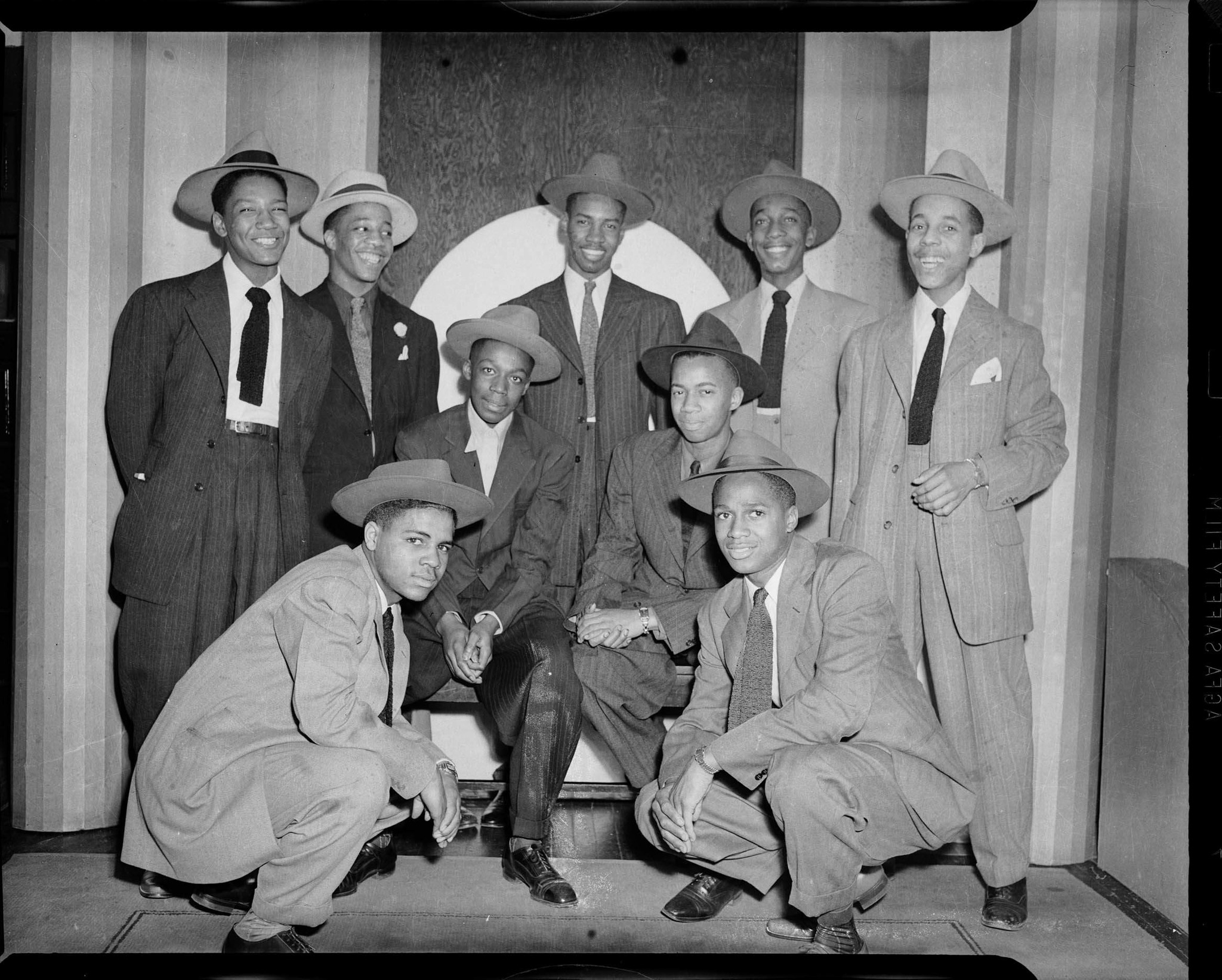
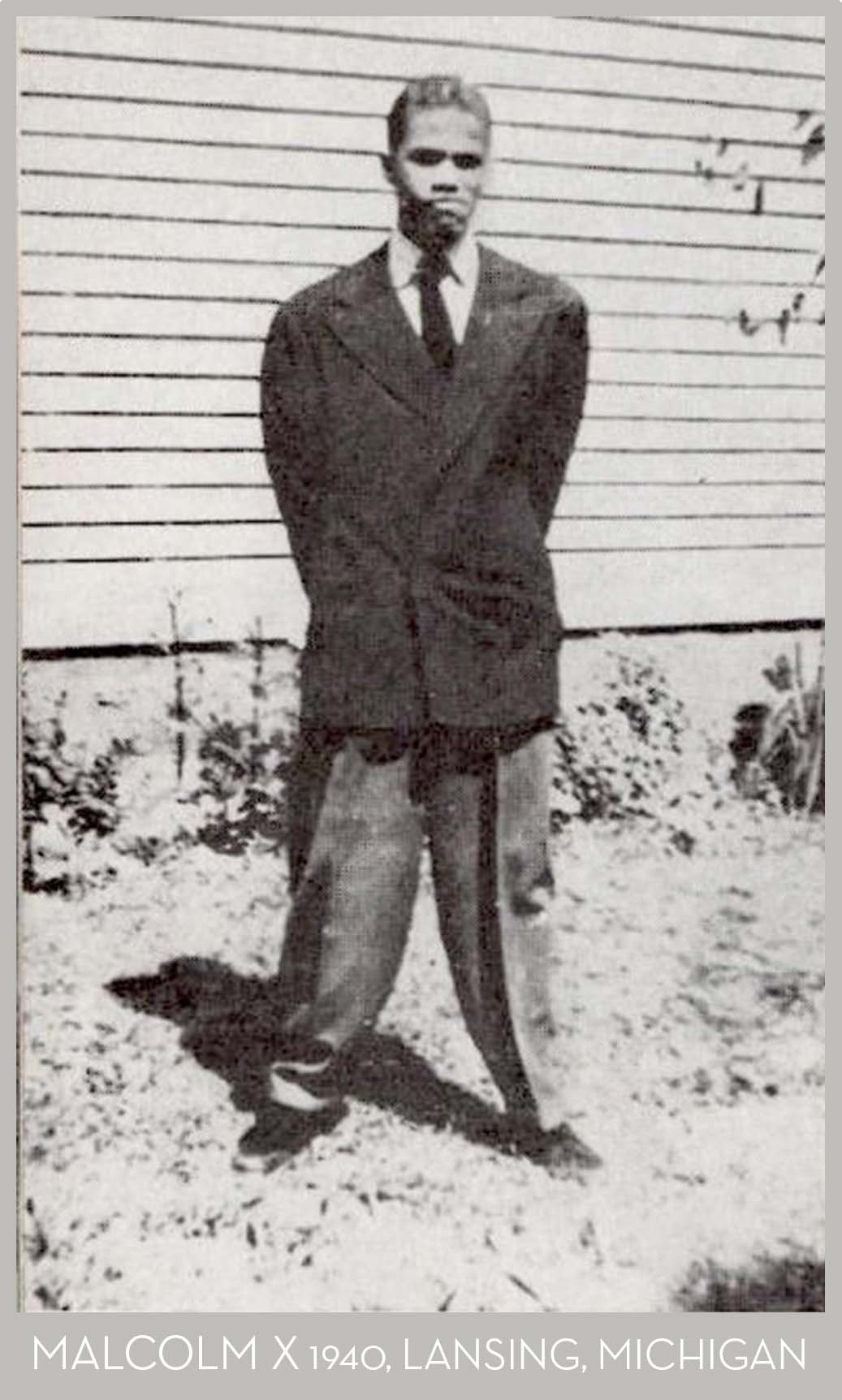
Some time in the mid 1930s, exaggerated shoulders, high-waisted trousers with a tight cuff around the ankle started to emerge as. a new style in Harlem.
Known as the “English drape,” then later known as “drapes,” zoot suits evolved with the help of Black, Hispanic and Phillipino youth started to out-do each other in their suit’s exaggerating features,
This led to local tailors picking up on the trend.
While there isn’t a lot of documentation to support exactly who started it and when, one of the better documented origin stories of the zoot suit comes from Detroit.
Phil Elkus, Toddy’s son, details the story:
Nathan “Toddy” Elkus, a Detroit designer and clothing store owner, created his first zoot suit in 1939, calling it “the Thunderbolt.”
It was back in 1939 when my dad took a regular suit, marked it with a host of chalk marks and sent it off to Blankson Clothes of New York to have a sample garment made.
I was there when the sample suit came back from New York and my dad opened the package. He was furious because Blankson made the sample with regular pockets instead of slash pockets and had a normal button front instead of a fly front.
Long-distance calls in those days were a rarity, but my dad called Irving Blank and told him he insisted upon having the slash pockets and fly front.
Mr. Blank refused to make up the suit with those styling details, remarking, ”A dozen eggs won’t guarantee a sponge cake will rise!”
My dad insisted and finally Mr. Blank told him that he would manufacture the suits, but my dad would have to pay for them up front with the order and the sale final, absolutely no returns!
My dad airmailed a certified check that day for 100 suits, a major cutting in those days.
New York Times, August 4, 1996
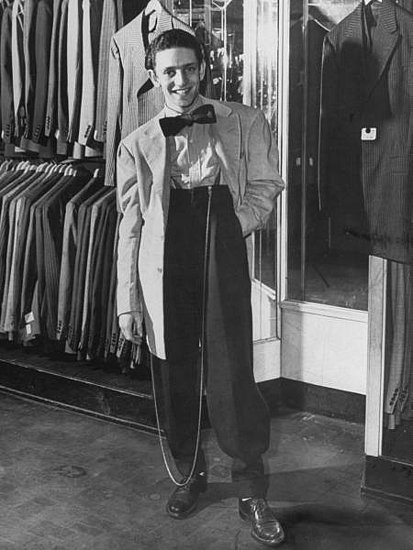
Harold C. Fox, a clothing store owner and trumpet player from Chicago, is credited with coining the term “zoot suit” as well as spreading its popularity by playing all over the country.
Soon after, big band leaders like Cab Calloway embraced the style, which was rapidly spreading across the United States.
However, the zoot suit, primarily worn by Black and Hispanic youth, started to be seen as not only counter-culture, but unpatriotic.
In December of 1941, after the bombing of Pearl Harbor, the United States entered World War II.
At the time, the country was galvanized into building materials for war. Entire industries changed over to support the effort, and specific materails began to be rationed.
Pantyhose, for instance, were found in short supply because the nylon required to make it was now being used for parachutes.
The same came for fabric.
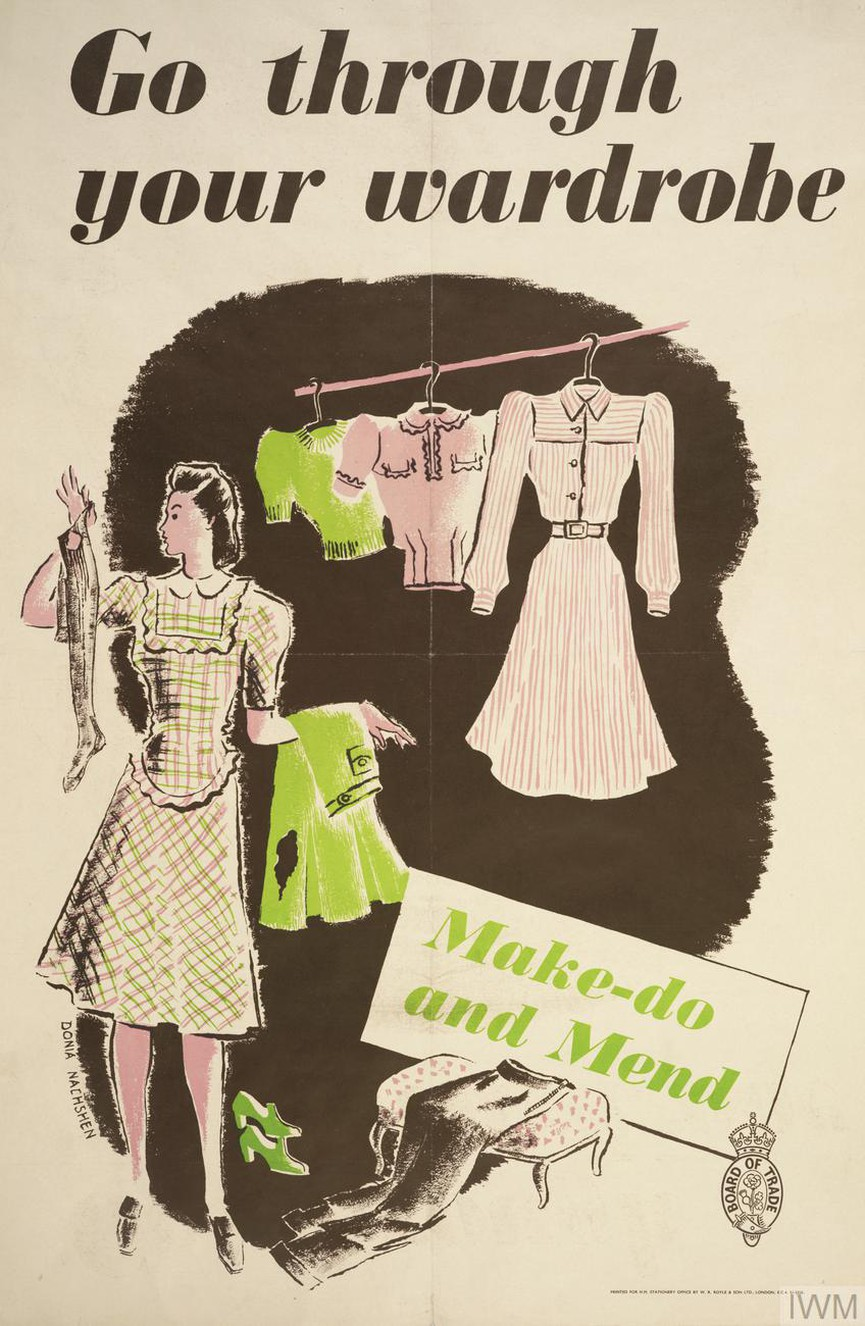
The War Productions Board, in 1942, passed edicts inside the US mandating fabric buying ceilings for clothiers and regulating the garment manufacturing process, going as far to ban pleats & cuffs on pants and regulating the amount of buttons to be used on a suit.
At a time when the government was promoting conserving fabric and banned pleats, cuffs and long jackets, wearing a zoot suit suddenly became illicit, subversive, and a sign of criminal activity. Yet many groups of African-Americans and Mexican-Americans and jazz musicians still wore their zoot suits with pride, getting their suits from underground garment stores.
The lack of patriotism, plus what followed, created rising tensions between Hispanic and White Angelenos.
In the summer of 1942, a gang of zoot-suited Mexican-Americans known as the 38th Street Gang, led by Enrique Leyvas, started a fight at a birthday party resulting in the death of 22 year old Jose Diaz.
The story riled up the media in Los Angeles, and the governor and the LAPD, who blamed juvenile delinquency and proceeded to round up 600 zoot-suited Mexican-Americans in connection to the murder.
Eventually, 17 Mexican-Americans were charged with Diaz’s death, and Leyvas, the leader, was sentenced to life in prison.
Hispanic Angelenos were outraged, claiming the youths were not given a fair trial. Riots and skirmishes started to break out in 1942 and early 1943 culminating in the most infamous event known as the Zoot Suit Riot.
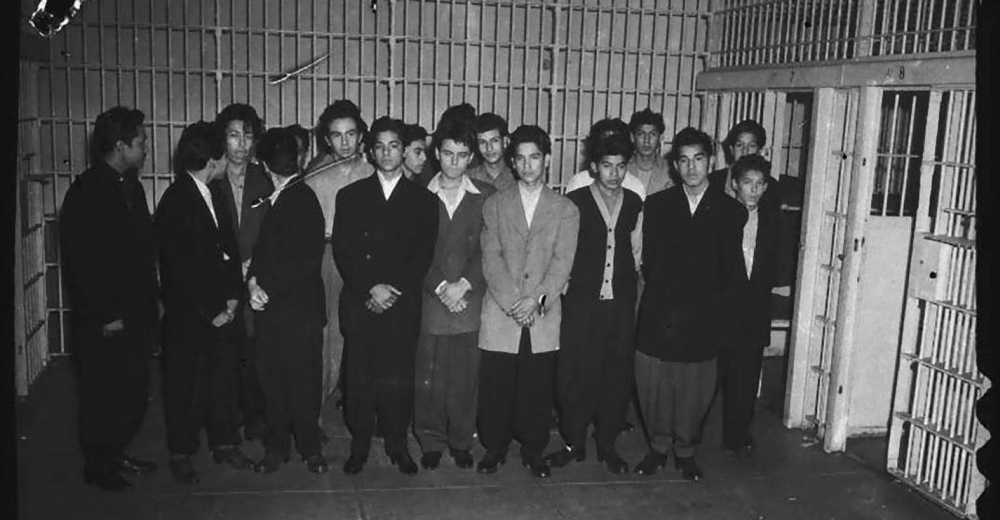
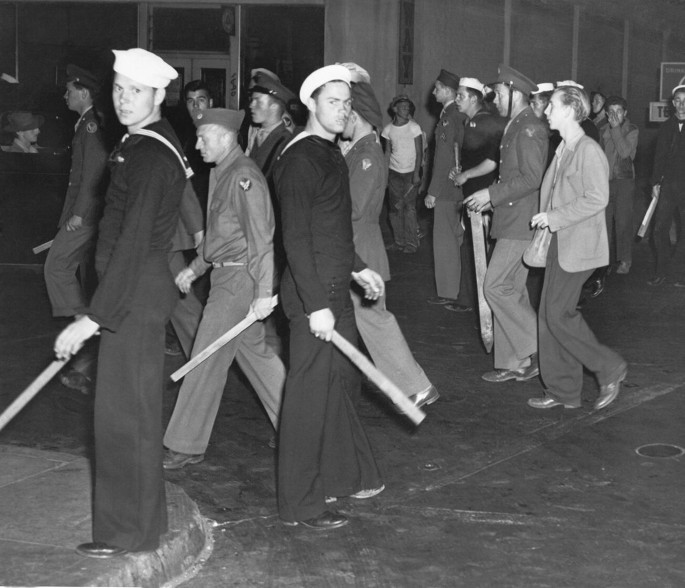
On May 30 1943, a huge fight broke out between Hispanics and US Serviceman in Los Angeles. Hispanics Angelenos viewed the primarily Anglo US Serviceman as promoters of White Hegemony, while the US Servicemen viewed their Hispanic counterparts as un-patriotic and unwilling to make sacrifices for the war movement.
The news of the fight started to spread among the military bases in Los Angeles and on June 3, a group of 50 sailors and soldiers marched throughout Los Angeles, pulling zoot-suited Mexican-Americans from theaters and restaurants, tearing their suits off their bodies, and beating them with clubs.
Put by PBS:
The worst violence occurred on Monday, June 7. One Los Angeles paper printed a guide on how to “de-zoot” a zoot suiter: “Grab a zooter. Take off his pants and frock coat and tear them up or burn them.”
That night a crowd of 5,000 civilians gathered downtown. By this time the mob was no longer made up of only sailors from the Armory.
Soldiers, Marines, and sailors from other installations as far away as Las Vegas eagerly joined in the assaults.
PBS The Rise of Riots
On June 8, military officials banned servicemen from Los Angeles city streets and LA City Council passed a measure banning zoot suits as well.
Less than a month later, the movie “Stormy Weather” was released. One of the more famous scenes in Stormy Weather included Cab Calloway singing “Geechy Joe” in his all white zoot suit. In the film,
Movies like Stormy Weather cemented the zoot suit in jazz culture, and wowed the mainstream, white culture, gaining great acceptance and influencing mens suiting.
After World War II ended and fabric bans were lifted, and the style of mainstream suits reflected zoot suits in their large lapels and wide shoulders.
Today, zoot suits are a point of cultural pride for Hispanics, particularly in Los Angeles, and are still seen today at formal parties.

