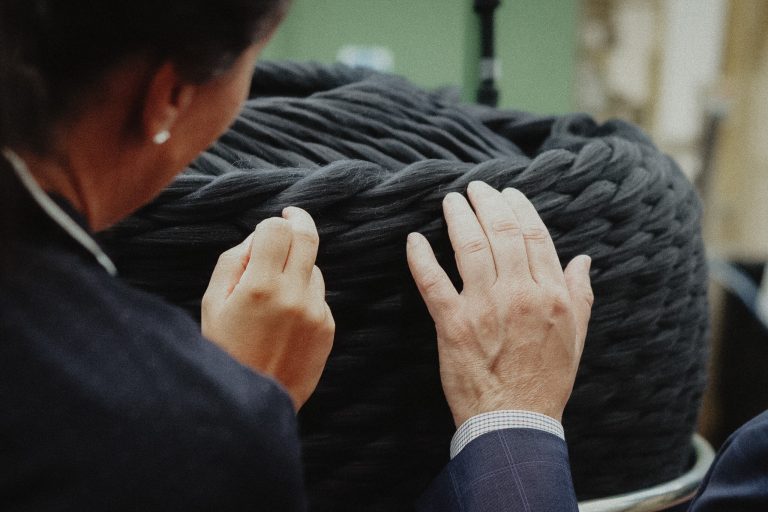
Luxury fabrics are intimidating and salespeople like it that way.
When something’s intimidating, a salesperson can intimidate you into buying by throwing around terminology that you don’t understand and count on you being too embarrassed to ask.
But I take the opposite approach: I want you to know as much as possible about fabrics.
Because the more you know, the more you appreciate.
That’s why in every fitting, I teach the three main metrics to evaluate a fabric:
- Super Number
- Fabric Weight
- The Weave
Once you understand these three concepts, you’ll know much more than the average sales person.
Let’s get started.
1. Super Number
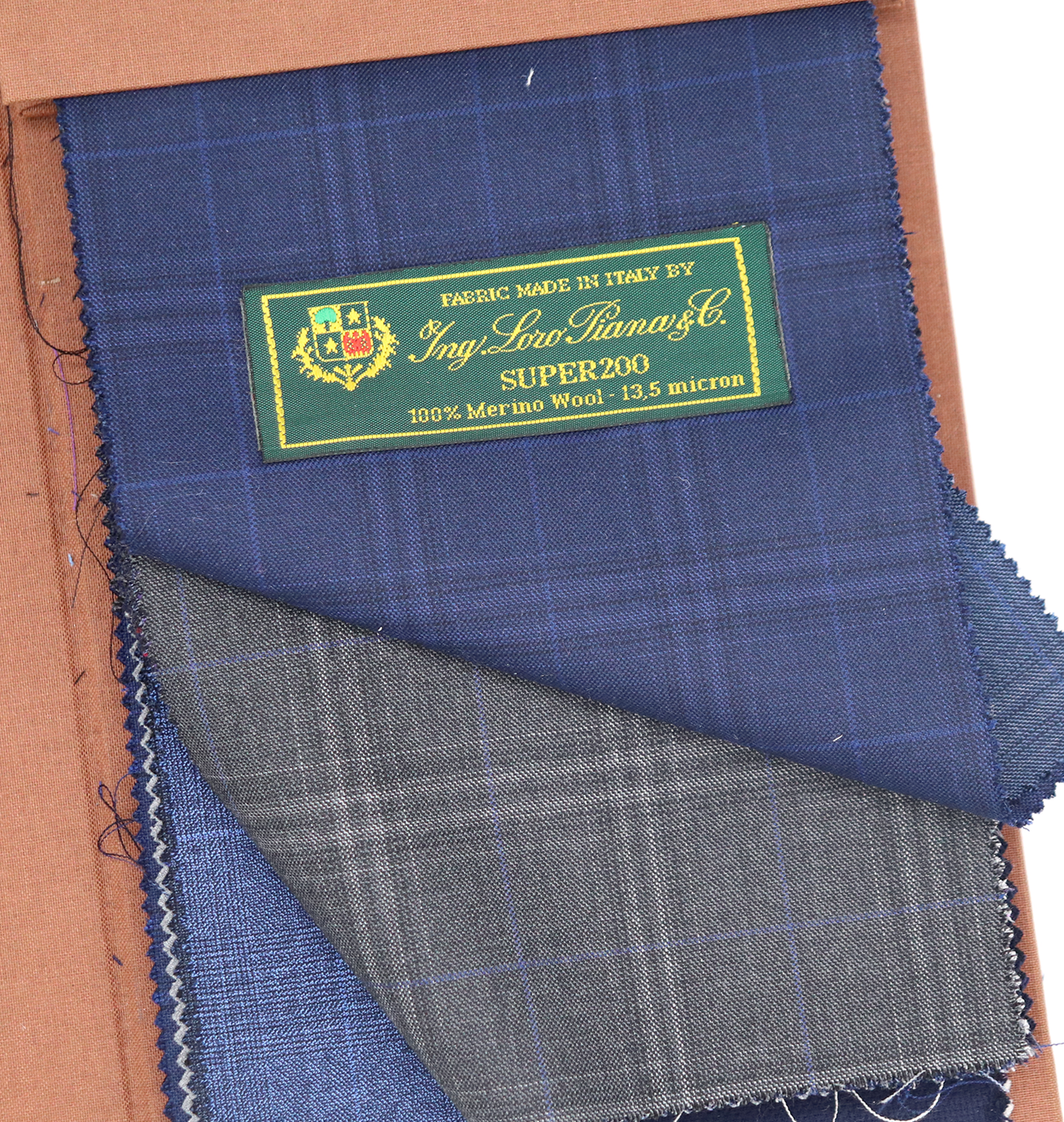
The Super Number is the average fiber diameter (AFD) of the wool when it’s sheared from the sheep.
The smaller the AFD, the higher the Super Number and the softer the fabric.
But the softer the fabric, the more delicate it is.
THE TRADE OFF
Very fine fabrics, like Super 180s, won’t stand up to everyday wear.
For a suit you’ll be wearing once per week, I suggest going with a fabric between a Super 120 and Super 170.
For a special occasion, like a tuxedo or a wedding suit, I recommend finer fabrics like a Super 180 or Super 200.
The 1701 Newsletter
Sign up for the 1701 Newsletter to get the latest drops, articles, videos and to learn more about fine tailoring, fabrics, and the history behind it all.
2. Fabric Weight
The weight of one yard of fabric, in ounces or grams, is going to tell you which season it’s most appropriate for.
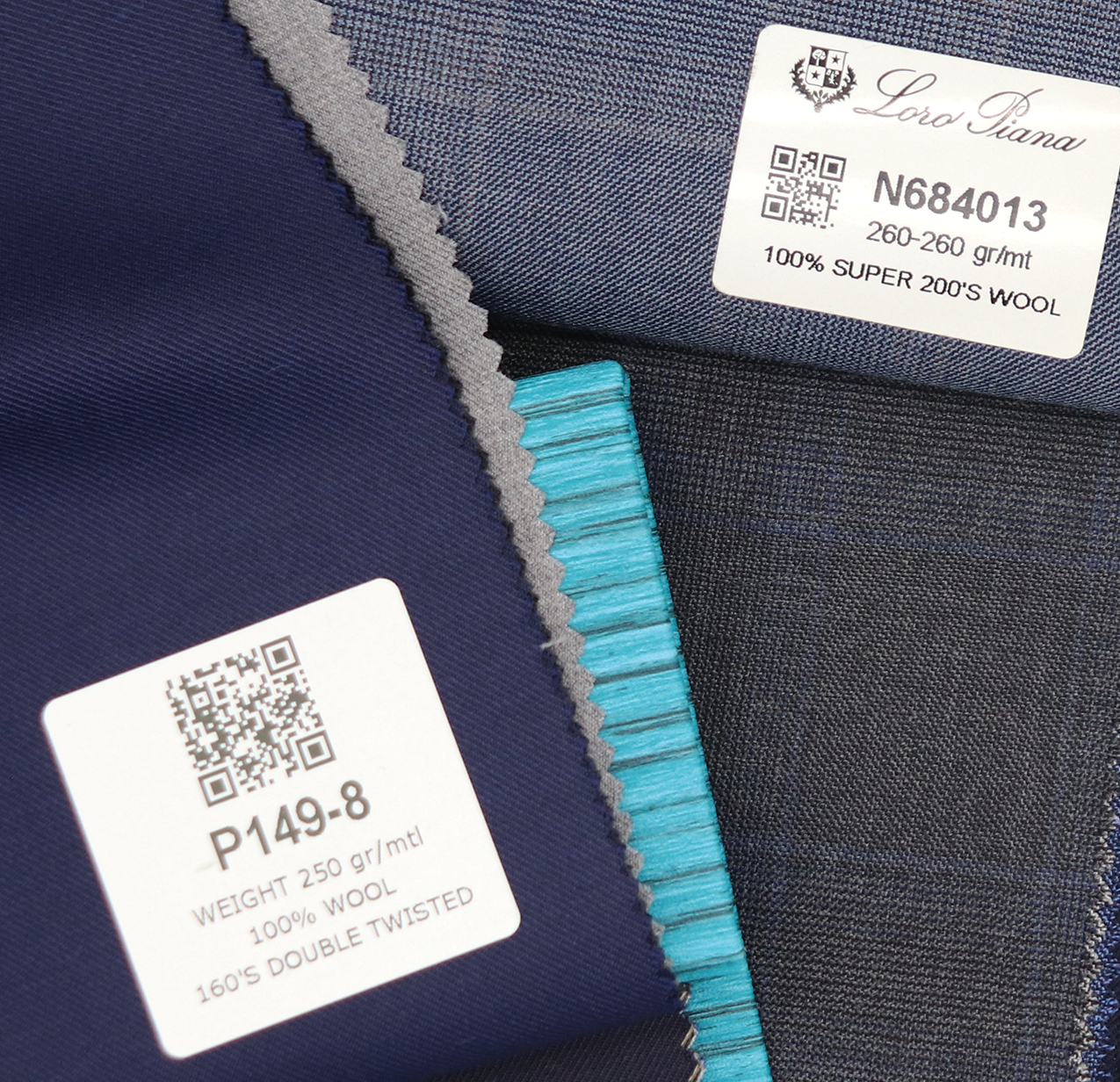
Fabrics that weigh between 230 grams and 280 grams are all year round.
Under 230 for summer time.
Above 280 is for the winter time.
ARE HIGH SUPER NUMBERS LIGHT WEIGHT?
No.
How dense the fabric is woven, its composition, and how it’s finished is going to be the determines it weight.
WHAT IF YOU’RE ALWAYS WARM?
Use the weight to your advantage.
If you run hot, but want something you can wear all year round, stick to fabric closer to 230 grams.
Conversely, if you get cold easily, you might want to pick a havier fabric for your all-year-round suit.
3. weave
The weave gives the variances we see in wool suits.
From hopsack suits, to sharkskin, to twill, this all has to do with the weave.
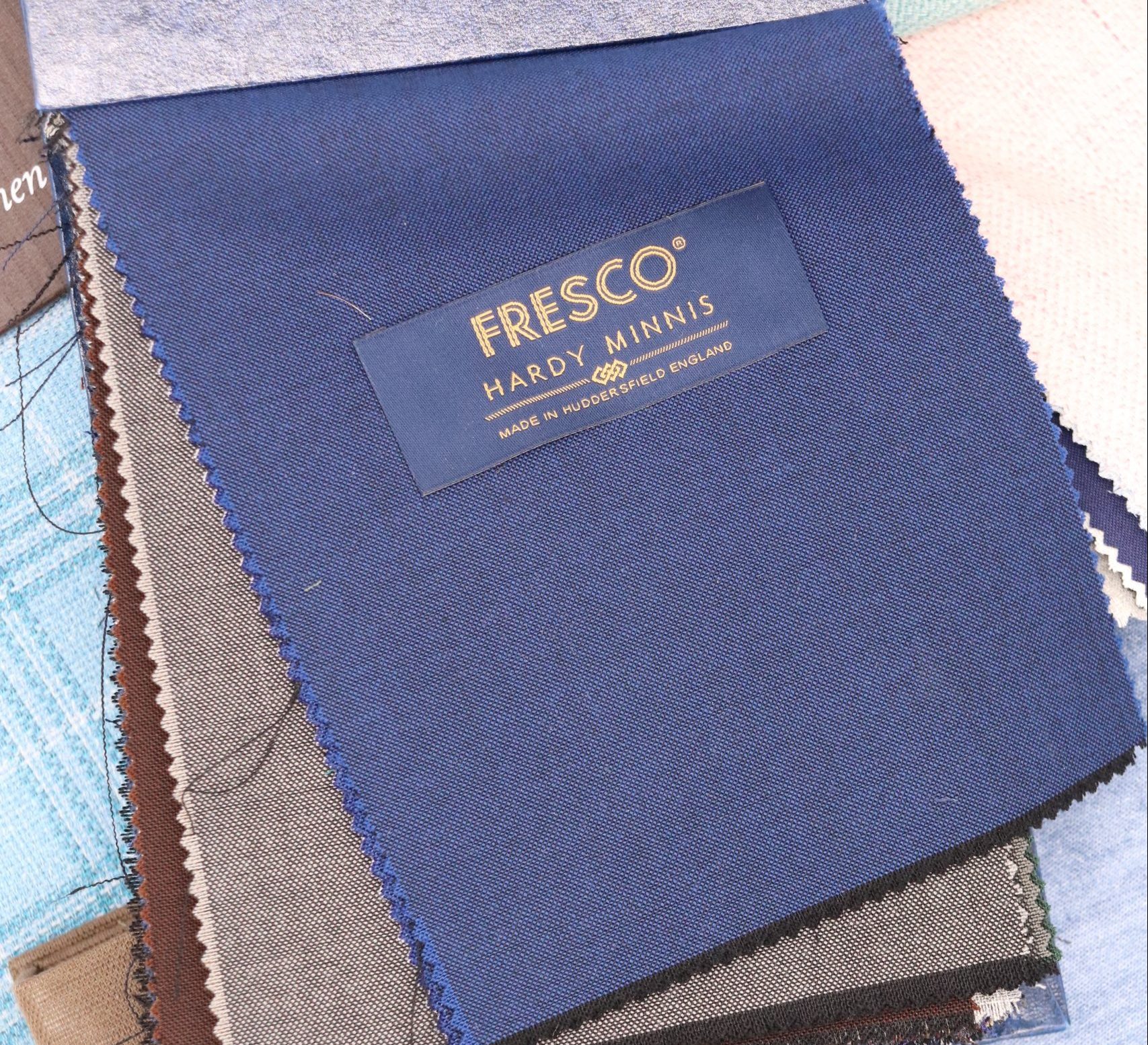
One weave I love working with is the double twist.
Most people don’t know this, but by the time a yarn gets to the tailor, it’s flattened from its original cylinder shape.
This closes all the air gaps in between the yarns.
So in 1907, an English mill called Martin & Sons began to wrap two yarns together, then weaving them together.
This reinforced the cylindrical shape, and created a tighter and denser yarn.
Fabrics woven this way breathe more, but are also more durable.
So you can go a little higher in the Super Number with a double twist (AKA Fresco or a doppio rittorto), since it’s tougher.
And a little heavier in the weight, since it breathes more.
Now You Know
Armed with the knowledge of these three metrics, you can be confident whenever you see a tailor or enter a high-end department store, you’ll know exactly what you’re getting.
But more importantly, you’re now baptized in the world of fabrics and can start to appreciate what you see.

