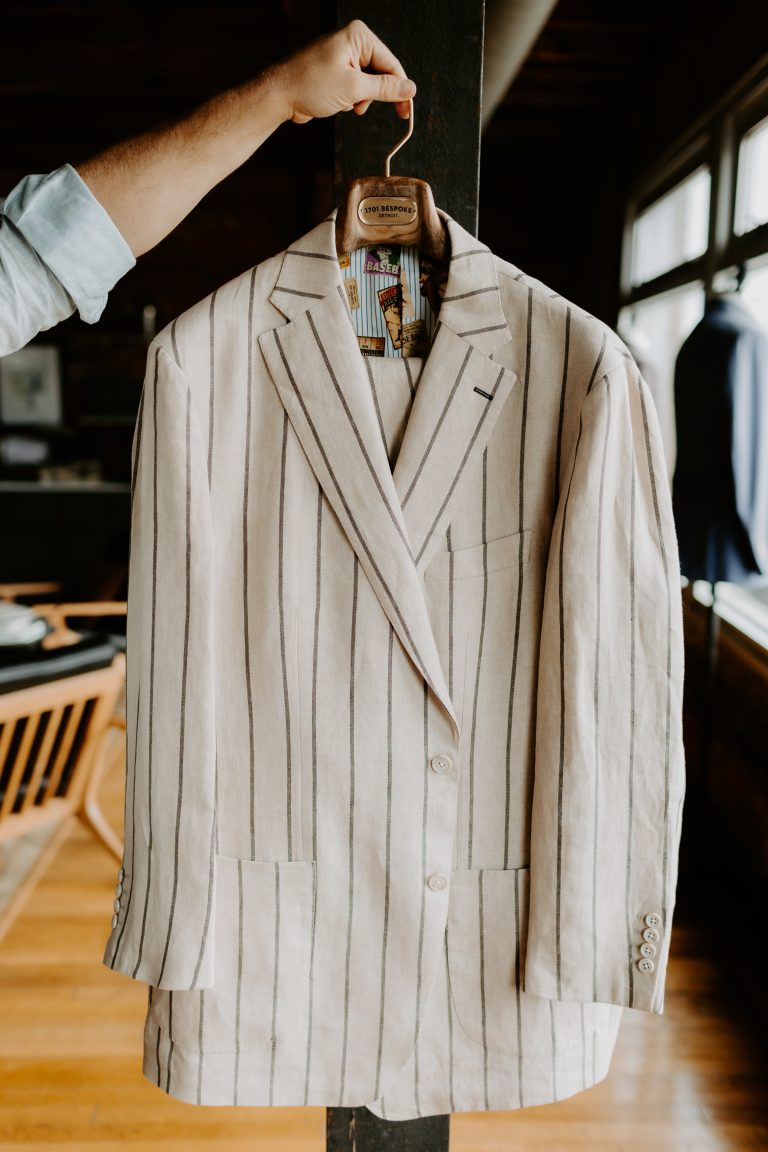
The telltale sign of someone who has an advanced wardrobe is dressing seaonally.
And whenever summer comes around and I see someone wearing linen, I know they’ve got a good head on their shoulders.
Linen is the quintessential fabric for the summer time because it actively keeps us cool.
It can be made to be lightweight, allowing a lot of air to pass through it, so you can catch the breeze.
But what most people don’t know is that linen’s natural characteristics lower your body temperature by removing your sweat.
Evaporative cooling
When the weather gets hot, our bodies attempt to cool ourselves off by sweating.
When sweat formulates on our skin then evaporates into the air, it takes with it body heat, thus cooling you off.
The more you can evaporate your sweat, the cooler you’ll be.
And unlike every other material, linen actually aids us in evaporating sweat through capillary action.
Capillary Action
Linen is the innards of a stalk of the flax seed plant.
And how plants draw water from their roots is by using capillary action.
Capillary action is where liquid can flow in narrow spaces without assistance or air pressure or gravity..
This is how plants get water from the ground. If a liquid is exposed to a very narrow space, like a tube or a root, it pushes on itself and against the walls of the tube and begins to climb.
This exact physics process is what’s going on to your sweat when you wear linen.
The moisture on your body is drawn into the fibers of the linen, then distributed throughout the fabric using capillary action.
When the sweat is removed from your skin, it’s taking with it your body heat, and cools you off.
Linen vs Cotton
In fact, linen can hold ten times its weight in moisture before iit starts to feel moist.
That’s why you rarely see sweat stains when someone’s wearing a linen shirt.
This gives linen a distinct advantage against another classic summer fabric: cotton.
Cotton is the flower of a plant and doesn’t use capillary action to distribute the sweat throughout the fabric.
As we all know, when you sweat in places like the small of your back, the sweat is concentrated to that area.
But with linen, you don’t have that problem.
That sweat is distributed throughout the garment, sparing you from sweat stains on your shirt or suit.
But the wrinkles?
Because linen is a stalk of a plant, when it’s broken, like a twig, it’s hard to put back together.
This is why linen wrinkles so much.
A lot of people have told me that these wrinkles bother them, to which I say, “too bad.”
Wrinkles are a part of the nature of the fabric, and must be embraced with wide open arms instead of shunned.
And that may not be for everyone.
Or for every occasion.
For example, business meetings or formal events aren’t the best place for linen because it’s more of a casual fabric.
The best place to wear linen is a regular day at work, out to dinner or with friends.
Personally, I wear linen all summer long. Once I started dressing seasonally, I noticed how uncomfortable wearing all year clothing is in extreme weather.
For a linen suit, I recommend checking out Solbiati, an Italian mill owned by Loro Piana that has been producing linen for well over 100 years. They make light and heavy-weight linen in a variety of different colors and patterns, which can expand the linen suit outside of the typical unbleached look.
The 1701 Newsletter
Sign up for the 1701 Newsletter to get the latest drops, articles, videos and to learn more about fine tailoring, fabrics, and the history behind it all.
Linen, a natural fabric derived from the flax plant, possesses unique properties that make it exceptionally suitable for keeping you cool during hot summer days.
The breathability of linen is attributed to its structure, which consists of fibers with natural gaps and a loose weave. This construction allows air to circulate freely, facilitating the evaporation of moisture and heat from the body.
Moreover, linen has high moisture absorbency, absorbing perspiration and quickly releasing it into the air, thus keeping you dry and cool. Additionally, linen’s low thread count and lightweight nature contribute to its breathability and ability to allow heat to escape, preventing the fabric from sticking to the skin.
The natural properties of linen make it an ideal choice for maintaining comfort in hot and humid climates, ensuring that you feel cool and fresh throughout the summer season. Explore the crisp and natural texture of linen to make a sartorial statement this summer.
Seersucker & More
If linen isn’t your preferred choice, there are other lightweight options to consider. With its puckered texture, seersucker offers a unique and classic summer look.
Additionally, lightweight cotton and tropical wool (as long as they are under 190 grams), provide breathability and comfort without compromising style.
Embrace Lighter Colors & Textures
Summer is the ideal time to experiment with lighter colors and textures in your wardrobe. Bid farewell to the traditional notion of winter and summer patterns and instead focus on incorporating interesting textures into your outfits.
Light gray and light blue are perfect choices for summer, exuding a fresh and sophisticated vibe.
Attention to detail is paramount. We’ll help you curate the perfect summer look by combining the right fabrics, colors, and textures that complement your personal style.
As the temperatures rise, it’s time to revamp your wardrobe and embrace the cool and comfortable styles of summer.
Whether you opt for the classic elegance of linen or explore other lightweight fabrics like seersucker, 1701 Bespoke is here to guide you every step of the way.
From linen suits to textured summer ensembles, we’ll ensure you look your best while staying cool and stylish.
Visit our blog for more style inspiration and don’t forget to check out our previous article on why men should embrace lightweight pants instead of shorts. Embrace the summer season with confidence and style with 1701 Bespoke.

