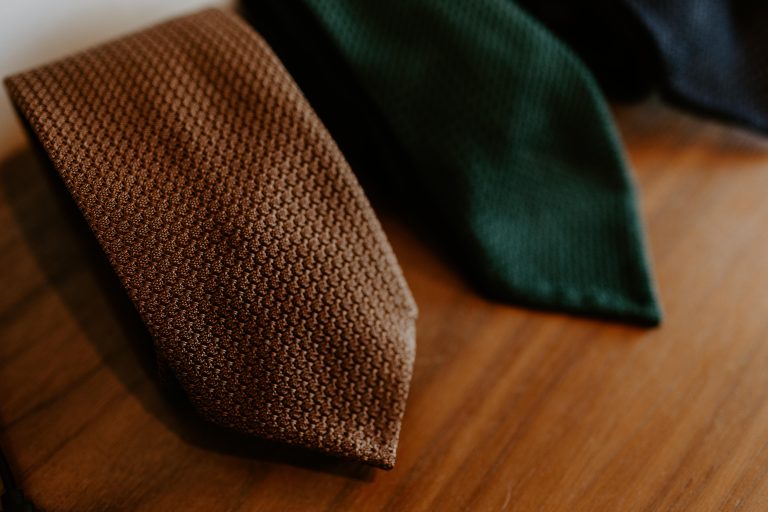
While many volumes have been written on the art of the handmade suit, the handmade tie mostly goes overlooked.
I think this is because ties seem so simple and ubiquitous, why bother learning anything about them?
You put them on, some look cool, some don’t. That’s it.
Right?
Well just like suits, there are levels to ties and distinct differences between a handmade tie and a mass manufactured tie.
This article is here to give you the basics of the neck tie, so not only will you be able to be able to make a better decision when it’s time to pick your next one, but also to appreciate the a handmade tie when you see one.
The Importance of Cut
A truly well-made tie starts with the fabric — and how it’s cut.
High quality ties are cut on the bias, which means the fabric is cut at a 45-degree angle.
This matters because cutting on the bias allows the warp (vertical) and weft (horizontal) threads of the fabric to move and stretch naturally.
That subtle stretch keeps the tie’s shape over time, even after repeated knotting.
Commercially-made ties, on the other hand, often cut fabric at less precise angles to save on material, sacrificing flexibility and longevity.
If a tie is cut on a 30 degree angle, the manufacturer is able to cut more ties out of the same yard of fabric.
For volume-based tie manufacturer’s it’s a no brainer; sacrifice on flexibility and longevity in exchange for making more ties.
What’s inside of a tie?
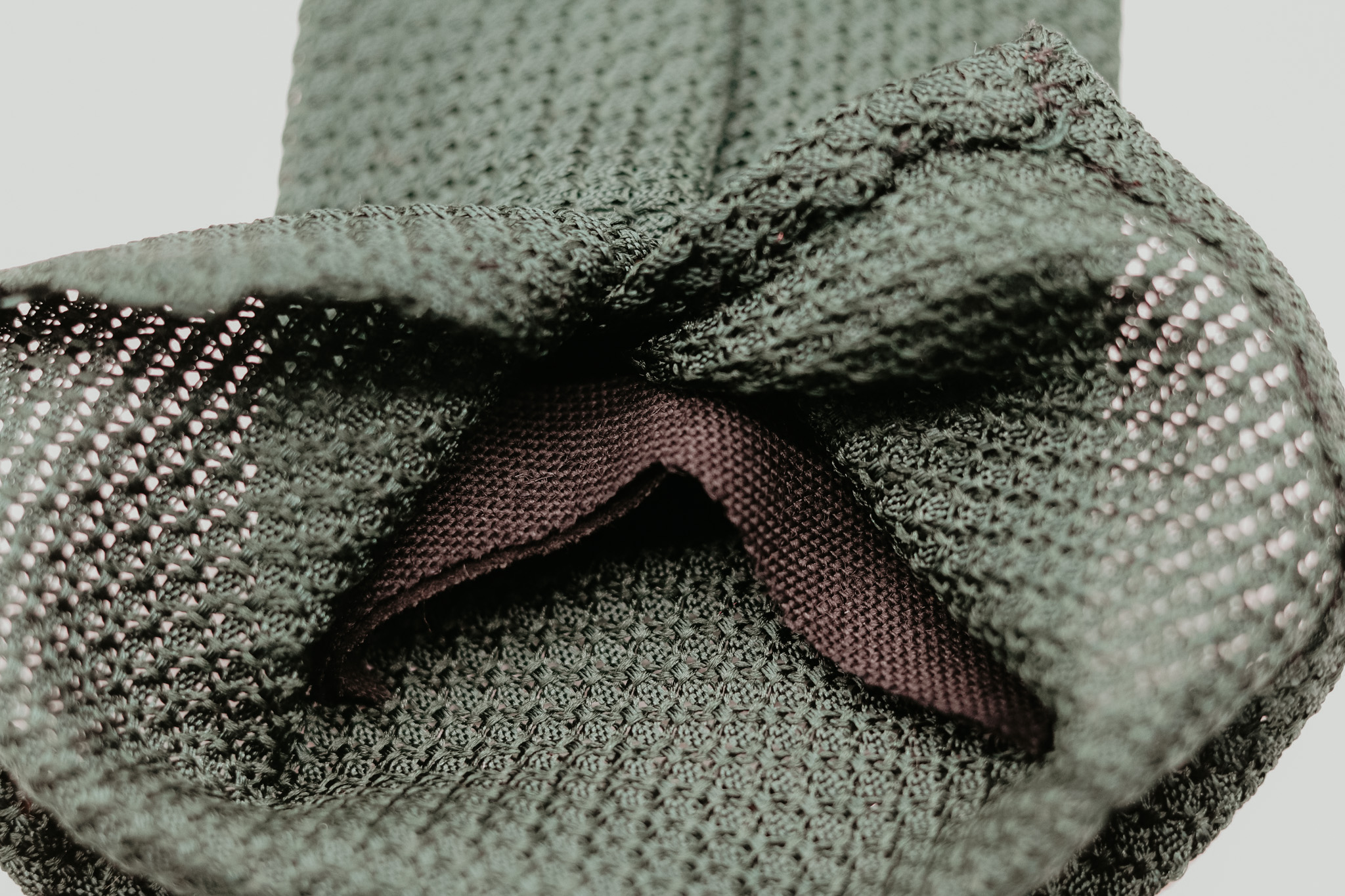
The inside of a tie, often overlooked, is just as important as what you see on the outside.
Known as the interlining, this material gives the tie its structure, weight, and drape.
High-quality ties typically use a lightweight wool or wool-blend interlining.
This helps the tie maintain its shape and ensures it knots smoothly without creasing or looking bulky.
Mass-manufactured ties often use synthetic materials like polyester for their interlining.
While these materials are durable and cost-effective, they lack the natural elasticity and breathability of wool.
This can result in a tie that feels stiff, doesn’t knot as cleanly, or wears down faster with repeated use.
As with the fabric of the tie, the interlining often is sacrificed for the sake of volume by being cut on an angle less than 45 degrees, which is one reason you’re not able to get a tie to bounce back after tying it.
There are some ties that are unlined, which allow the fabric to move more freely and give the tie a softer and more casual feel.
You’ll typically find ties made from heavier materials to be unlined, or else the added bulkiness of the interlining end up making it too difficult to tie.
The Role of stitching
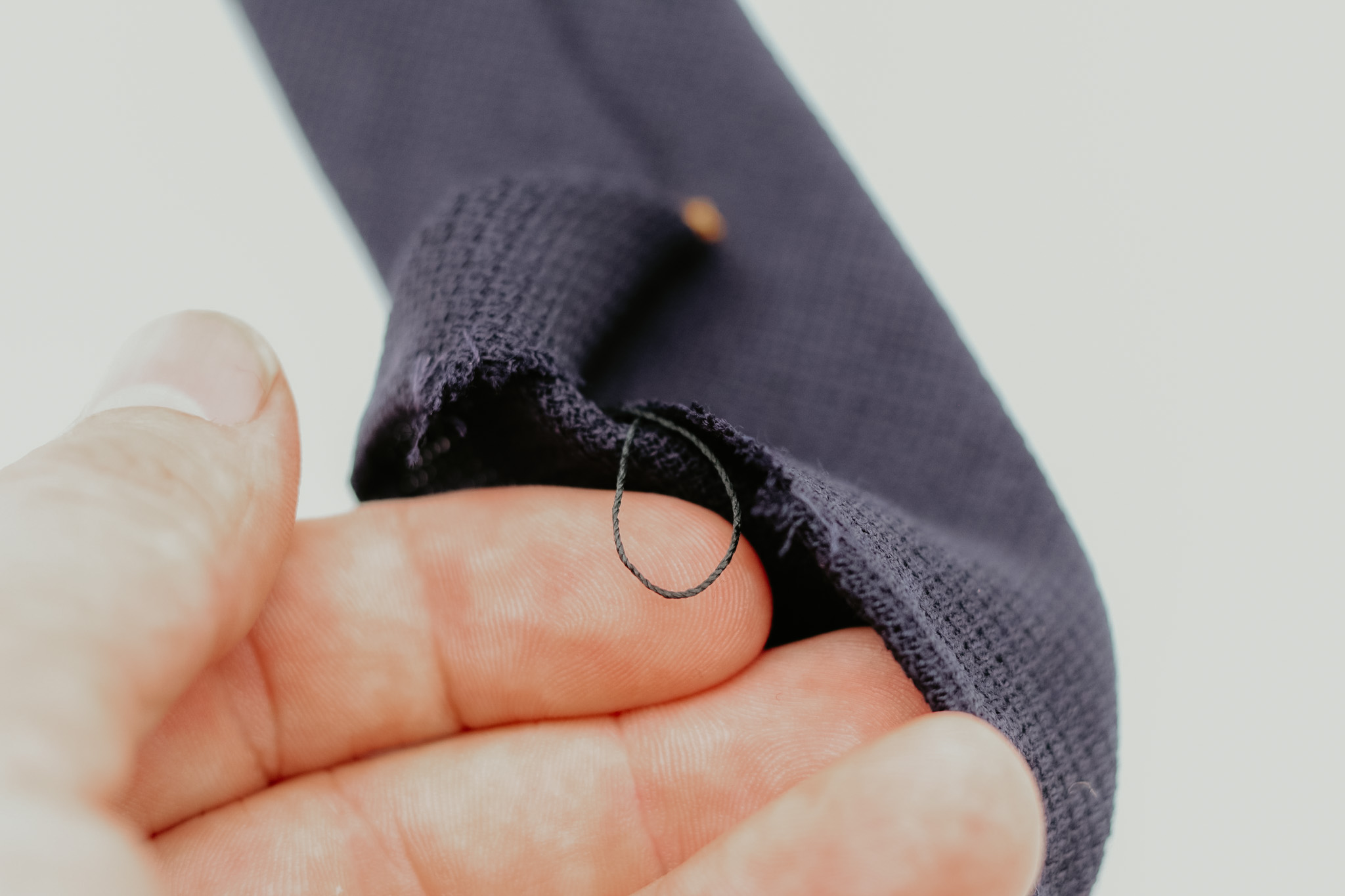
The stitching in a tie is just as important as the fabric. Most machine-made ties use a standard slip stitch to hold the layers together.
In a handcrafted tie, you’ll often find a saddle stitch, which is not only stronger but adds a decorative detail.
The saddle stitch is anchored by a loop of thread near the tip of the tie, hidden beneath the folded fabric.
This loop gives the tie flexibility, allowing it to stretch and recover naturally—especially useful for unlined ties, where the fabric needs to move more freely.
Hand-rolled edges are another hallmark of a high-quality tie.
At 1701 Bespoke, nearly every tie we produce is hand-rolled, giving the edges a subtle, rounded finish.
It’s a small touch, but it speaks volumes about the craftsmanship behind the piece.
Tipping
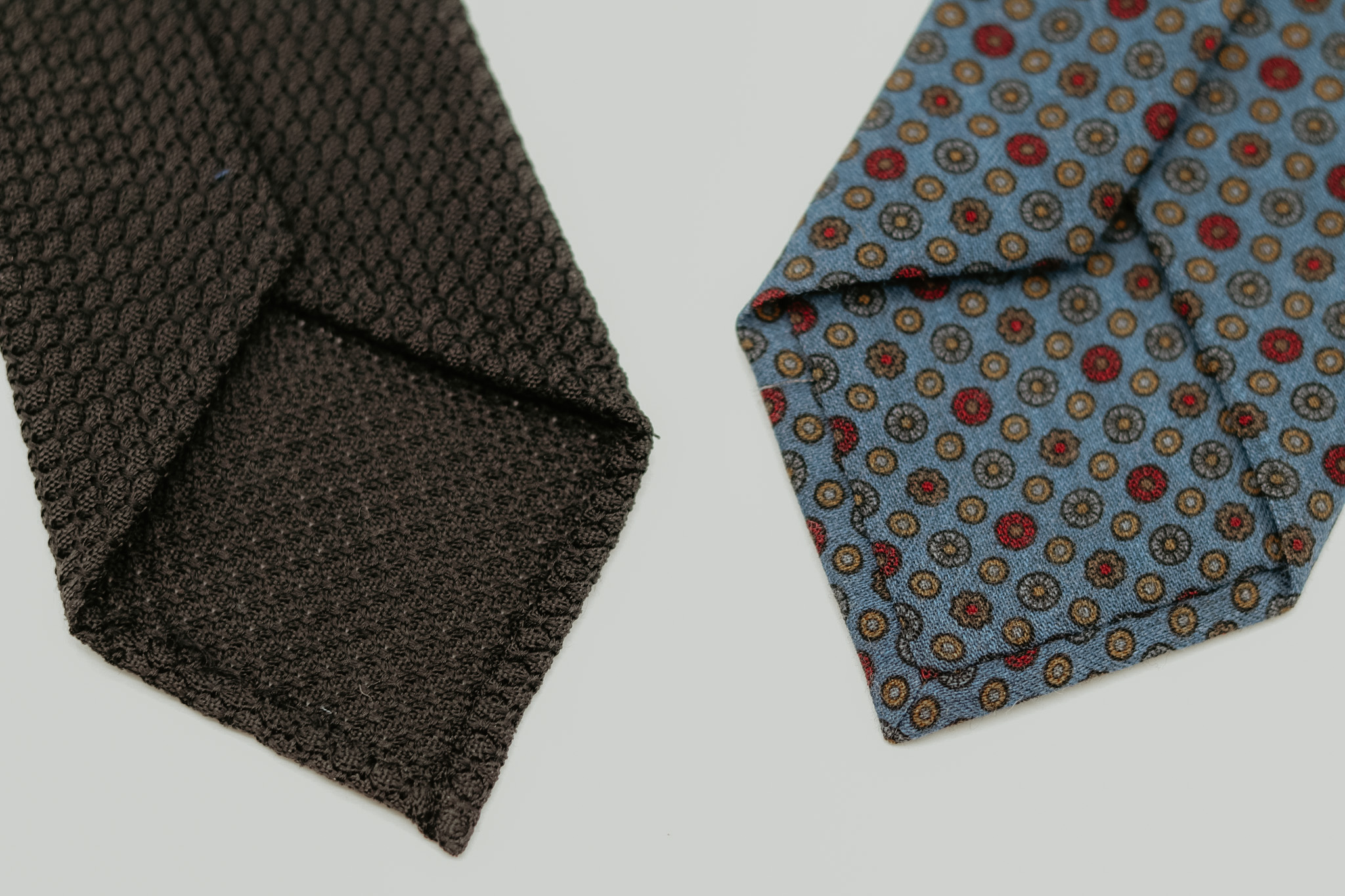
If a tie from 1701 doesn’t have a hand-rolled edge, that’s because the tie is tipped.
A tipped tie features a piece of fabric sewn to the underside of the blade (the wide end of the tie) creating a clean, polished finish.
Although the tipping is typically made with the same fabric as the outer shell, some tipping can be a contrast material.
You’ll find nearly every mass-manufactured tie is tipped, with the exception of cotton knit ties.
The reason is to hide rough or machine-cut edges, as well as to save time and money by foregoing the expense of hand-rolling every edge.
This is why I personally find untipped ties to be much more desirable.
Tie Fabrics
Finally, the outershell fabric itself plays a crucial role in determining the quality of a tie.
High-quality ties are typically made from natural materials such as:
- Silk: a timeless and classic material known for its smooth texture and sheen
- Wool: textured and bouncy, allowing for a clean knot and drape
- Cashmere: soft, rich and warm that looks and feels luxurious (perfect for winter)
- Linen: lightweight and relaxed, perfect for summer
Each material has its own personality as well as a role inside your closet.
Mass-manufactured ties, however, are often made of synthetic materials such as polyester.
These materials dominate the mass-manufactured tie market because they offer wrinkle resistance, stain resistance and more importantly saves on the cost of making.
As you can guess, mass-manufacturing makes every choice based upon cost rather than quality.
This is why handmade ties look and feel better; they use higher quality materials and hand made details that not only show better, but display the skill of the craftsman.
3-Fold, 5-Fold and 7-Fold
Lastly, there’s the fold of a tie, or how many times the fabric is folded in on itself during construction.
You can count the folds of a tie by looking at the blade of an untipped tie and gently opening it up. Each crease you see is a fold.
There are three main types of folds: the 3-fold, 5-fold and 7-fold, although more exist.
The 3-fold tie is the most common and uses the least amount of fabric (hence favored by mass-manufacturing).
The 5-fold tie is a step-up in craftsmanship and luxury. Because there is more fabric used than a 3-fold, a 5-fold doesn’t require an interlining, though the tie still features heft and weight to create a luxurious drape.
The 7-fold tie goes even further, with seven layers of fabric folded intricately to form the body of the tie. It requires great skill to make a 7-fold and is considered the pinnacle of tie construction.
Because the 7-fold uses the most amount of fabric and requires the highest degree of skill to make, you’ll almost never find a 7-fold tie in a big box store.
The Final Word
A tie may seem like a small accessory, but the details make all the difference. From how it’s cut and stitched to the lining and edges, a well-made tie elevates your entire look.
Next time you knot up, take a second to appreciate the craftsmanship behind it—especially if it’s a tie that was made just for you.

