During the industrial revolution, inventors all over Europe began changing the textile mill to make it more efficient, increase production and ultimately make themselves wealthy.
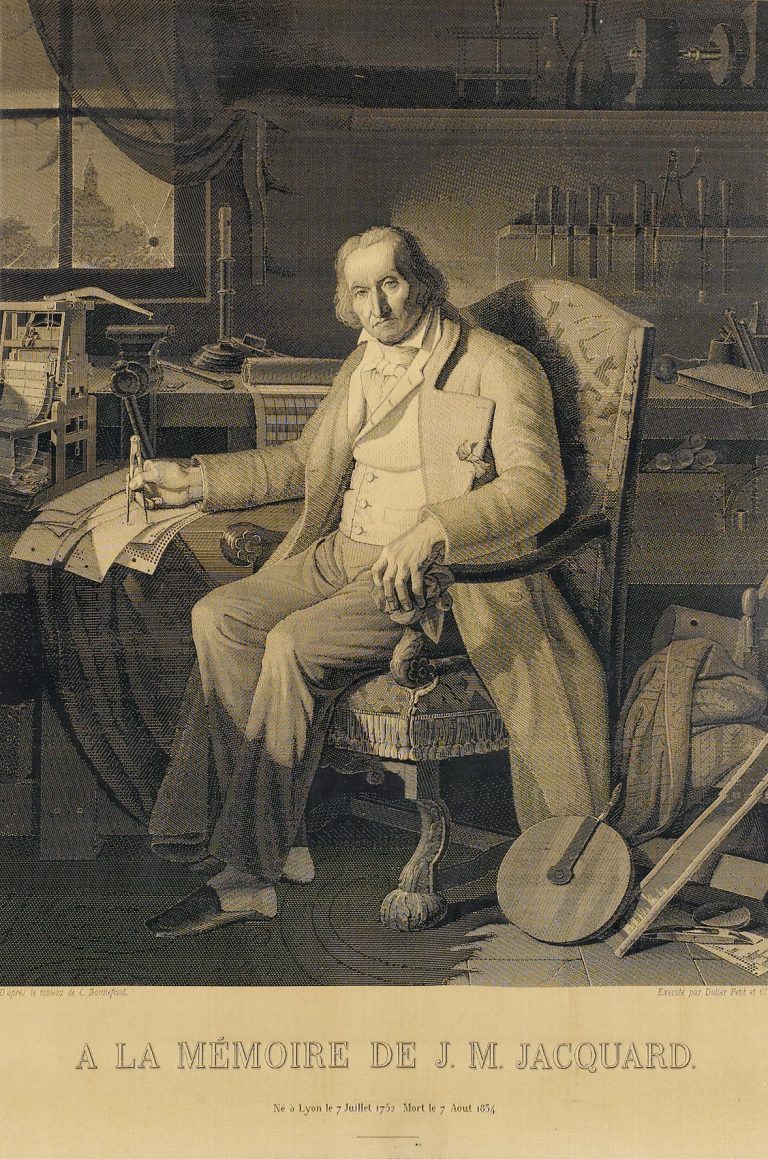
One of the men that completely revolutionized the production of cloth was a man name Joseph-Marie Jacquard and his invention The Jacquard Loom.
While he dramatically altered textile production, it came at a high cost.
This is the story of how technological innovation collided with a proud and skilled workforce, leading to one of the most infamous labor revolts in history.
The Weaver-Turned-Inventor

Joseph-Marie Jacquard, born in 1752 in Lyon, France, grew up in a city synonymous with silk production.
The silk industry was a major source of income for Lyon. It employed 30,000 people and made up a significant portion of the city’s exports.
The weavers in Lyon had a strong culture and community, and were very protective of their trade with a guild system that controlled production and prices.
Jacquard began his career weaving with his family, but it was his curiosity and ingenuity that set him apart.
At the time, weaving intricate patterns was a slow and labor-intensive process.
Weavers had to manually control the movements of different colored yarns on the loom, which made these high-quality textiles both time-consuming and expensive to produce.
For Jacquard, the inefficiencies of weaving weren’t just a time-sucking inconvenience; they were a puzzle for him to solve.
He dedicated himself to creating a loom that could automate the weaving of intricate patterns, allowing for faster production, without compromising on quality.
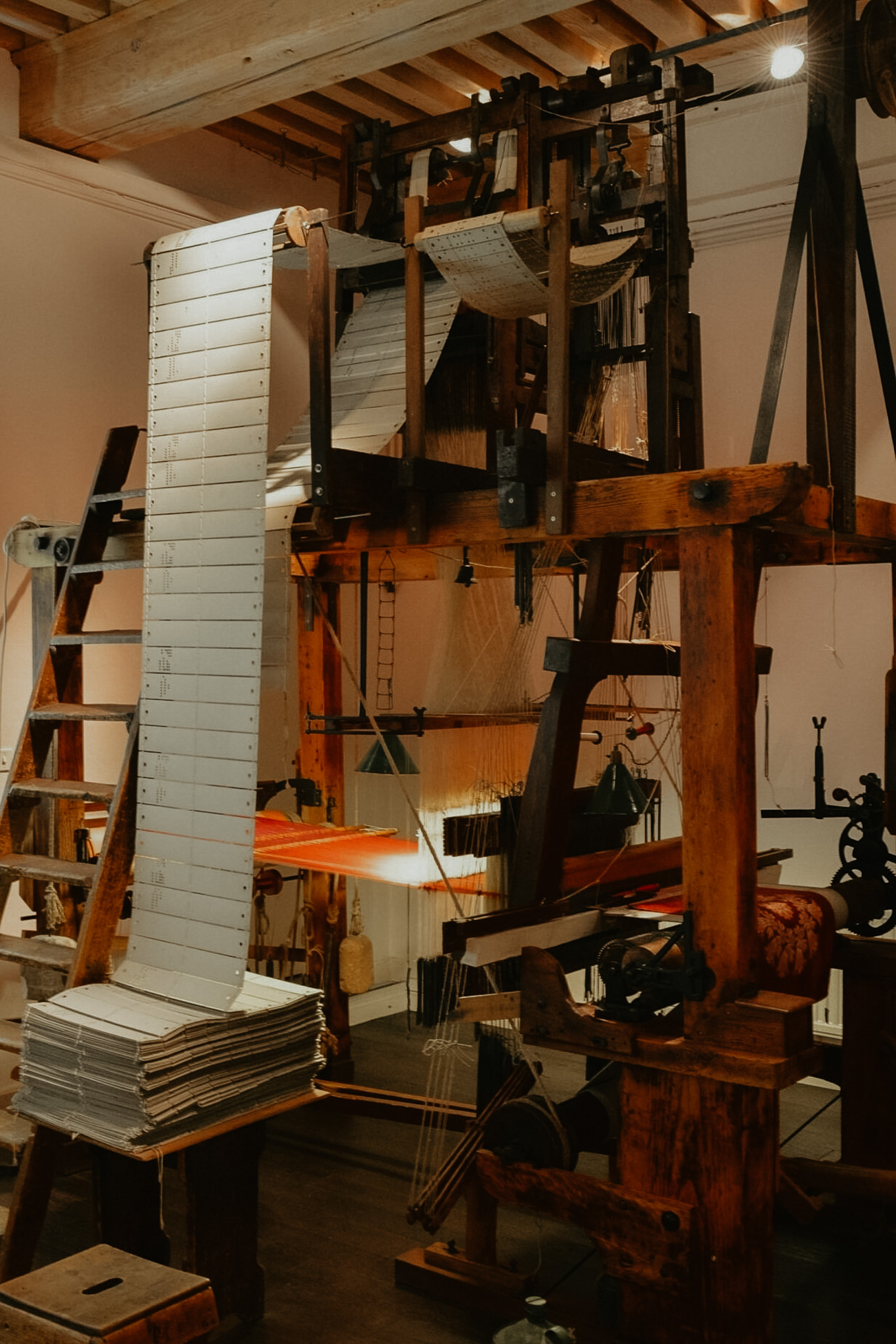
After more than a decade of experimentation, Jacquard unveiled his first prototype at the age of 49. The invention, later refined and patented in 1804, used a series of punch cards to control the movement of yarns.
The punch cards would allow some yarns to show in the pattern, while suppressing other yarns, which dictated the design of the fabric with remarkable precision and speed.
The loom could replicate patterns that previously took days to weave, and also allowing the loom to be operated by a single person.
The Canuts: Guardians of Tradition
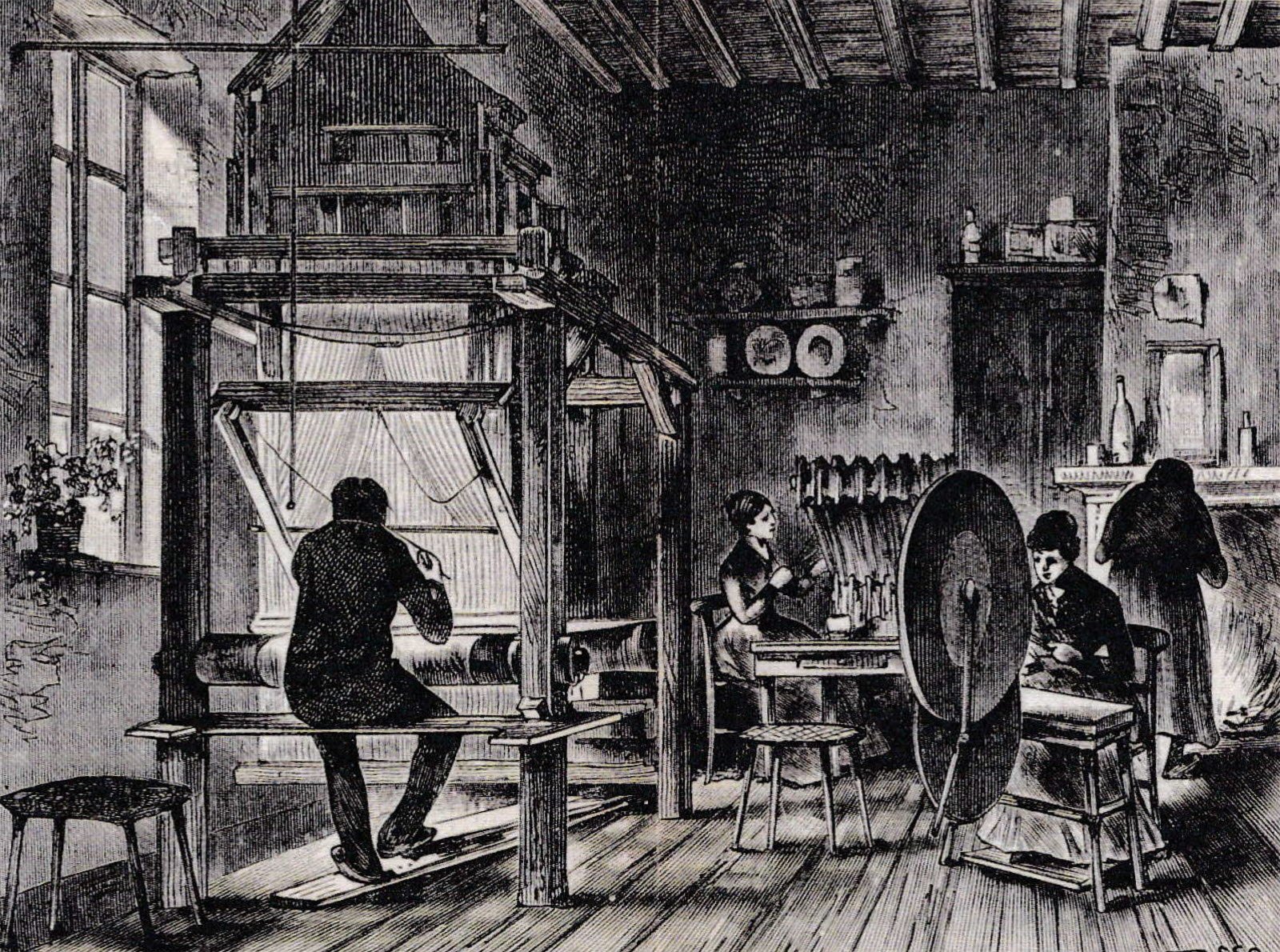
In Lyon, the silk weavers, known as the Canuts, were the lifeblood of the city’s economy.
Working in small workshops in the Croix-Rousse neighborhood, they upheld a proud tradition of craftsmanship, passing down techniques through generations.
The Canuts were not only skilled tradesmen, but were also very politically active.
They created.a guild to control prices, set production standards, and ensure employment for everyone who joined them.
So when Jacquard presented his loom that could be operated by one person, not two, the Canuts were unhappy.
The introduction of Jacquard’s loom was a direct threat to their way of life.
While it promised efficiency and innovation, it also risked displacing the very artisans who had built Lyon’s reputation as the silk capital of the world.
The Build Up to the First Revolt
According to the book “Jacquard’s Web: How a Hand-Loom Led to the Birth of the Information Age” by James Essinger:
News of the new invention soon spread throughout the city, and when Jacquard demonstrated it in public for the first time, the response was mixed. Some weavers were hostile, believing that the new loom would render their traditional skills obsolete, while others were amazed by its versatility and saw the potential for producing more intricate and sophisticated designs than had ever been possible before.
Despite the mixed reception, Jacquard’s loom began to be adopted across factories in Lyon.
Because silk could now be produced faster, with greater accuracy, and with fewer labor, more and more silk began to flood the French market.
This led to the price of silk dramatically falling over the course of three decades.
Before industrialization, the Canut guild workers had informal agreements on a minimum wage for completed silk, or tariff.
But because of the huge fall in silk prices, the factory owners became squeezed; they borrowed money to buy more looms, agreed to pay their workers the tariffs, yet the silk they were producing continued to fall in price every single year.
So factory owners began to ignore or renegotiate the informal tariffs, which created more and more contention between the Canuts and the factory owners.
The October 1831 Tariff
Then in October of 1831, an agreement was drafted between the factory owners and the Canuts to formally observe a tariff system.
When it came for the signing parties to close the deal, at the last minute the factory owners backed out.
This was the final straw for the Canuts.
The First Revolt: November 1831
On November 21, 1831, the Canuts organized a massive demonstration in Lyon.
Thousands of silk workers, joined by other artisans, marched through the city demanding the enforcement of the tariff.
The protests quickly began to escalate.
On November 22, the Canuts seized control of the Bon-Pasteur barracks and looted armories and fortified the Croix-Rousse district with barricades.
With over 30,000 workers protesting, Lyon fell under control of the Canuts, who began to terrorize the local authorities, killing over 100 and forcing the rest to flee the city.
For a brief moment, the workers established an insurrectional government, occupying City Hall and demanding justice for their livelihoods.
However, this wouldn’t last long.
By December 2, the monarchy responded with overwhelming force, sending in a royal army of 26,000 men and 150 cannons led by the king’s son
An intense battle broke out, and by the end over 600 people were killed and 10,000 Canuts were expelled from Lyon.
The Second Revolt: April 1834
After the first revolt, the French government sought to impose protections to make sure nothing like that would ever happen again.
However, they still needed the Canuts produce the jewel of France, its silk.
And because industrialization continued throughout Lyon, in spite of the first revolt, the price of silk was still dropping.
Factory owners sought to reduce the wages of the Canuts in early 1834, arguing that they could no longer stay in business and sustain the acceptable wages, and the Canuts fiercely resisted.
Using their guilds and other organizations, they began to demand their wages remain the same.
However, this time the government was going to try to prevent any organized effort of resistance in order to keep the silk production going.
So the government began to eliminate the Canut’s guilds, treating them like they were treasonous criminals, and prosecuting worker leaders.
This is what led to the second revolt.
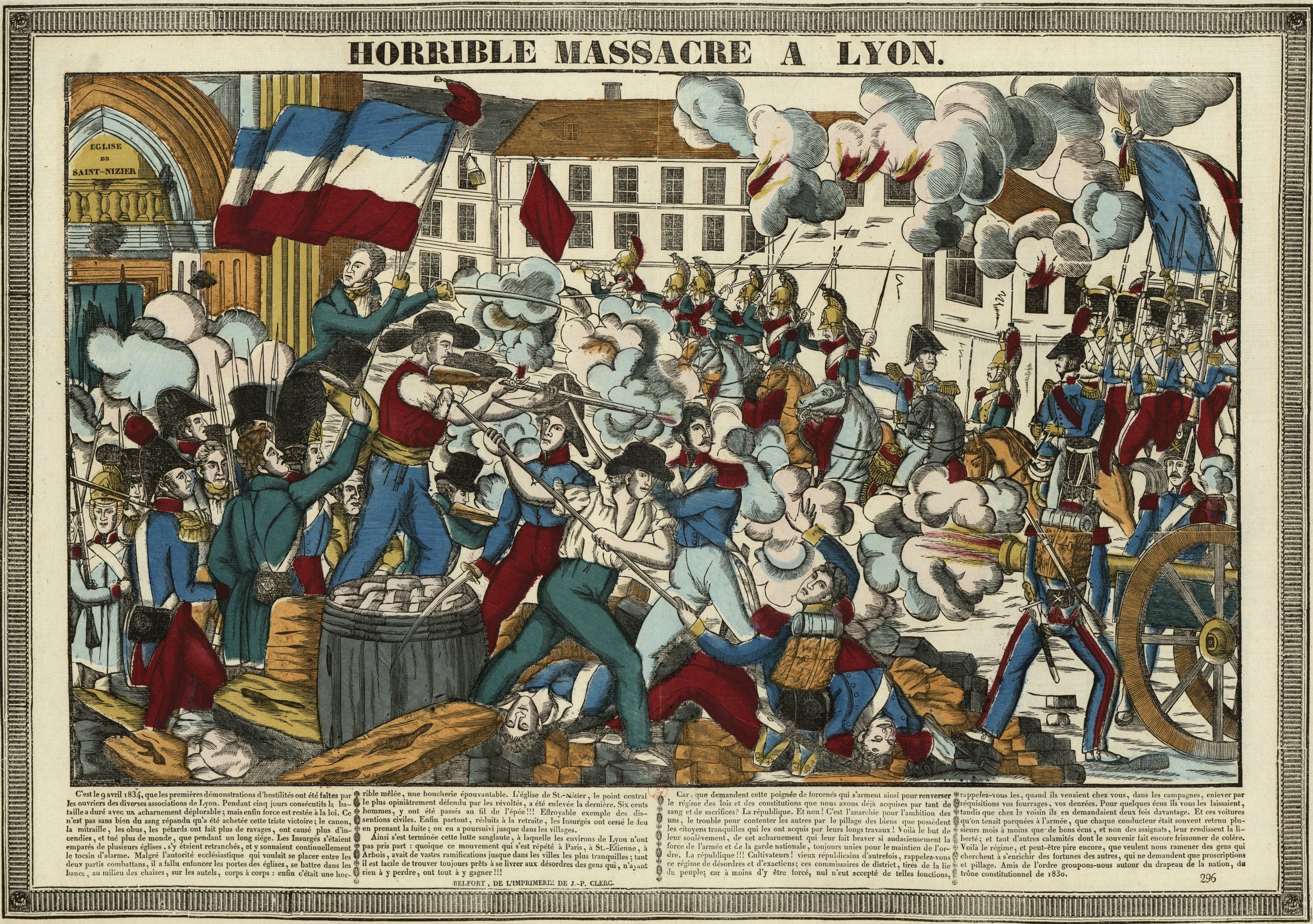
On April 9, thousands of silk workers and artisans once again took the streets of Lyon, particularly Croix-Rousse, and built barricades throughout the city, turning it into a battleground.
They once again seized the barracks and fortified their position, but what lay ahead was even bloodier than 1831, and became known as The Bloody Week.
After initial clashes with the Canuts in the preceding days, on April 11 the French Army began firing canons in the Croix-Rousse district.
In one particular horrifying event, a nameless Canut fired from an apartment building on the French Army, killing a captain, In response, the French Army invaded the apartment building killing everyone inside, including women and children. This became known as the Massacre at Rue Transnonain.
During the Bloody Week, over 600 people were killed and many more injured, and thousands were imprisoned.
Broader Implications
The Jacquard Loom Riots were more than just a clash between factory owners and workers; it was a moment when technological progress began to destroy the lives whose it was suppose to help.
I often think about the libertarian answer to conundrum of technological innovation displacing jobs is “the market will balance itself out.”
Theoretically it’s true, but during this period of transition, how many lives is society willing to sacrifice?
Resistance to technological advancements is a recurring theme in history, and something we are undergoing now with the rise of Artificial Intelligence.
Technology moves forward regardless of any resistance, and the libertarians are right that it creates new opportunities during its disruption of old systems.
However, the key question, after all of these technological battles is how do we ensure those displaced by innovation aren’t left behind.
The story of the cantus is a reminder that progress comes with responsibility. Innovation should not only aim to increase efficiency, but ultimately enhance our lives.
This balance is something we all still have to figure out.

