Best Fabrics for Bespoke Suits
The best fabrics for bespoke suits largely depends on how you plan to wear your suit
Key Takeaways
- Super Numbers are how soft & durable a wool fabric is
- Wool weighing between 230-280g are for all year round
- Double twist will add more durability
- Cashmere & Silk weigh less than Wool
- Cotton, Linen & Mohair weigh more than Wool
The Basics of Fabrics
Before working with me, most of my clients didn’t know anything about fabrics. Even the ones that had been buying suits for decades.
So every appointment of mine starts off with some education about the three main metrics to look at for a fabric:
- The composition (what it’s made out of)
- The weight
- Any special twist or characteristic
Once you understand these metrics and how they interrelate, then you’re able to start picking fabrics that best suit your lifestyle.
Fabric Composition
What the fabric is made out of is going to tell you about the fabrics::
- Seasonality
- Wrinkle and Stretch
- Durability & Softness
Seasonality
Most fine suiting fabrics are 100% wool, but sometimes you’ll see fabrics that will have different materials woven in
You could also see some fabrics containing cashmere. While not exclusively a fall/winter fabric, more than likely the fabric is designed for colder weather.
Wrinkle & Stretch
If you see a fabric that’s 100% wool, you’ll know the fabric will moderately wrinkle.
Nothing compared to linen or cotton, but it will still wrinkle if you’re sitting all day or crinkling up your jacket.
But if you see a fabric that contains mohair, you know the fabric is going to resist wrinkling a lot more.
You might also find fabrics that have a little bit of elastane, usually abbreviated as EA.
This means the fabric is going to stretch and be great for a suit that you need to move around a lot in.
Durability & Softness
Wool is rated on what’s called the Super Scale.
This is how fine the fibers are wool are, before they’re twisted into yarns and woven into the fabric.
The higher the Super Number, the finer the fiber.
Which also means the softer the fiber.
But that doesn’t just mean go for the highest Super Number.
Finer fibers also mean more delicate.
So if you’re wearing your bespoke suit multiple times a month, then you might want to choose a fabric that’s going to have a more robust fiber so it can withstand more friction.
However, if you only plan to wear your bespoke suit a few times a year, you can look at a higher Super Number.
Easy Wool Super Number Guide
| Durable | Super 100, 110, 120 |
| Soft But Durable | Super 130, 140, 150, 160 |
| Ultra Soft & Luxurious | Super 170, 180, 190, 200 |
Fabric Weight
After you look at the composition, take a look at the weight of the fabric.
The weight is usually in grams, and it’s for a square meter of the fabric.
A year-round suit, that’s comfortable to wear in all seasons, typically weighs between 230 grams and 280 grams.
Going over 280 grams means the fabric is for winter.
Going under 230 grams means the fabric is for summer.
Here’s where you can really fine tune the fabric to your life style; if you’re someone that tends to run hot, you can choose fabrics that weigh less, so you’re not as warm all day.
If you are buying suits specifically for the winter time, then you can start buying heavier weight fabrics so you still stay warm.
One Caveat
But only if we’re dealing with wool!
The reason you look at the composition first is to see if we’re going to add nuance to the weight.
Cashmere and silk weigh less than wool, and other fibers like linen, cotton, and mohair weigh more than wool.
So keep in mind that if you’re not dealing with 100% wool, our weight guidelines are not as strict.
Another Caveat
The reason you held up the fabric to the light is to see how much the fabric breathes.
If you’re dealing with heavy weight fabric, but it breathes a lot, then we know it’s going to feel a lot closer to a spring/summer fabric than a fall/winter fabric.
Twist & Special Characteristics
Lastly there is the twist, and any special characteristics.
Some common special characteristics you’ll see are “natural stretch” which means it’s going to stretch without the use of elastane.
Another is “gaberdine weave” which means it’s woven for durability.
But then there’s also the twist.
A fabric mill that I love to work with called Ariston likes to double-twist almost all of their fabrics.
What that means is before they weave the fabric, they take a yearn and twist another yearn around it.
This is reinforcing the fabric which means that a higher Super Number is going to be more durable.
A double twist can also make the fabric more breathable because it maintains the air gaps in between the yarns.
Some Examples
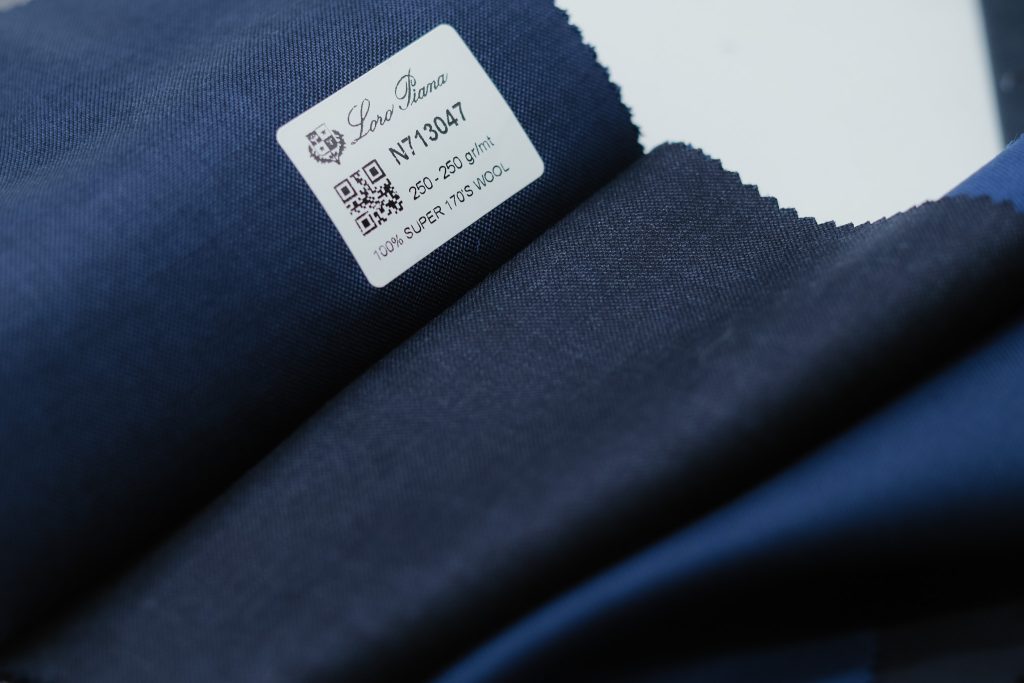
The fabric above is made up of 100% Super 170’s Wool, weighs 250 grams and doesn’t have any special twist or characteristic because it’s not noted on the sticker.
What we can gather from this sticker is that the fabric is great to wear all year round (its weight), and is very soft because it’s a Super 170s.
Another example:
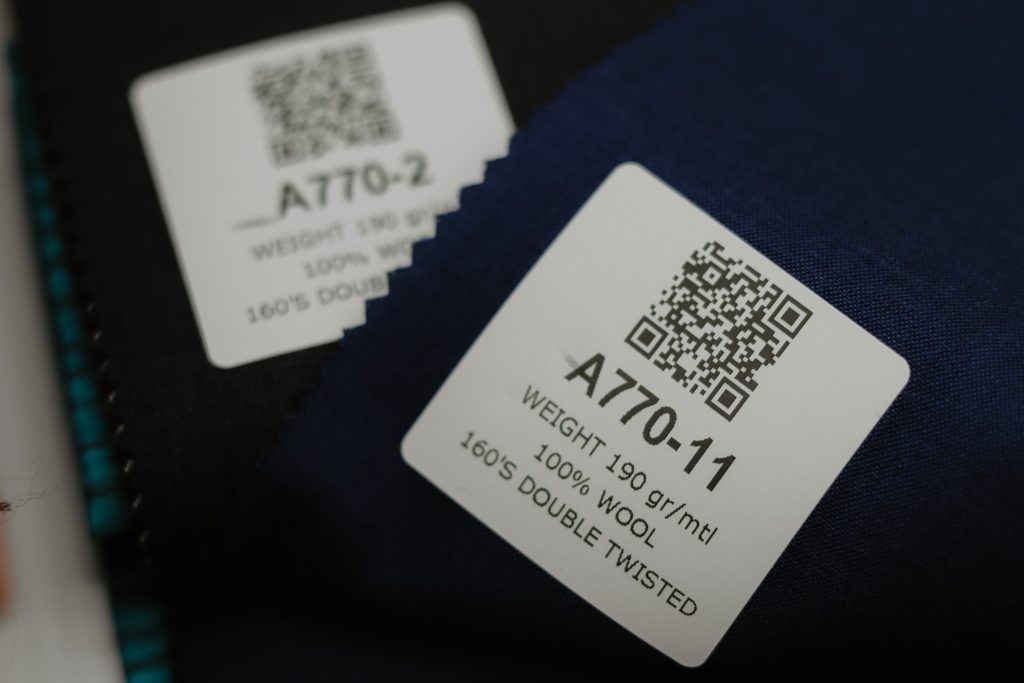
The fabric above weights 190 grams, is made from Super 160s wool, and the fabric is double twisted.
This means the fabric is ultra light weight (190 grams) and is only a summer suit, is soft to the touch (Super 160s) and is double twisted, which means it’ll be more durable than your standard Super 160s.
One last example:
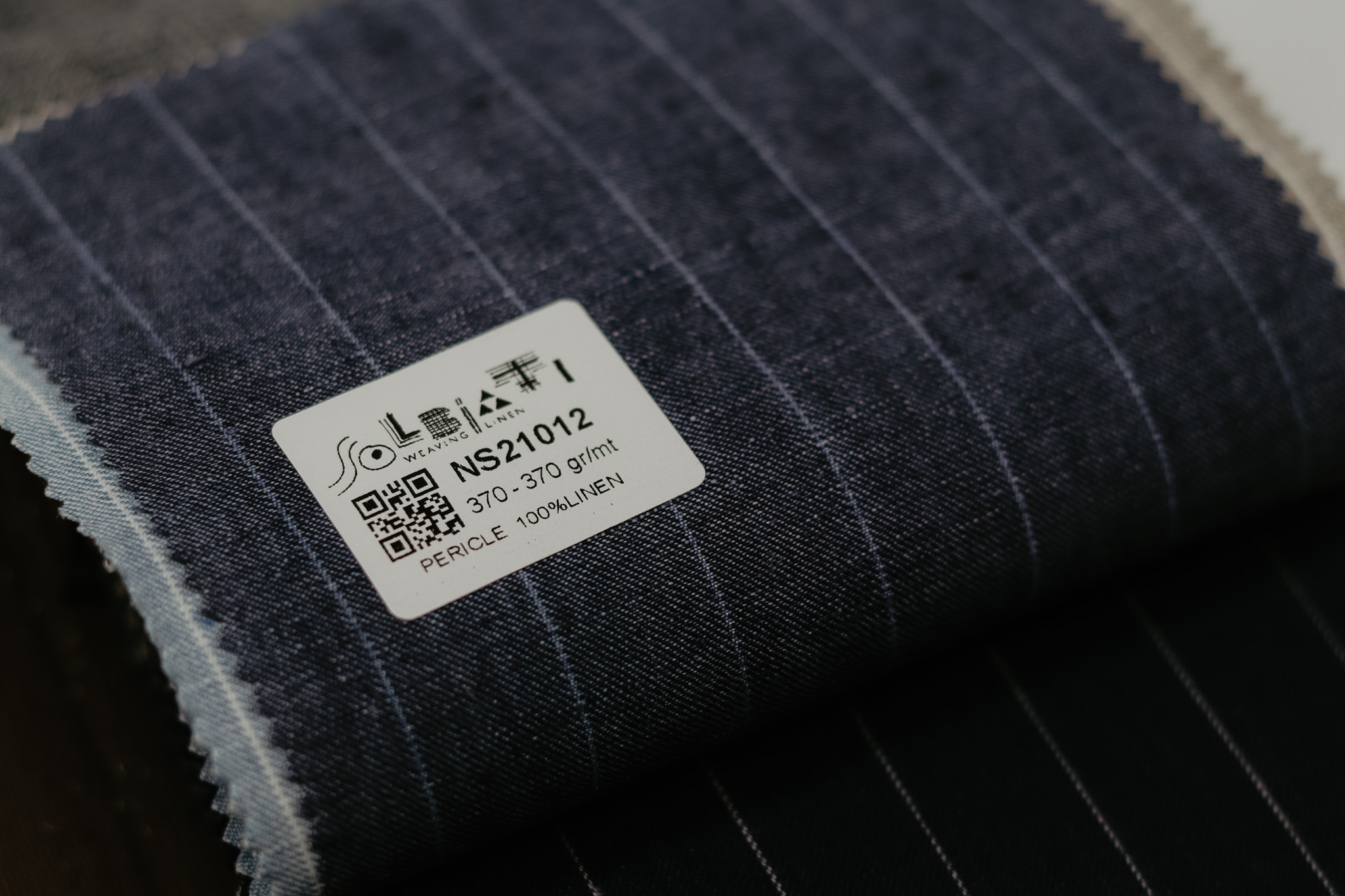
This fabric is made out of 100% linen and weights 370 grams.
This means that it’s designed for summer, and because it’s 100% linen, we’re going to disregard the weight to determine its seasonality.
I hope this helps! If you have any questions, feel free to reach out: inquiries@1701bespoke.com
Frequently Asked Questions
How do I choose the right fabric if I don’t already know anything about suiting?
You don’t need prior knowledge. Fabric selection is guided during your appointment, starting with how often you’ll wear the suit, the climate, and what you’ll be doing in it. Once those variables are clear, the right composition, weight, and Super range become obvious.
Is a higher Super number always better for a bespoke suit?
No. Higher Super numbers are softer, but also more delicate. The right choice depends on wear frequency. Suits worn often benefit from slightly lower Super numbers or reinforced yarns, while occasional suits can lean into finer, more luxurious fibers.
What’s the safest fabric choice if I want one suit that works year-round?
A 100% wool fabric weighing between 230 and 280 grams is the most versatile option. It performs well across seasons, drapes cleanly, and balances breathability with durability.
Why does twist matter if the fabric already feels soft?
Twist affects longevity and performance. Double-twisted fabrics hold their shape better, resist wear, and often breathe more effectively. This allows you to choose softer fabrics without sacrificing durability.
Commission Your Bespoke Suit Today
A true bespoke suit begins with a hand-drawn pattern, crafted from the world’s best fabrics, and finished with 50+ hours of expert handwork. Reserve your appointment today in Detroit, New York, or Los Angeles. Other locations available upon request.
Only 100 bespoke suits are made per year, so inquire below for availability.