Harris Tweed is a traditional fabric still hand made in Scotland, with a tradition going back at least 100 years. Below is its storied history and how this unique fabric is still made today.
History in your closet
Sure, your grandfather’s gold watch or those linen handkerchiefs from your father hold great sentimental value. And so, too, does a favorite, if out of style, tie you wore to your first important business meeting years ago that you just can’t seem to discard.
Or, perhaps, it’s your first custom-made shirt, a gingham plaid number that remarkably looked great with everything but now, years later, is a bit snug.
When we dress, we often connect to the past, even if we have no direct relation to what we’re sporting.
The history, though, is there.
Take Harris Tweed. That cherished fabric is still today woven by hand on the Island of Lewis and Harris in Scotland’s Outer Hebrides.
Born of the harsh landscape and unforgiving weather defining the islands northwest of the Scottish mainland, Harris Tweed is steeped in centuries of tradition.
A WOOL UNLIKE ANYTHING ELSE
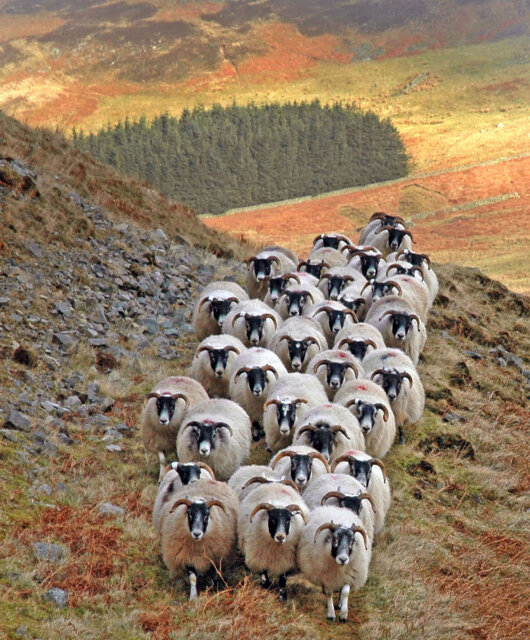
Unlike its Italian cousin, made from the Merino sheep native to New Zealand and Australia, Harris Tweed comes from the wool of blackface and Cheviot sheep, both native to Scotland. Their fleece is well suited to the climate of the Outer Hebrides, and provides the hardy nature of tweed, making it the perfect fabric for the outdoorsman: water resistant for rain and snow, warm for the harsh winds, and dyed to blend in with the Scottish landscapes.
Traditionally, these sheep were kept on family farms of the weavers. Today, though, the sheep can be found throughout Scotland, particularly in the Scottish Borders
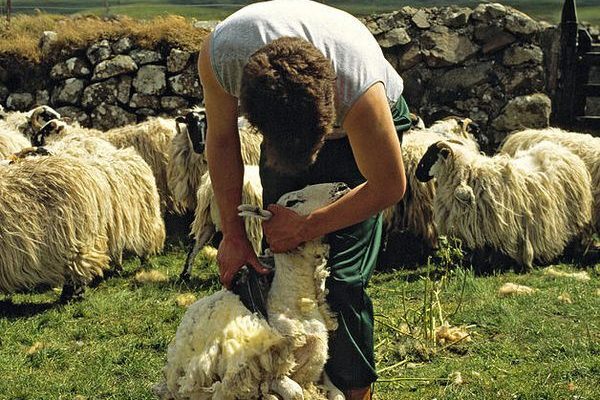
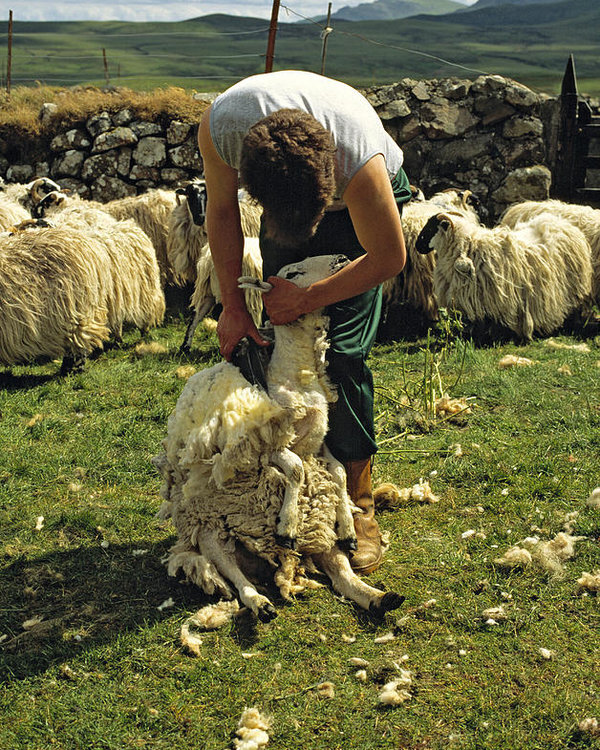
Each shearing season, around mid-May, traveling shearers visit farms throughout Scotland. The skill of a shearer takes great practice in order to move quickly and not cut the animal; professionals are in great demand. During shearing season, shearers from New Zealand are flown in lend their deft hands. Not only is the wool itself something completely distinctive to Scotland, so, too, is the dyeing process..
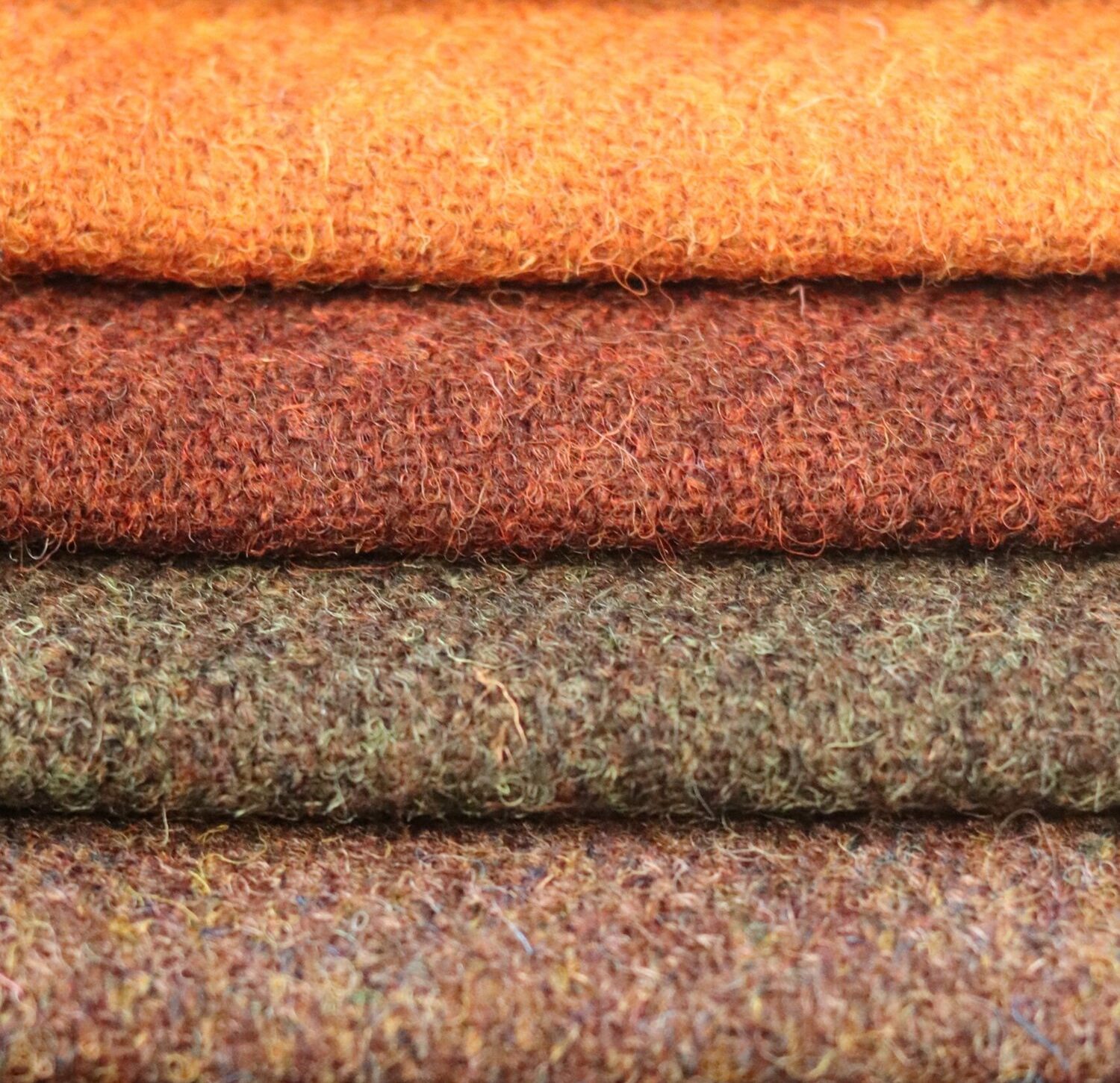
After the wool is washed and scoured on the mainland, it makes its way to mills on Lewis and Harris where it is dyed in colors specific to Harris Tweed yarns.
This process has remained the same for at least a century. Some yarns require five or six different colors blended together with a hayfork. The wool is placed in an industrial mixer that helps break apart the fabric into tiny, different colored pieces. These are clumped together, then stretched and spun into yarn.
The random clumping of different colors is what creates the variety of colors seen in Harris Tweed yarn, all slightly varying yard by yard, giving each piece of fabric a depth and distinctiveness.
But it’s how Harris Tweed is woven that is its trademark: by hand and in the homes of the islanders.
Approximately 140 weavers in the Outer Hebrides are self-employed using pedal-powered weaving machines, like a Hattersley single-width loom.
The introduction of the Hattersley in the 1920s created a boom for home weavers, who could compete with larger mills by weaving faster than if they used manual looms. They were also better equipped to handle complicated patterns. While many weavers learned their trade on Hattersley machines, they now use machines made by Griffith Textile Machines, which began building machines in the 1980s.
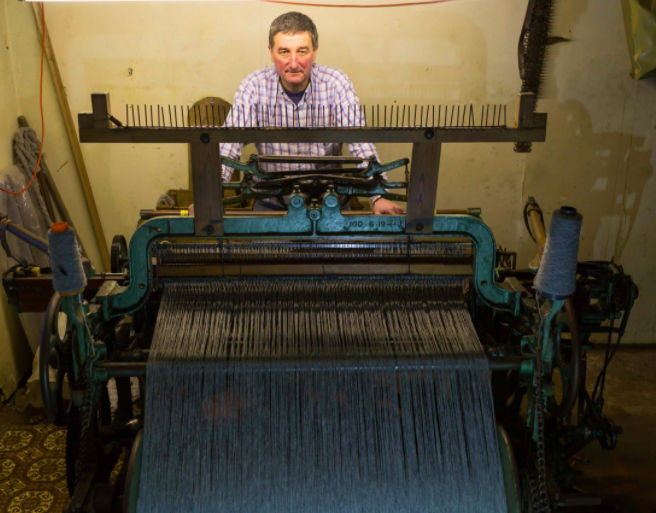
Each weaver is contracted out by mills for production. Weavers receive detailed instructions; mills are known for their signature styles.
The weavers create plastic punch cards for production describing the fabrics’ patterns. The punchcards show which yarns should be placed where to create the specific pattern of the designer.
Then the weaver can begin their work, powering their loom with their bodies.
Each machine, typically being over 100 years old, has its own quirks, along with each yarn being completely unique because of the dyeing process.
This is what makes Harris Tweed so special. Every fabric has not only been created by hand, but has an individual personality, characterized by its unique color and flaws.
So when you wear a garment made of Harris Tweed, it’s a garment that will never be created ever again, and is unique only to you.

