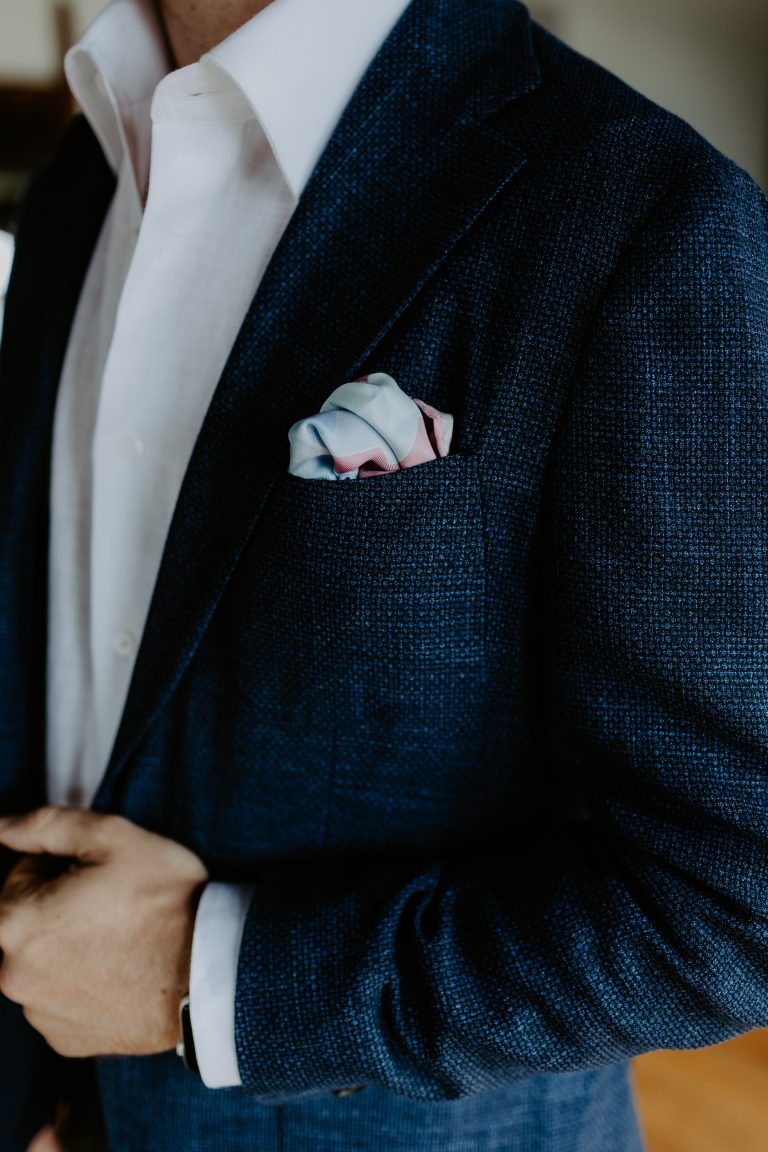
Shoulders are the foundation of any suit.
Whenever I’m looking at a suit, it’s the first thing I notice.
If they don’t fit correctly, an excellent fabric or even perfect craftsmanship won’t matter.
Poorly fit shoulders stick out like a sore thumb and can completely ruin a look.
The purpose of this article is to explain how shoulders should fit, common mistakes to avoid, and an overview of the different ways you can customize them.
How Shoulders Should Fit
The way a shoulder fits can be subjective, guided by what’s known in the industry as “rock of eye,” or the tailor’s trained judgment.
But there are a few objective tests you can use to determine if the fit is off.
Shoulders are too big
When shoulders are too big, it has an effect of shrinking the size of your head disproportionally, as if a child is wearing an adult’s suit.
One quick test to see if your shoulders are too big: stand perpendicular to a wall and lean against it.
If the shoulder pad or fabric touches the wall before your actual shoulder muscle does, the fit is too large.
A properly fitted shoulder should have a smooth, natural transition from the shoulder pad to the arm without extending beyond your frame.
Shoulder is too small
On the flip side, if a shoulder is too small, it enlarges the head, as well as restricting movement and creating creases all along the arms, back and breaking the lapels.
The test for this is whether you see a ripple or bunching of fabric under the shoulder pad, or whether it looks like from the front or back, that the shoulders are breaking the jacket open.
When the fit is perfect
A perfect fitting shoulder will have neither fabric ripples, or hang off the wearer’s shoulders.
Instead, there should be a gentle transition from the top of the shoulder into the shoulder muscle.
The people that have the hardest time with shoulders are those that have large shoulder muscles. Particularly body builders.
For these folks, it’s hard to obtain a gentle transition because their muscles protrude so much, they’ll always a ripple underneath the shoulder pad.
That’s why these individuals should avoid a shoulder pad if they can. An unconstructed jacket will guarantee them a gentle transition and compliment their frame better than a shoulder pad can.
Types of Jacket Shoulders
Different shoulder styles allow for customization based on personal preference, body type, and the suit’s purpose.
There are five primary types of shoulders:
Unconstructed Shoulder
This shoulder type features no padding, offering a relaxed, natural look. It’s ideal for those with broad or muscular shoulders, as it eliminates the risk of ripples while maintaining proper proportions.
An unconstructed shoulder creates a seamless transition from the shoulder to the arm, which is why it’s a favorite for casual or lightweight suits.
These days, the majority of 1701 suits contain no shoulder pad. I personally find a soft silhouette to be complimentary to most people, so unless there is a specific reason, I almost always recommend an unconstructed shoulder.
Soft Shoulder
A soft shoulder includes minimal padding, striking a balance between structure and natural fit. It’s versatile, working well for both formal and casual settings, and adds a touch of elegance without looking stiff.
For formal suits, like tuxedos or business suits, I’ll often recommend a soft shoulder. Certainly these types of suits can also have an unconstructed shoulder as well, but giving a little structure for a serious event makes the suit appear more formal.
Normal Shoulder
This is the standard padded shoulder you’ll find on most suits.
The padding is about twice the size of a soft shoulder and is designed to enhance the wearer’s natural silhouette.
I only suggest a normal shoulder for those with very sloped shoulders, or those that don’t appear to have much structure and need to augment their frame, but for the most part, a normal shoulder is a rare occasion these days for a 1701 suit.
Roped Shoulder
A roped shoulder features a distinct ridge at the sleeve head, adding a bold, architectural detail.
They call it a roped shoulder because old tailors used to literally put a small piece of rope where the sleeve and shoulder meet.
Roped shoulder is a very distinctive look and I would almost exclusively reserve it for a tuxedo or a formal suit of some kind. I would never add a roped shoulder to a sportcoat to wear out with friends or on a date; it’s a little too distinctive and formal for those settings.
Spalla Camicia
The spalla camicia, or “shirt shoulder,” is a hallmark of Italian tailoring.
It’s characterized by a soft, unstructured look with a slight puckering at the sleeve head.
You’ll only find spalla camicia on handmade jackets, so if you see it out in the wild, it’s something to give a compliment to.
Spalla camicia, however, isn’t for everyone. I only recommend spalla camicia for someone that already has a good sense of style and a few jackets and suits in their wardrobe.
Wrapping Up
Getting the shoulders right is the single most important factor in achieving a perfect fit. Whether you’re going for a relaxed, unconstructed shoulder or a bold, roped look, it’s all about balance and proportion.
This is why it’s important to work with an expert that can help guide you through these decisions and figure out what’s best for you.

