
For most of my life, I thought of World War II as a conflict fought on battlefields, in factories, and across oceans. The impact on politics, technology, and economies was obvious. But fashion? That seemed like a frivolous afterthought in a time of global crisis.
Then I came across something that didn’t sit right.
I was reading about the rationing of materials during the war when I stumbled upon a peculiar detail: men’s suit sales in the U.S. had reportedly tripled just before the country entered the war.
How could something as utilitarian as a men’s suit—a staple already owned by most adult men—experience such a sudden spike in demand during a time of looming austerity?
It didn’t make sense.
So I started digging.
The Victory Suit Phenomenon
The story began in Britain.
When the war started there in 1939, the government immediately implemented strict regulations on fabric use to conserve materials for military uniforms and equipment.
These restrictions extended to civilian clothing.
Suit details that required a lot of fabric, like double-breasted jackets and wide lapels, were eliminated.
The result was a pared-down suit called the Victory Suit; propaganda tying fashion with patriotism.
And it worked.
Men wore the Victory Suit with pride, not just to comply with regulations but as a way of showing solidarity with the war effort.
But the Victory Suit and an unintended consequence: men decided to buy more suits with the large fabric stylings fearing they wouldn’t be able to get them again.
In some cities around the US, suit sales tripled.
So when the US entered WWII in 1941, the government had to come up with a plan to ration materials, but not induce panic buying.
Enter Stanley Marcus
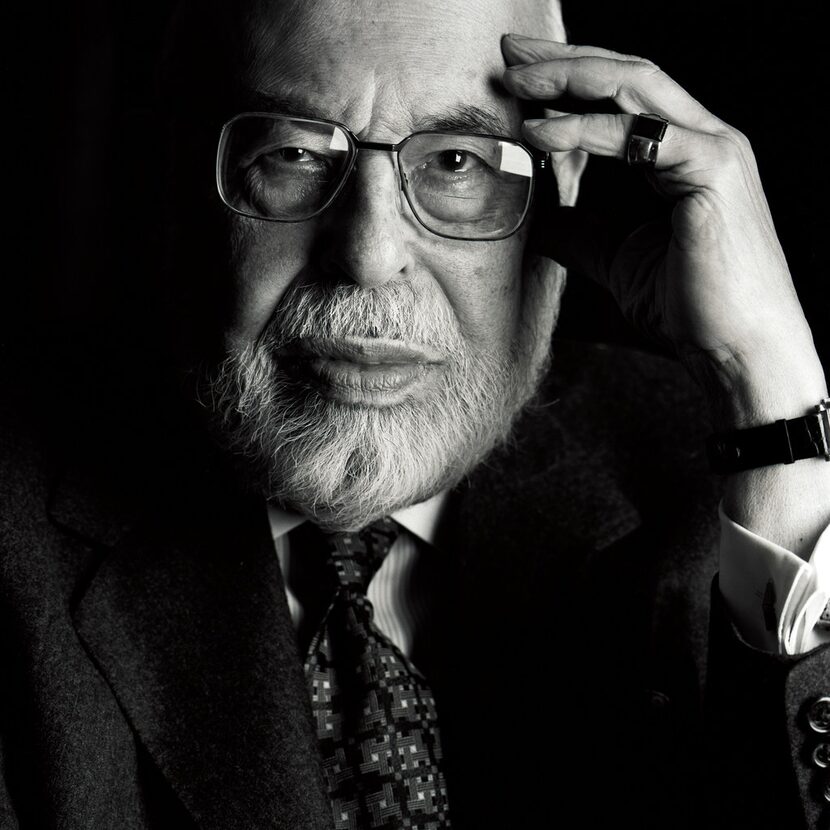
Stanley Marcus wasn’t a name I expected to encounter. As the son of the co-founder of Neiman Marcus, he was a retailer, not a policymaker.
Yet just three weeks after Pearl Harbor, Marcus found himself in Washington, summoned by President Franklin D. Roosevelt himself.
The government needed a strategy to ration clothing materials without inadvertently stoking demand like Britain had and wanted Marcus to come up with the plan.
Marcus gathered together 70 of the country’s leading fashion editors to come up with a plan to freeze fashion.
He knew that fashion trends, left unchecked, could undermine rationing efforts. If designers introduced new silhouettes or styles, it would encourage people to discard old clothes and buy new ones.
And in an era of limited resources, that was a luxury the country could afford.
The fashion editors as well as style influencers were tapped to limit new styles released.
1942’s new fashion would be the same as 1941’s fashion.
Then Marcus introduced legislation to keep the fashion designers honest.
Halting Fashion Trends
Under Marcus’s guidance, the War Production Board issued Regulation L-85 in 1942. This set strict limits on clothing design.
Said Marcus:
We settled on certain prohibitions, such as lengths, sleeve fullness, patch pockets, ensembles, sweeps of skirts, widths of belts and depth of hems. … The restrictions we put into effect froze the fashion silhouette. It effectively prevented any change of skirt length downward and it blocked any extreme new sleeve or collar development, which might have encouraged women to discard existing clothes.
Women’s clothing bore the brunt of these rules, while menswear largely dodged the regulations because men’s clothing required less fabric.
And while the regulations seemed stringent, in combination with the fashion editor’s compliance, Marcus’ plan worked.
For the first time in modern history, fashion trends were intentionally paused.
Paris in the Shadows
One of the most fascinating consequences of the war was the shift in the global fashion landscape.
Before 1940, Paris was the undisputed epicenter of style. But when Germany invaded France, the city was effectively cut off from the rest of the world.
With Paris in the shadows, American designers seized the moment.
Many French couturiers fled to New York, bringing their expertise with them. For the first time, American fashion wasn’t just imitating European trends—it was setting them.
This marked the beginning of what some historians call the “American Century” in fashion, a period when U.S. designers gained prominence and independence from European influence.
WWII’s Fashion Legacy
By the time the war ended in 1945, the fashion industry had undergone a profound transformation.
The rationing of materials had forced designers to innovate within constraints, leading to a new appreciation for simplicity and practicality.
More importantly, the war had reshaped the global fashion hierarchy. Paris eventually reclaimed its position as a style capital, but American designers had proven they could stand on their own.
And yet, the story of how Stanley Marcus and the War Production Board froze fashion during the war remains one of the most compelling examples of how something as seemingly trivial as clothing can intersect with the larger forces of history.
What started as a patriotic necessity became a turning point for the industry, challenging our assumptions about the role of fashion in times of crisis.
In the end, it’s a reminder that even the smallest details—like the width of a skirt or the length of a jacket—can tell us something about the world we live in. And sometimes, they can even change it.

