Summer heat can pose a challenge to those of us that wear suits everyday, and as the temperatures heat up, It’s important to wear the type of fabric that doesn’t make you regret your wardrobe choice.
That’s why it’s important for summer suits to be made of the right type of materials that enable you to keep cool, when the sun is beating down. create some lightweight,
This brief article is going to give you a rundown of what you should look for in a fabric, as well as the different types of fabrics you can choose to keep you cool.
Watch the Weight
Whenever you’re looking at a fabric, it’s important to check out the weight.
If you’re not up to speed on how to evaluate a fabric, check out our article: What To Look For In a Suiting Fabric. [INSERT LINK HERE]
If you’ve already finished that article, then you know one of the main metrics to look at when evaluating a fabric is its weight.
A year round fabric has a weight in between 230 and 270 grams per square meter.
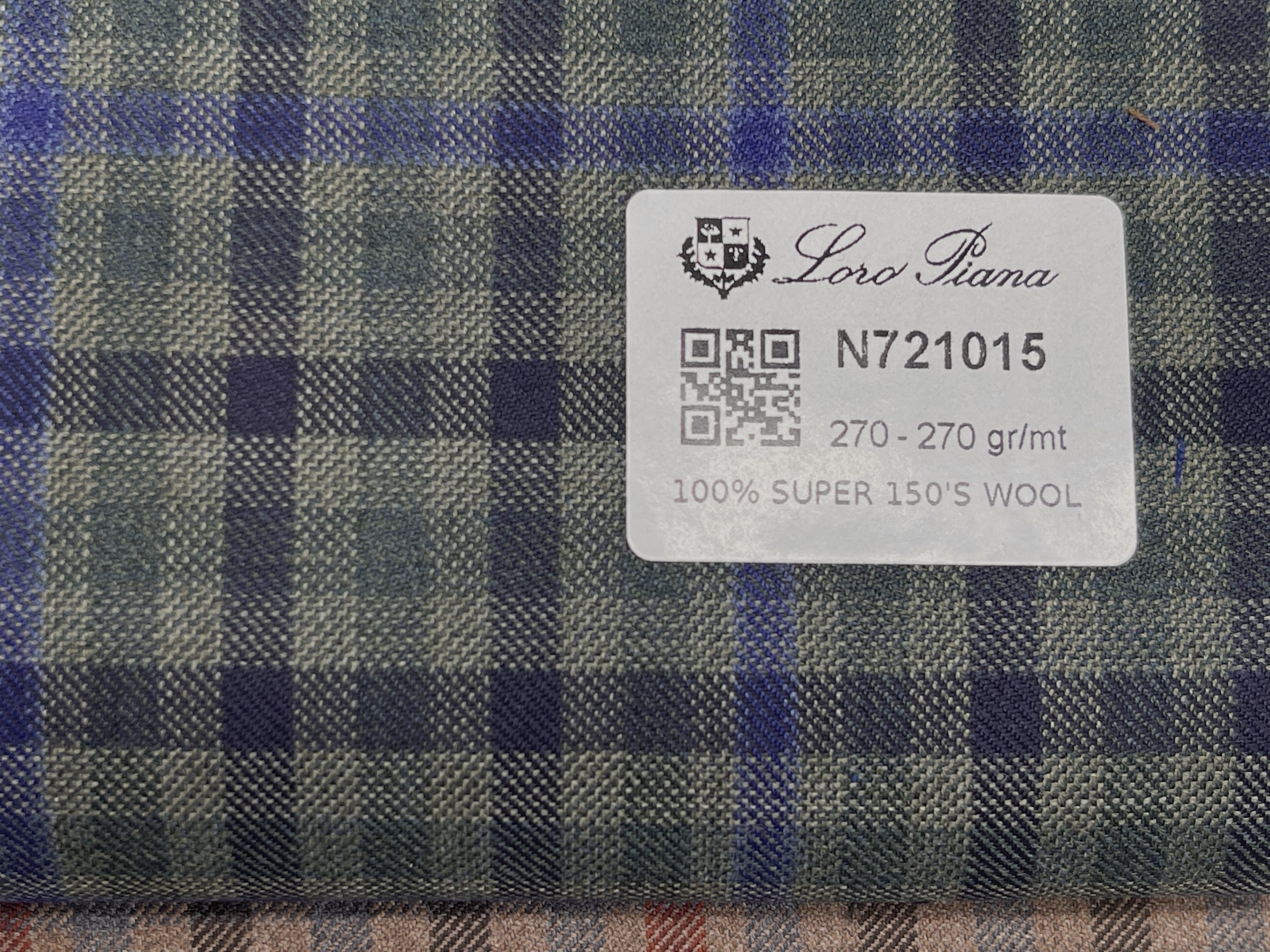
In the fabric to the right, out of Loro Piana’s Australis Jacketing collection, the weight is 270 grams, which puts it at the higher end of the four seasons fabrics.
But not all wools are heavy.
Although wool gets the reputation of being a fabric meant to keep you warm, there are very light weight wools that will feel like you’re wearing nothing.
Perfect for the summer time.
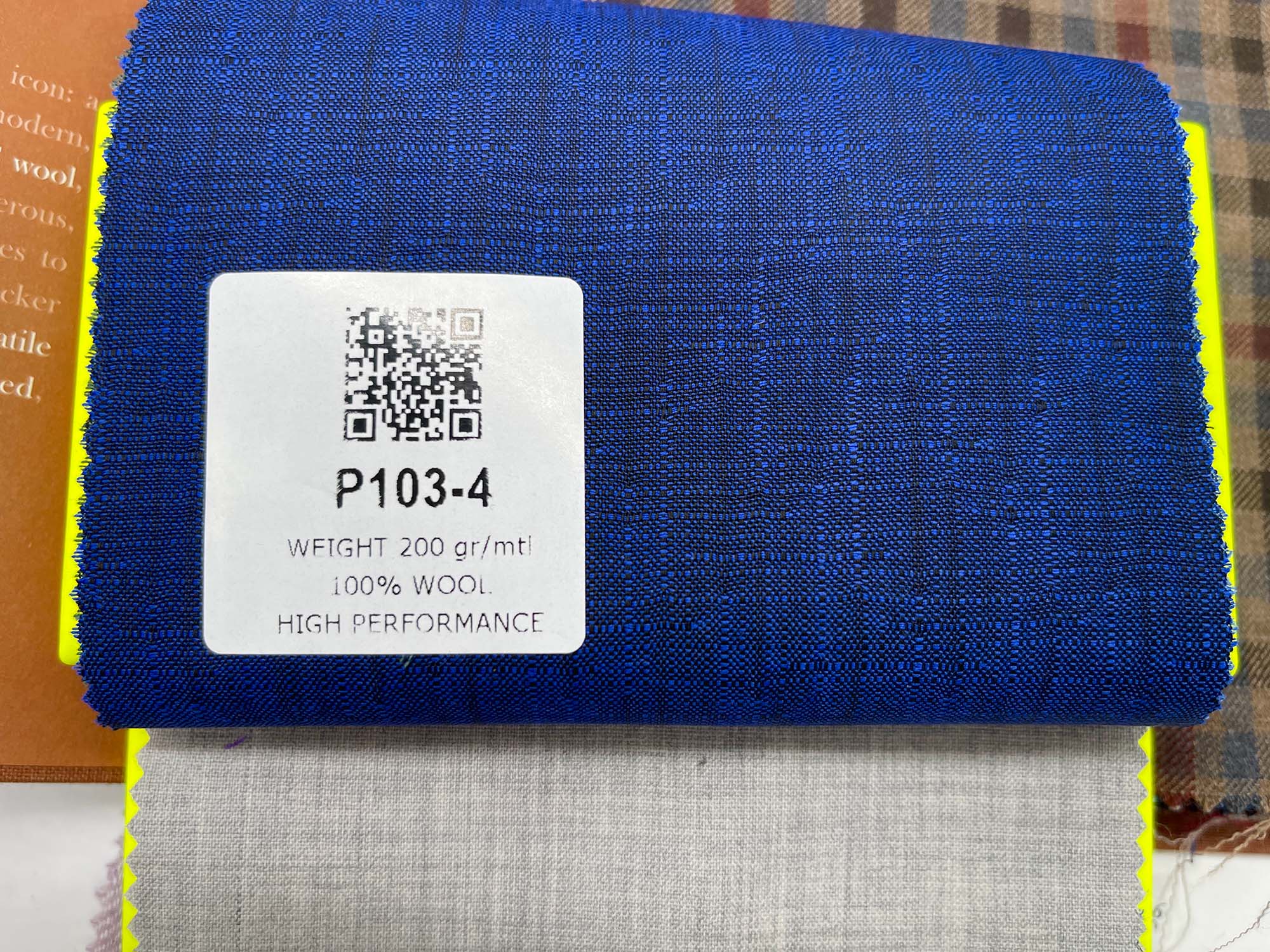
The blue fabric pictured is from the Italian design company Ariston. I don’t call them a mill since they don’t own their own manufacturing, but rather outsource to other Italian fabric mills.
Howveer, Ariston does the best job at designing fabrics and has some of the most creative and artistic talent around.
As you can see form the sticker pictured, this 100% Wool fabric only weights 200 grams, which makes it ideal for the summer time.
Wearing something like this will make sure any breeze you’re around cuts through your suit and keeps you cool.
Choose the Right Weave
While looking at the weight of a fabric is important, one aspect that can completely negate the weight is the weave of the wool.
And keep in mind, this only applies to wool.
The weave of wool can add a lot of different characteristics, but for warm weather, the main weave I want to talk about is called a Fresco weave, or double twist (doppio ritorto as the Italians call it).
Invented in 1907, a double twisted fabric wraps one yarn around another, which ensures a cylindrical shape.
What most people don’t know is that by the time a tailor receives a fabric to make a suit from, the cylindrical shape of a yarn flattens out.
When the yarn flattens, it expands and closes all of the air gaps in between the yarns.
J&J Minnis, which eventually partnered with John G. Hardy, to form Hardy Minnis, invented the Fresco weave to counter the yarns flattening.
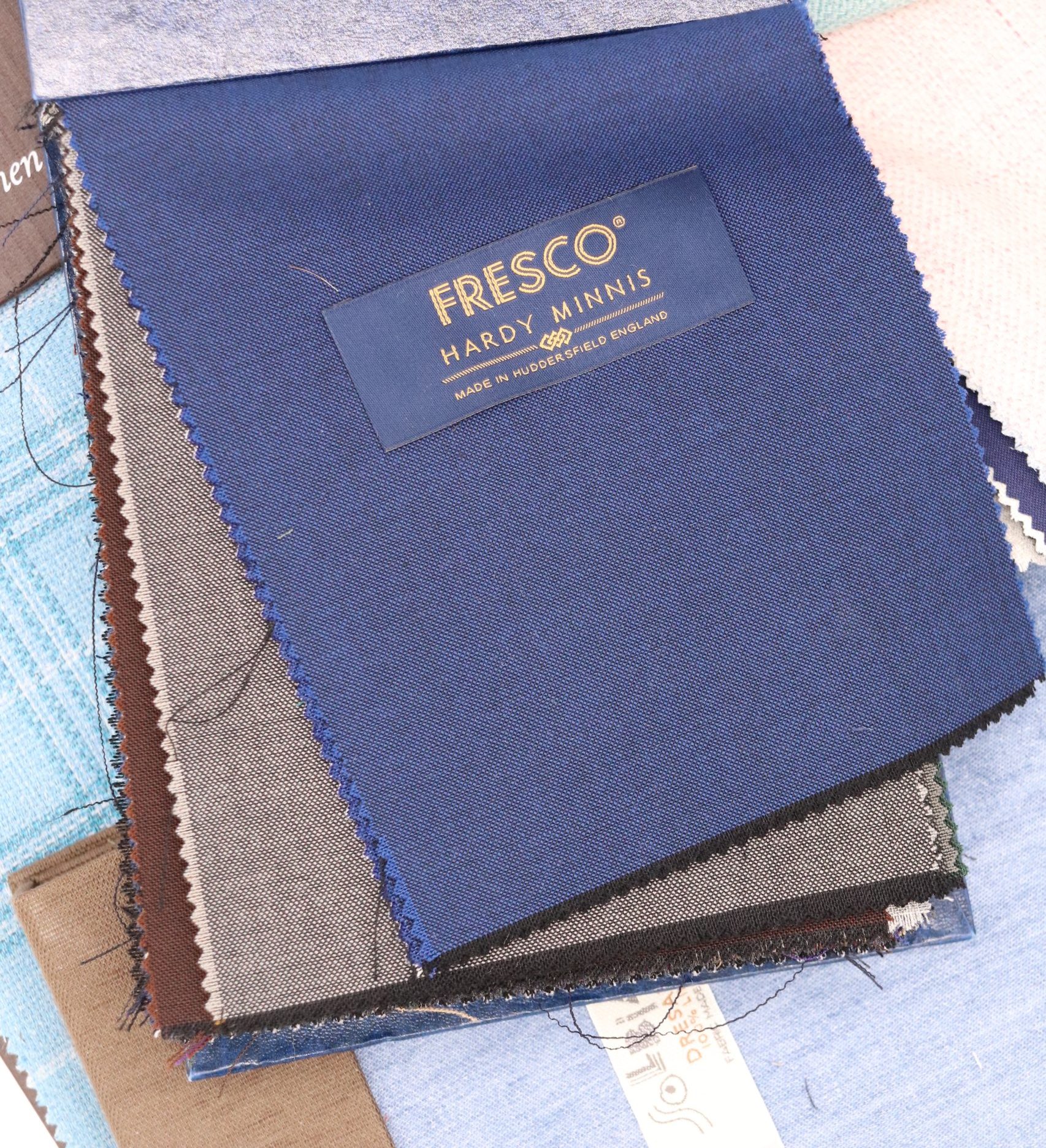
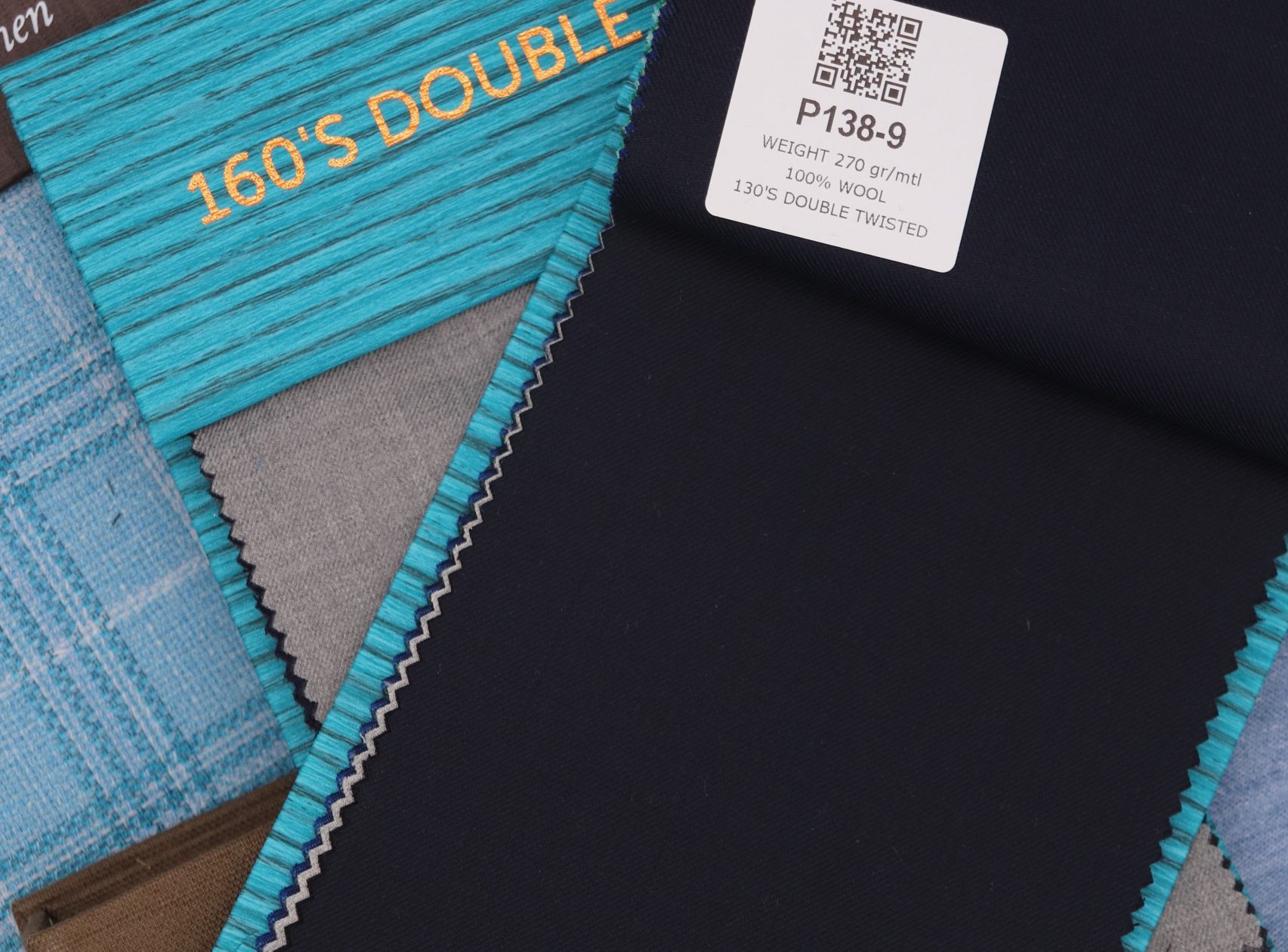
The term has a copyright, so all the other mills around the world come up with their own name, but a double-twist is the most common to see.
When you see a fabric with a double twist, the first thing you should do is hold it up to the light to see how much light passes through it.
A Fresco (from Hardy Minnis) typically weighs around 280 grams.
So on first blush, you would assume this fabric is a heavy, four-seasons fabric.
But if you hold it up to the light, you’ll notice how transparent the fabric is.
If you see light passing through it, that means air will pas through it too, making a Fresco weave ideal for summer heat.
Look for Linen
One of the best fabrics for the summer time is not wool, but linen.
Linen is a stalk of a plant derived from the flax plant.
The plant is cut down, then decoriated, which means to remove the outer shell of the the plant.
By the way, if you use the term decoriate, to a tailor, I guarantee they won’t know what they’re talking about because it’s a very advanced term, only for those in the know.
The inside of the flax seed plant looks a lot like wool and cotton whne its outer shell is removed.
This wooly material is then combed and spun to create a yarn, which is woven into fabric.
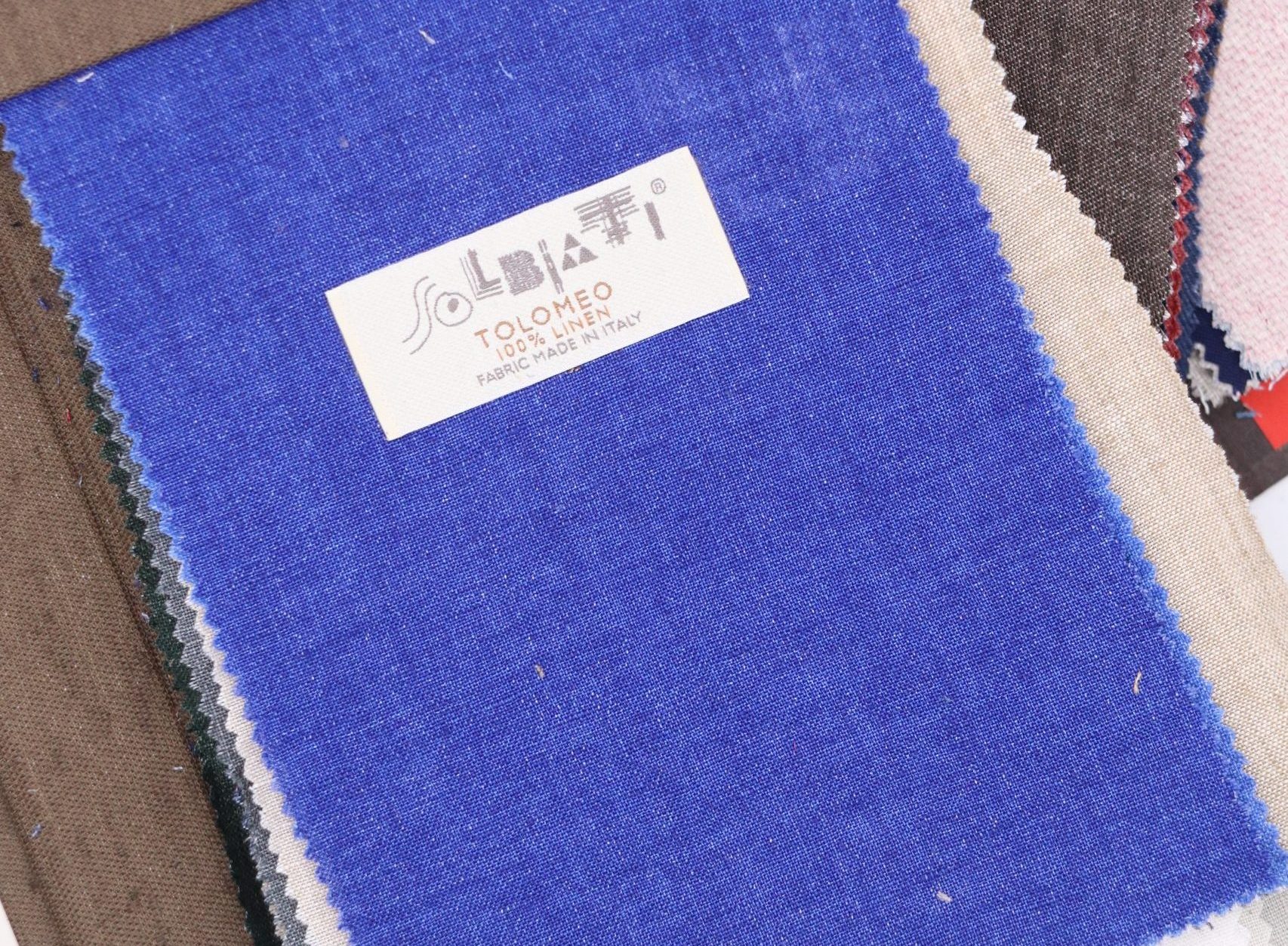
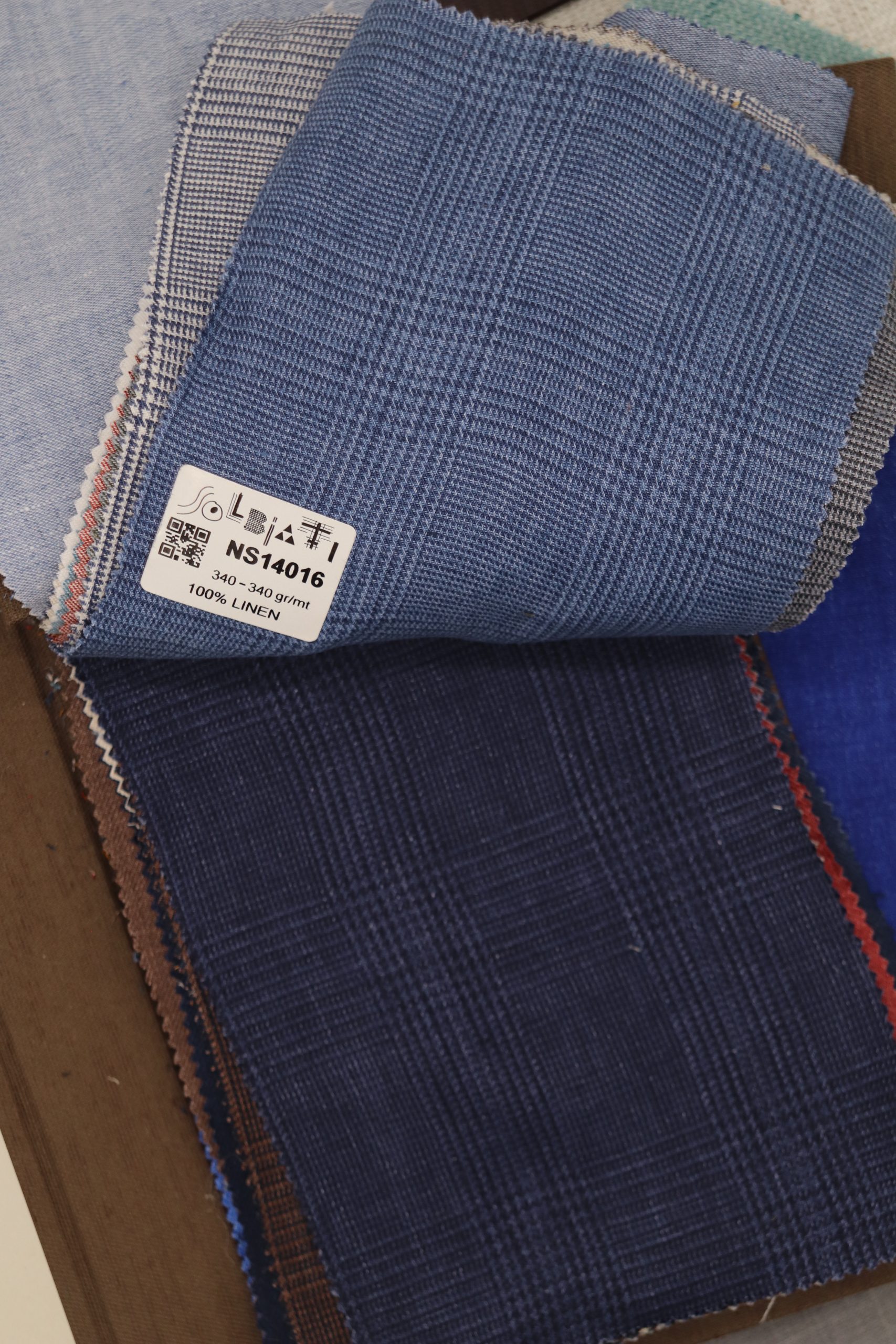
What makes the fabric so unique is that although it is now in a different form, the stalk of the flax plant retains its most interesting characteristic; the capillary action.
The capillary action, defined by Wikipedia is:
“The process of a liquid flowing in a narrow space without the assistance of, or even in opposition to, any external forces like gravity.”
In other words, plants draw water from the ground through their stalk, and that’s what linen does with your sweat.
While typically there is lining inside of a jacket in the front and back panels, as well as in the trousers, in the front down to the knee, this will still play a major role in keeping you cool, particularly in the torusers.
Not only will linen allow more air to pass through it, but back side of the trousers, which tend to be unlined, will help absorb sweat from the back of your thighs and butt, which will help keep you cool.
Coupled with a half lined, or unlined jacket, the linen fabric will absorb 20% of its weight in moisture before it feels wet to the touch.
In other words, if a linen garment weights 280 grams, then it can absorb 28 grams of sweat before it feels wet. To put it in perspective, the average human will lose 1 gram of moisture per hour through sweat, and there is typically at least 4 meters of fabric in a suit, resulting in at least 112 hours of continuous sweating before linen starts to feel wet.
It’s not perfect science, because that assumes the moisture is distributed evenly, so don’t be a jerk about it, but you get my drift.
Linen absorbs your sweat, which keeps you cool and makes it the ideal fabric for summer time.
What about cotton?
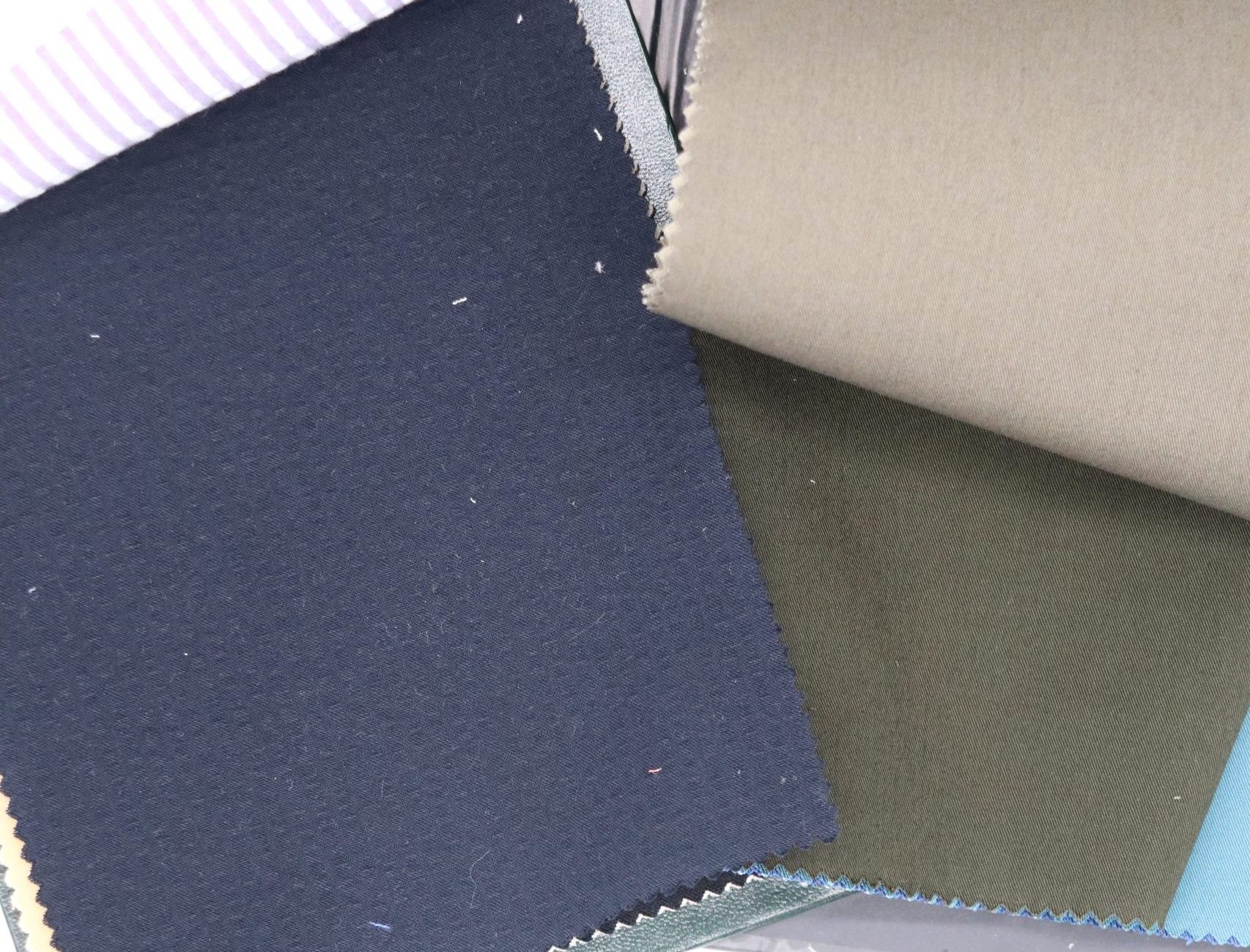
Of course, cotton is known as the summer fabric, but how does it hold up against linen?
Cotton, unfortunately, only absorbs moisture and has no moisture-wicking characteristics.
What does this even mean?
If cotton gets wet, it doesn’t use the capillary action to distribute the moisture. The moisture only saturates the area in which it’s exposed.
So while cotton is typically known as a great summer fabric, it’s more form over function. If you want something that actively keeps you cool, get as much linen as you can.
Overall, there are many great options for summer suiting, where you can look cool while staying cool. If you have any questions make sure to comment below and I’ll do my best to respond quickly.

