Most people know the suit as a British invention.
But what they don’t realize is that the style of English suiting was the only style for quite some time.
Even in hot climates, suits were constructed with the same heavy structure designed for England’s rainy and cold weather.
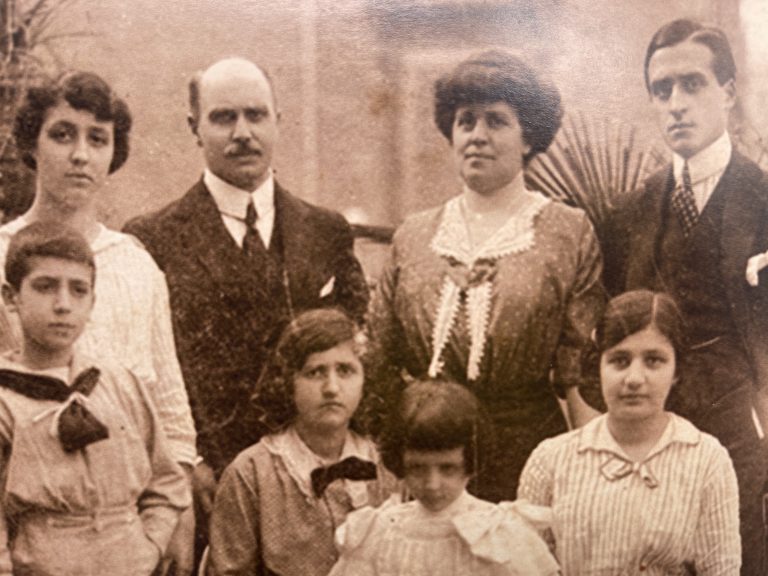
That was until two men, Gennaro Rubinacci and Vincenzo Attolini, reimagined tailoring and gave the world what we now know as the Italian style.
The Italian Suit Started Off English
The English company Henry Poole & Co, founded by James Poole in London, is credited with developing the first modern method of making suits.
For decades after, if European tailors wanted to learn their craft, they went to England to study the techniques developed by Poole.
This meant in Italy, Italian suits were essentially English suits made on Italian soil.
They shared the same rigid structure; heavy chest pieces, padded shoulders and full linings — regardless of the warmer Mediterranean climate.
Then Rubinacci and Attolini, came along and rewrote the rules to fit their way of life, creating something distinctly Italian.
The Beginnings of Rubinacci

The Rubinacci family didn’t start as tailors.
They made their fortune from importing fine silk from India and selling to the tailoring houses in Naples.
Gennaro Rubinacci, born in 1895, grew up surrounded by luxury fabrics and developed a reputation as a dandy after serving in the Neapolitan cavalry.
Rubinacci’s love for color and his impeccable taste earned him a reputation as a style advisor, where he eventually became a stylist for Italian nobility.
He would accompany royalty and aristocrats to their tailors, offering guidance on cuts, colors and fabrics.
By the 1930s, he decided to open his own shop and called it London House.
The name was a nod to Savile Row, but it was London House where Rubinacci conceived of a new style that was anything but English.
Enter Vincenzo Attolini
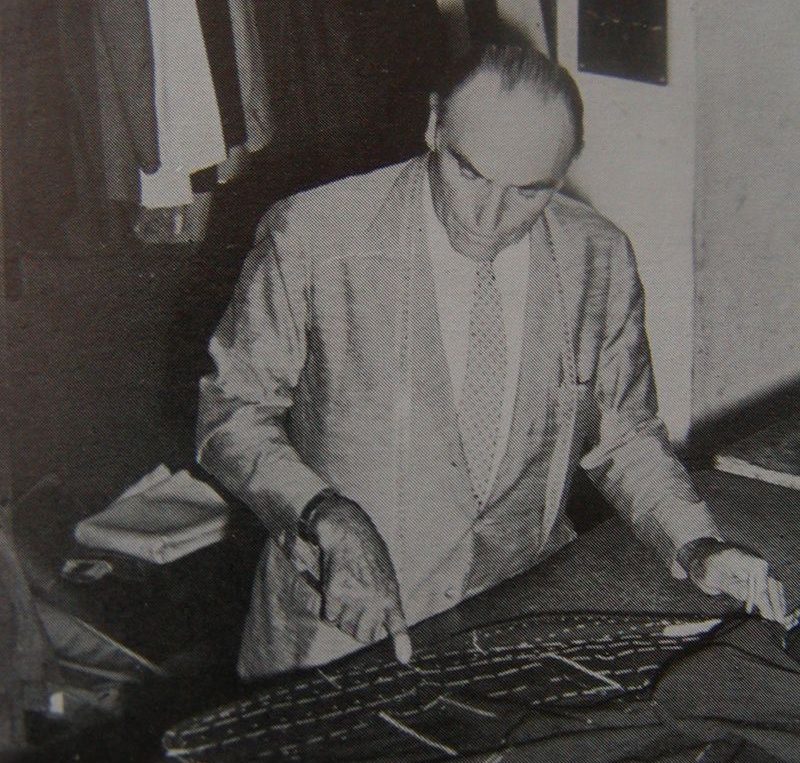
While Rubinacci curated the aesthetics for customers, it was his head tailor, Vincenzo Attolini, who revolutionized how the suits were constructed.
Attolini took what was, at its core, an English suit and stripped it down.
He removed the heavy padding from the shoulders, cut away the bulky chest piece and used minimal lining.
The result?
A lightweight, unstructured jacket that became known as the soft coat.
This innovation wasn’t just a technical improvement — it was a major shift in style.
The soft coat reflected the relaxed elegance of Italian life with its clean and flowing lines, and became the foundation for what we now consider as the Italian silhouette; natural shoulders, lightweight construction and little to no lining.
Rubinacci vs Attolini
It was Rubinacci’s style that set the stage to develop the soft coat, but it was Attolini’s hands that made it.
So when it comes to getting credit for who is the father of Italian style, there’s a debate.
Today, both the families of Rubinacci and Attolini continue to make the claim the soft coat was their invention.
While it’s more of a friendly ribbing between the two tailoring houses, both are well known today for crafting extremely high-quality garments embodying the Italian style.
I personally don’t think that one man deserves all the credit, because they both depended on each other to make the style.
Just like most great innovations, it’s collaboration that makes it happen.

