When you think of technology that shaped civilization, the loom probably doesn’t come to mind. But it should.
For thousands of years, the loom has been one of humanity’s most important inventions, transforming raw materials like wool, flax, and cotton into the fabrics that clothe us, shelter us, and enable trade.
Its history is a story of human creativity, shaping economies, cultures and even how we live.
As I began to research the loom and its history, I realized it isn’t just about fabric—it’s about ingenuity, trade, and how humans have always sought to turn the ordinary into something extraordinary.
This is the story of how one invention wove its way through human history, influencing everything from ancient traditions to modern economies.
What is a Loom?
Before diving into the history, it’s important to understand the basics.
What exactly is a loom?
A loom is a device for weaving threads into fabric.
It works by interlacing two sets of threads: the warp, which runs vertically, and the weft, which weaves horizontally over and under the warp threads.
Simple looms have the warp stay in one place, while the weft weaves over and under them.
And complicated looms, which can make patterns and images on the fabric, raise and lower the warp to expose or hide different yarns.
Looms are one of mankind’s earliest inventions and because of it, wars have been fought, nations built and people have been pulled out of poverty because of their ingenious innovations to it.
But just how long has man been weaving fabric?
The Earliest Loom
In doing this research, I wanted to find the earliest evidence of weaving, which led me to a cave in Dzudzdana, in the Republic of Georgia.
There, archaeologists made a stunning discovery: dyed flax fibers that were spun and woven together.
Flax fibers are what we call linen, and when the fibers were carbon dated, the archaeologists discovered they were over 36,000 years old.
It was hard to wrap my head around. People were weaving long before they wrote, built cities, or even farmed.
We tend to think of technology as something modern, but weaving is one of humanity’s first great inventions.
And while the Dzudzuana fibers are the oldest we’ve found, they’re probably not the first. Archaeologists think weaving might be even older, a craft passed down long before there were looms as we know them.
The Loom in Egypt
To get a clearer picture of how looms evolved, I turned to ancient Egypt, where the loom was already an essential tool.
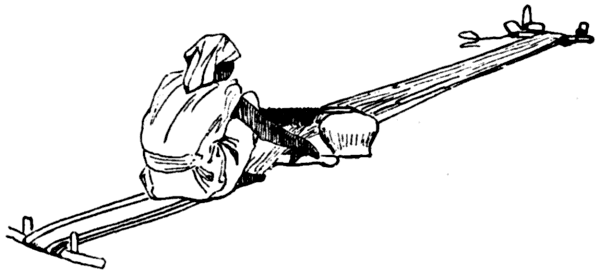
At first, looms were simple—warp threads stretched out on the ground, with the weft woven over and under by hand. Then came vertical looms, which were more efficient.
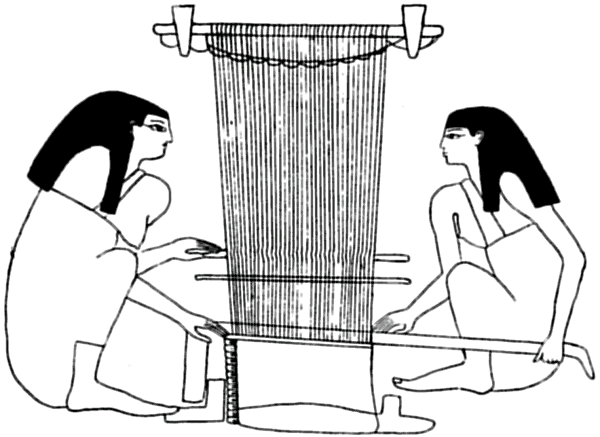
Warp threads were hung from a pole, making it easier to control tension and weave intricate designs.
But the real game-changer was the warp-weighted loom, which used weights to keep threads taut. This design spread to ancient Greece, where it became known as the Hellenistic loom.
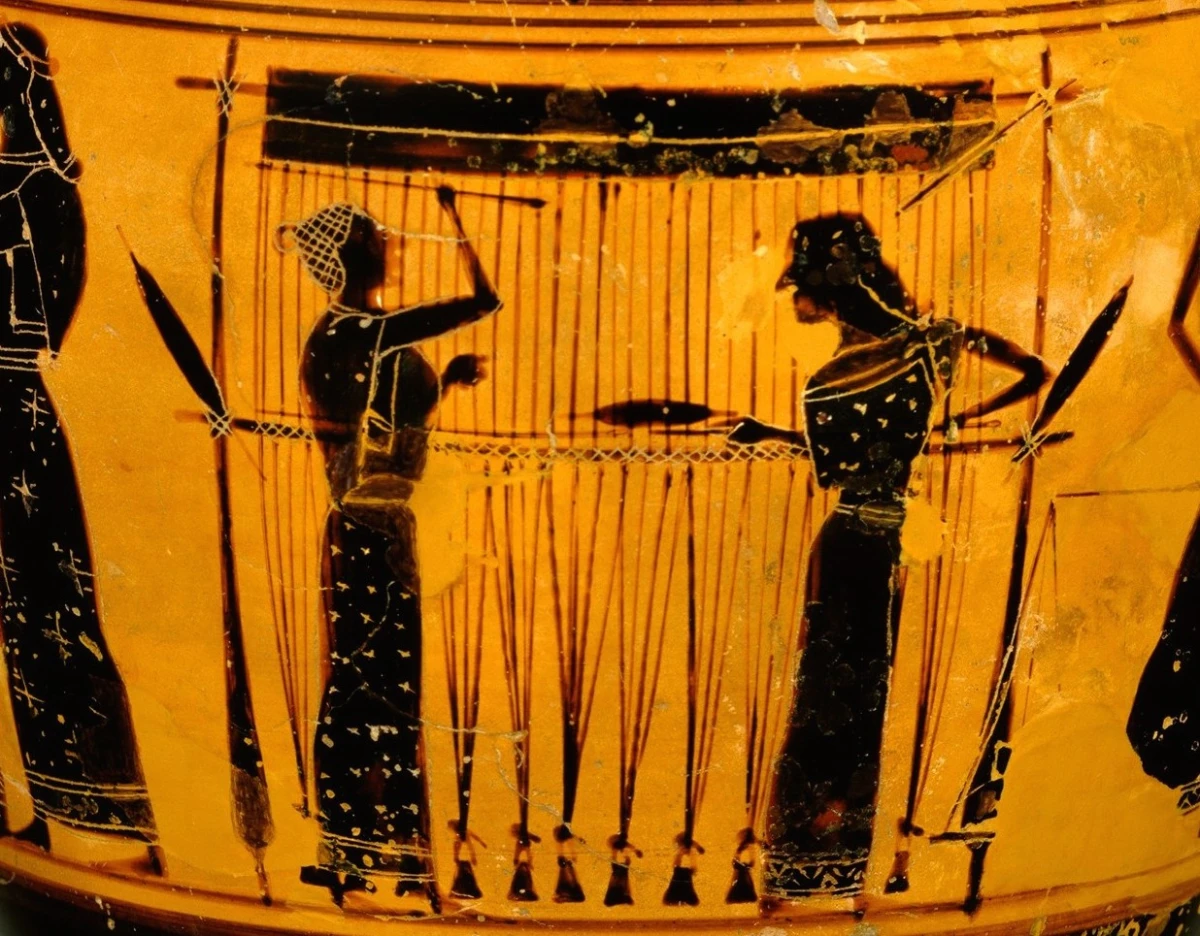
Suddenly, weaving wasn’t just practical—it was an art form.
The Drawloom from China
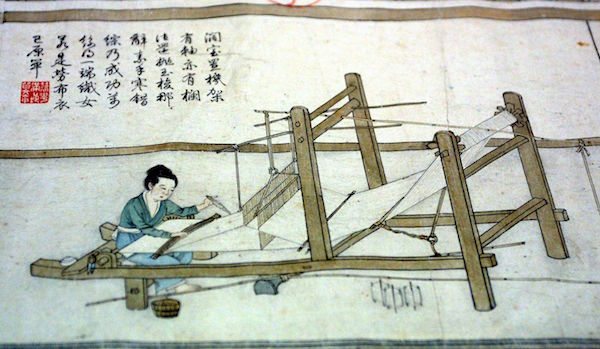
But the greatest ancient advancement in loom technology came from the Chinese with their invention of the drawloom.
This type of loom was invented around 600 BC and enabled weavers to create intricate patterns in their cloth by easily raising and lowering the warp yarns.
It made intricate designs that were once impossible easy to create.
However, this technology was extremely slow to spread, and didn’t extend outside of China until around 300 B.C, working its way over the Himalayas into areas like Khazakstan, India, Pakistan and Iran.
Although the drawloom was such a leap forward in technological advancement, it stayed East of the Zagros mountain ranges for nearly a thousand after that, only reaching the Mediterranean during the Byzantine Empire.
And it wasn’t until around 800 AD did the drawloom finally make its way to Europe.
Looms in Europe
Calabria, the toe of the boot of Italy, was one of the first regions to embrace the drawloom, and its reputation began to grow for producing fine silk with intricate patterns.
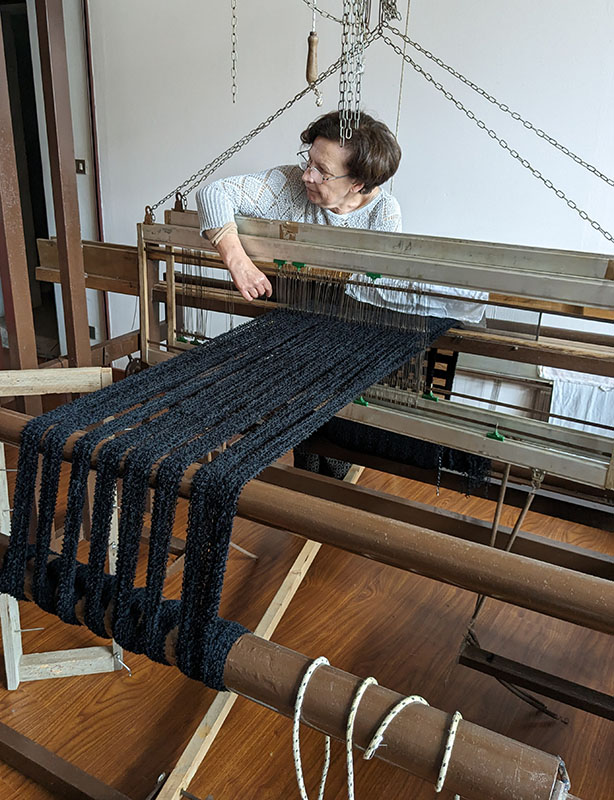
For 500 years, Calabria was known for its fine silk, and the French began buying massive quantities of it for its fashion industry.
Then in the 1400s, King Louis XI of France invited Jean le Calabrian, a weaver from Calabria to Lyon, to create the silk industry in France.
As the silk industry in France began to grow, inventors began to come up with better and better ideas to design their looms.
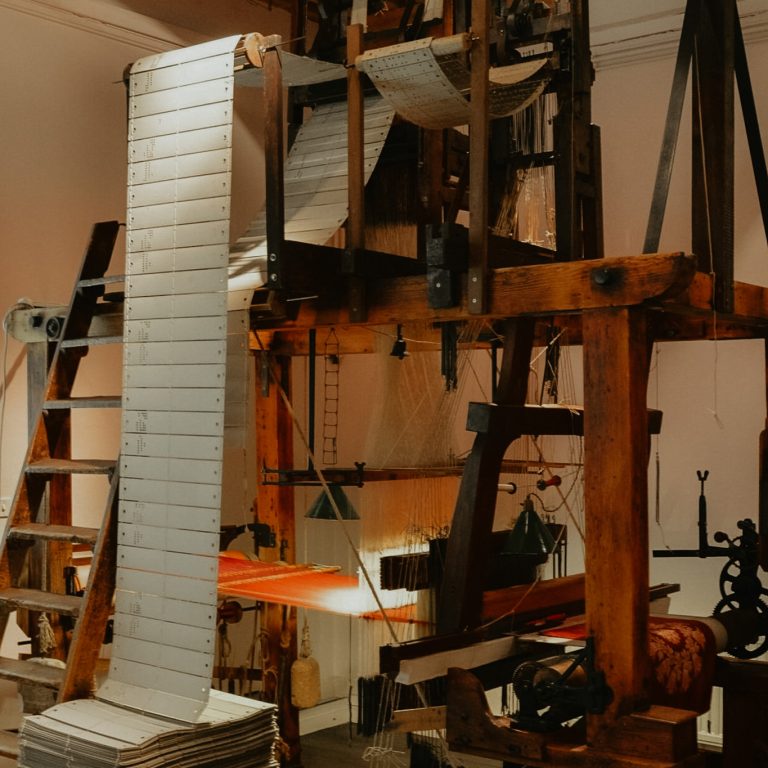
Famously, Joseph Marie Jacquard made the largest breakthrough in loom technology by combining prior innovations into a box that sat on top of the loom that could automatically pull the correct warp yarns to make intricate patterns.
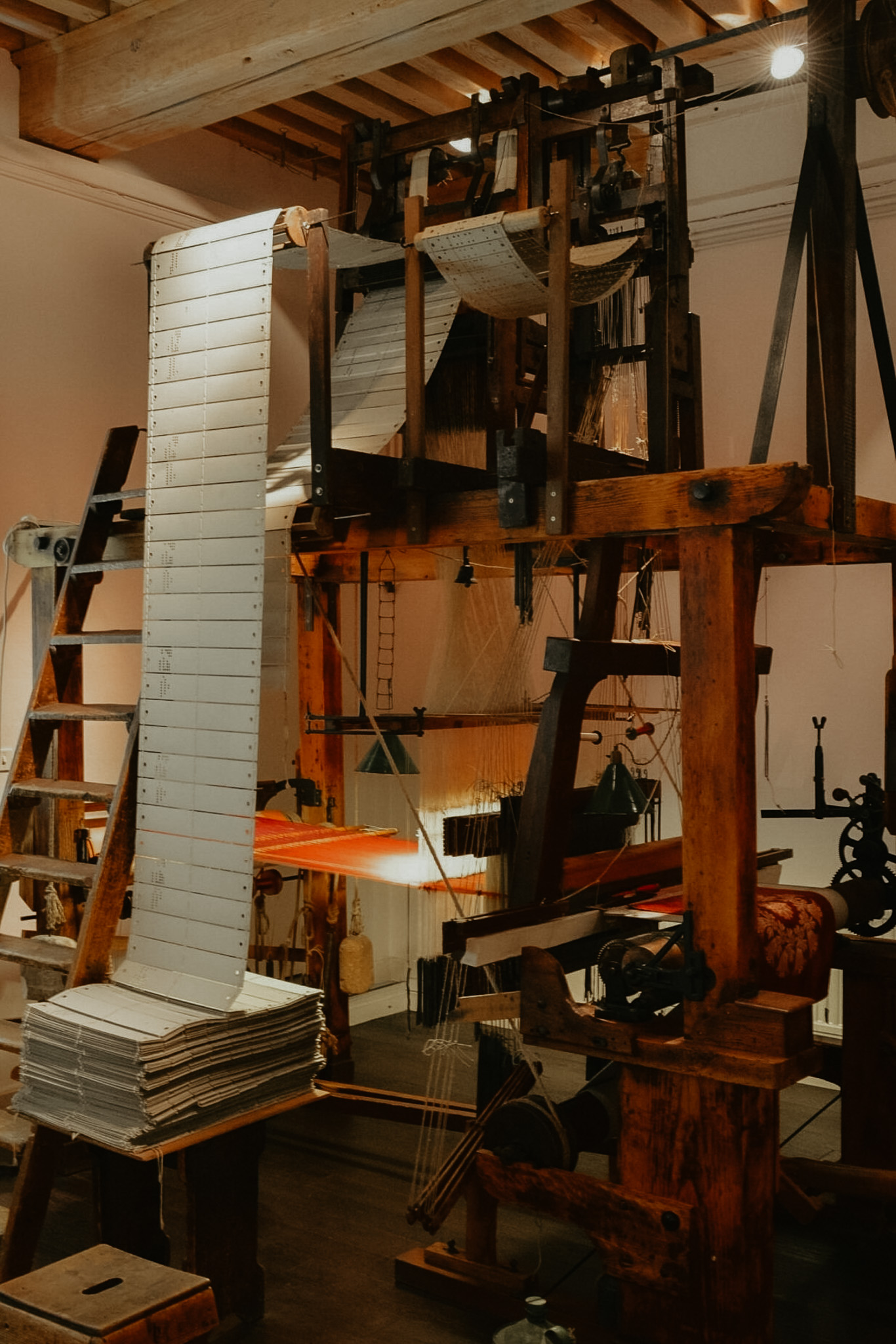
His invention, the Jacquard Loom, massively sped up the process of weaving and allowed a loom to be operated by one single person.
This increased efficiency and led to lower prices, making high-quality fabrics more accessible to a wider range of people.
The Jacquard Loom, however, was accepted with skepticism and even violence in France.
But England embraced the Jacquard Loom almost immediately after it was invented and soon began leading the world in weaving innovations.
These advancements, coupled with the industrialization of the textile industry, led to a period of unprecedented growth and prosperity in Europe throughout the 19th century.
Looms get even better
It’s important to note that all of these types of looms mentioned earlier are considered to be shuttle looms.
They use a shuttle to pass back and forth inside the “shed,” or the gap, that’s created by the warp threads rising and falling.
But at the turn of the 20th century, many industries were looking for ways to increase productivity and efficiency and one of the ways they achieved this was by getting rid of the shuttle altogether.
Instead of sending one shuttle back and forth, the weft could travel on streams of water (water-jet looms) or air (air-jet looms) or even have tons of tiny shuttles that replace themselves in a sequence that can weave fabric exponentially faster than before.
Check out this video of how modern looms work:
Despite these technological advancements, however, shuttle looms are still used in some traditional weaving processes, such as selvedge denim and Harris Tweed.
The Last Word
Ingenuity sparked the creation of countless looms, each developed independently in different parts of the world.
But it was the mixing of ideas and constant innovation that turned the loom from a slow manual tool into the advanced machines we use today.
The loom stands as an example of human creativity and resilience.
Even the simplest tools can evolve to shape economies, cultures, and industries.
Understanding its history not only deepens my appreciation for this ancient craft but also highlights the potential of our spirit to innovate and adapt.

