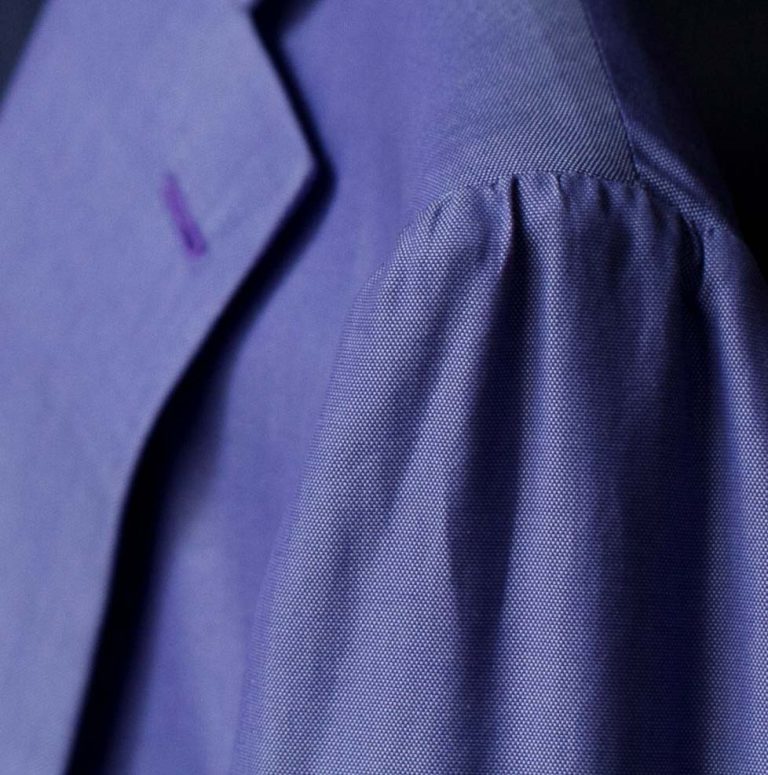
The quintessential detail that defines Neapolitan style in custom tailoring.
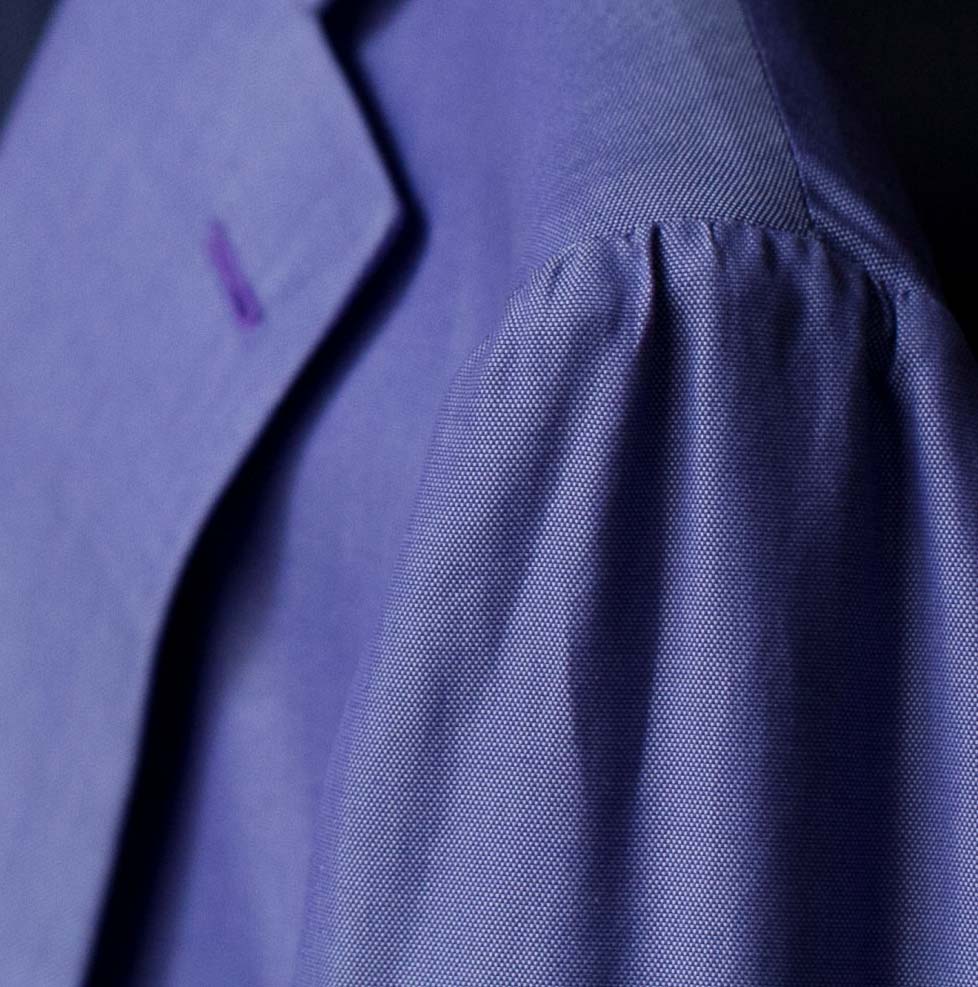
What is spalla camicia you ask?
Spalla camicia is Italian for “shirt shoulder.”
As you can see from the image of the purple suit, the wrinkles at the top of the sleeve are quite exaggerated.
This is spalla camicia.
The way a sleeve is shaped using spalla camicia is to add a bit more of fabric to the top of the sleeve of the arm, mimicking the bell of a trumpet.
Then, during the sewing process, the excess fabric is gathered and pleated.
You may be thinking, “well that doesn’t look like a shirt shoulder.” And you would be right.
But compared to a structured jacket, these shoulders look like they have no padding in them.
This style is a hallmark of the Neapolitan tailoring, originating in Naples, Italy.
Before 1930, all suit styles were pretty much the same. They were very structured suits, with big shoulders and heavy chest pieces.
This makes sense if you think about it; the suit was invented in London, England where it’s often cold. The extra padding and structure is a necessity because of the weather.
But as tailoring knowledge expanded out of London, styles started to change.
One man is credited with defining the Neapolitan style: Vincenzo Attolini.
Attolini learned how to sew in London, but upon being hired by Genearo Rubinnaci to head up his own tailoring house, Attonlini began to develop his own style, perfect for the warm climate of Naples.
Attonlini cut down on shoulder pads, removed the lining from the suit, and also started to make his shoulders a little different.
Thus, spalla camicia was born.
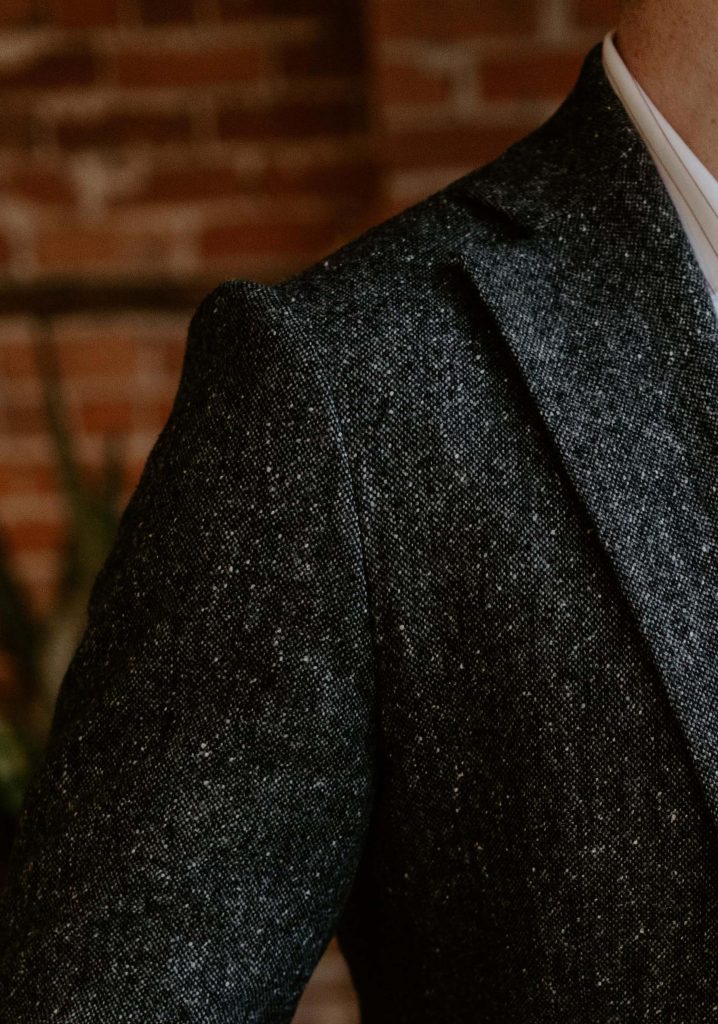
Spalla Camicia isn’t for everyone
One of the interesting things about style is it’s very geographic. Some things look good in some places, but not in others.
Because spalla camicia is such a quintessential Italian detail typically only reserved for made to measure or bespoke garments, in many places outside of fashion capitals, it looks like a poorly constructed shoulder.
I, personally, would only recommend spalla camicia for someone that has already cultivated an Italian-esque style.
I think this doubly applies for spalla camicia.

